
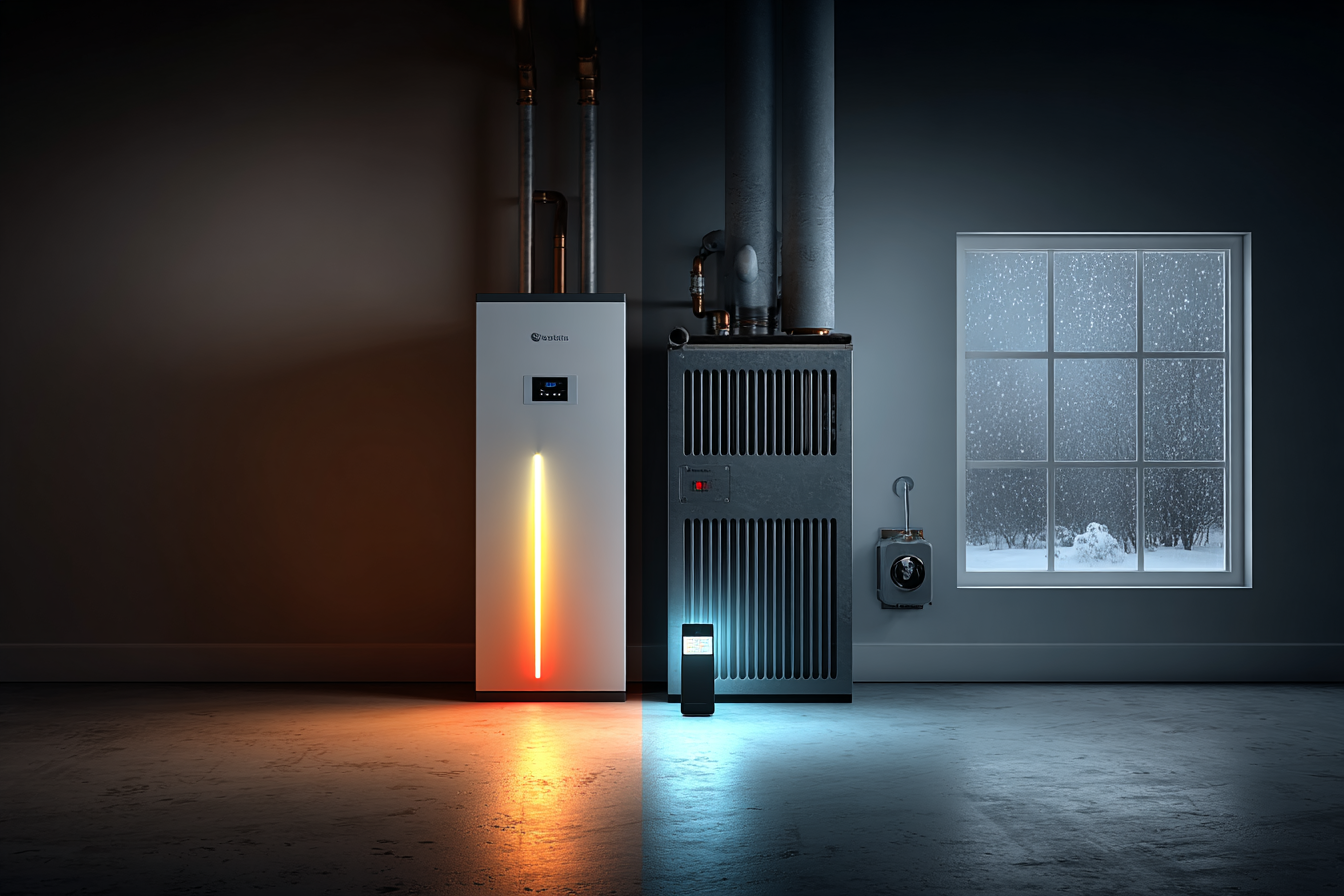
Heat Pump vs Furnace Canada: Which Is More Efficient in Winter?
Heat pump vs furnace Canada is one of the most common questions for homeowners facing cold winters. Understanding the efficiency, cost, and comfort of each system helps you decide which heating option is best for your home in the Canadian climate.
You’ve probably heard that furnaces are better for Canadian winters. But is that still true in 2025? Thanks to new cold-climate models, heat pumps are becoming the go-to for energy savings—even when it’s -25°C outside.
In this guide, we’ll break down the pros, cons, and efficiency of heat pumps vs. furnaces in Canada’s diverse winter climates. Whether you’re in Toronto, Winnipeg, or St. John’s, this post will help you make an informed decision.
How Does Heat Pump vs Furnace Canada Work?
Let’s start with the basics:
System Comparison Table
| System | How It Works |
|---|---|
| Heat Pump | Transfers heat from outside air into your home—even in sub-zero temperatures. |
| Gas Furnace | Burns natural gas or propane to create heat. |
| Electric Furnace | Uses resistance coils to generate heat (like a toaster). |
Key difference: Heat pumps move heat instead of creating it—making them far more energy-efficient.
Comparing the Efficiency of Heat Pump vs Furnace Canada
Efficiency Table
| Metric | Cold-Climate Heat Pump | Gas Furnace | Electric Furnace |
|---|---|---|---|
| Typical COP @ -15°C | 2.2–2.7 | ~0.95 | 1.0 |
| Energy Use | 1 kWh = 2–3 units heat | 1 unit gas = <1 unit heat | 1 kWh = 1 unit heat |
| Operating Cost | Lower (esp. in clean-grid provinces) | Moderate | Highest |
| Carbon Emissions | Low (if grid is clean) | High | Medium |
In provinces with cleaner grids (e.g. BC, Quebec, Nova Scotia), heat pumps are both cleaner and cheaper than gas or electric furnaces.
Example: A Halifax home switched from baseboard to a cold-climate mini-split and saved $1,200/year in heating costs.
Read more: Can a Heat Pump Replace a Furnace in Canada? Here’s When It Can
Performance in Canadian Winters: Does One Work Better?
Gas Furnace Pros & Cons
- Delivers strong, instant heat, great for older, drafty homes.
- Doesn’t lose efficiency in cold weather.
- Relies on fossil fuels.
Cold-Climate Heat Pump Pros & Cons
- Provides steady, even heating.
- Works reliably down to -25°C with the right model.
- May need backup only in extreme cold snaps.
Best for: Ontario, BC, Atlantic provinces.
Dual-fuel recommended in: Alberta, Saskatchewan, Manitoba.
Homeowner quote: “Our new heat pump kept the house warm at -22°C in Ottawa. We haven’t turned on our gas furnace all winter.”
Upfront Cost and Long-Term Savings
Cost Comparison Table
| Category | Heat Pump | Gas Furnace |
|---|---|---|
| Upfront Cost | $8,000–$15,000 (ducted or mini-split) | $4,000–$7,000 |
| Rebates Available | $40,000 interest-free loan + Provincial top-ups | Minimal or none |
| Energy Savings | 30–60% over baseboard or oil | 10–20% vs. older gas |
Heat pump costs are higher upfront, but with updated 2025 rebates and loans, the gap is shrinking fast. Bonus: you get free air conditioning in summer.
Read more: Government Rebates for Solar Panels and Heat Pump in Canada (2025)
Maintenance and Lifespan of Heat Pump vs Furnace Canada
Heat Pump Maintenance & Lifespan
- Lasts 12–15 years.
- Requires annual filter cleaning and basic servicing.
- Fewer moving parts than furnaces.
Gas Furnace Maintenance & Lifespan
- Lasts 15–20 years.
- Needs regular tune-ups, safety checks, and carbon monoxide monitoring.
Bonus: Heat pumps don’t need fuel delivery or hookup—great for rural/off-grid areas with clean electricity access.
Conclusion
When it comes to heat pump vs furnace Canada, the choice is becoming clearer. In most regions, cold-climate heat pumps are now more efficient, quieter, and cheaper to run than gas or electric furnaces. If you live in an area with a moderate winter climate and a clean power grid, a heat pump is the obvious choice for comfort and savings.
Even in harsher climates, pairing a heat pump with your existing system gives you the best of both worlds, reduced fuel use, lower bills, and a step toward net zero.
Incentive Snapshot (2025)
- Canada Greener Homes Loan – Up to $40,000 interest-free.
- Ontario (HER+) – $5,000–$10,000 in stackable rebates.
- BC (CleanBC) – Up to 100% coverage for income-qualified homes.
- Nova Scotia (Efficiency NS) – Up to $6,000 for heat pumps.
- Yukon – Up to $5,000 rebate ($0.80/W) on residential solar + heat pump pairing.
- Alberta (CEIP, Edmonton Solar) – Rebates and low-interest financing for hybrid systems.