
How Virtual Power Plants Are Quietly Reshaping Canada’s Energy Grid
Introduction
Imagine if your thermostat, solar panels, electric vehicle, and water heater could all team up—not just to save you money, but to support Canada’s power grid. That’s not science fiction—it’s called a Virtual Power Plant (VPP), and it’s already happening in provinces like Ontario, Alberta, and Nova Scotia.
In this post, we’ll explain how VPPs work, which Canadian programs are leading the way, and how your home can participate. If you’ve ever wondered what comes after solar panels and EVs—this is it. And don’t worry, you won’t need to build your own system from scratch.
What Is a Virtual Power Plant (VPP)?
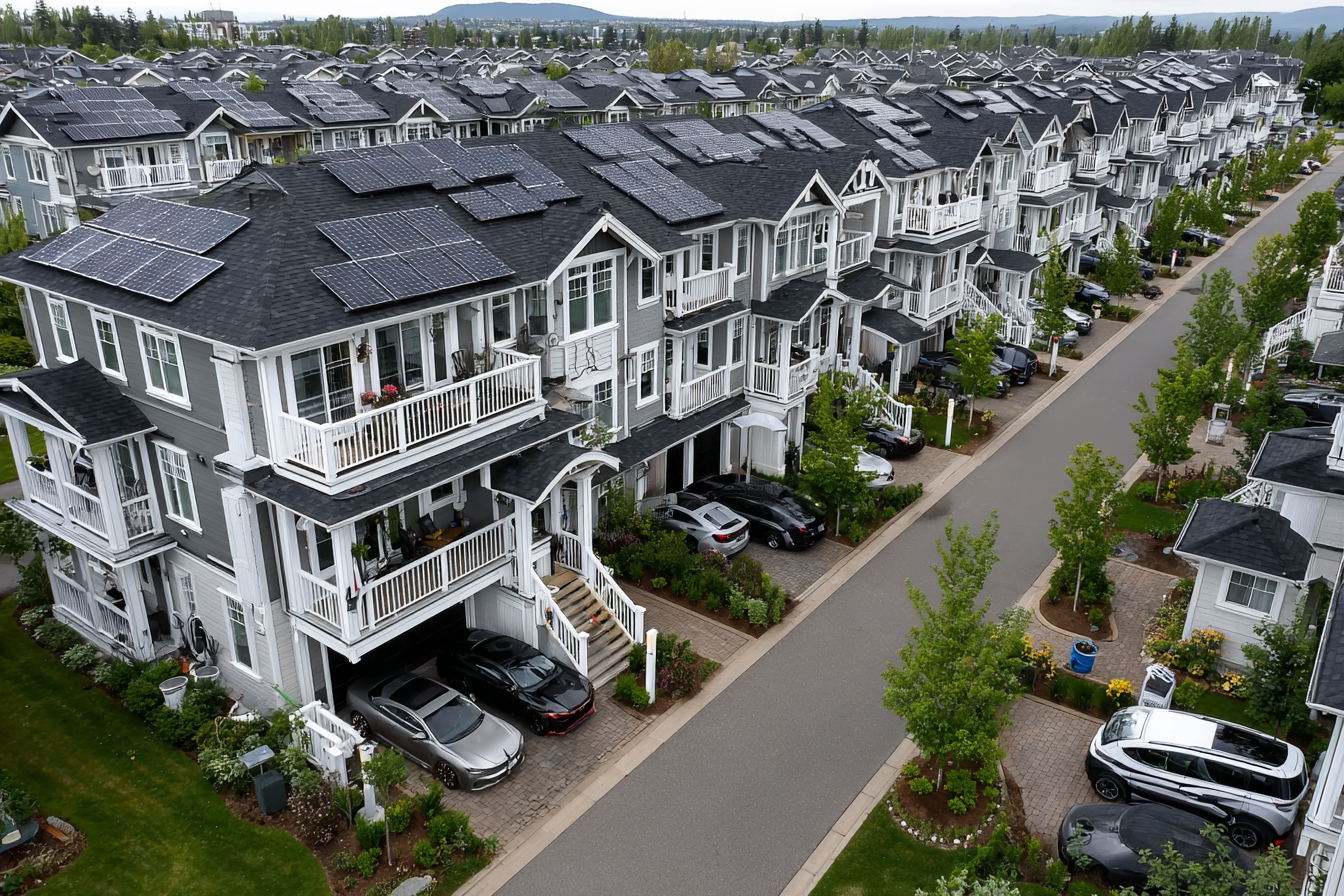
A virtual power plant connects thousands of homes and small energy systems into one coordinated network that acts like a traditional power plant—just smarter and cleaner.
A VPP Might Include:
- Rooftop solar panels
- Home batteries (e.g., Tesla Powerwall)
- EV chargers
- Smart thermostats
- Electric water heaters
- Heat pumps with demand-response features
Instead of firing up a gas plant when demand spikes, utilities can “tap” into homes that voluntarily shift usage or feed power back into the grid.
Think of it like thousands of Canadian homes quietly acting as one giant, clean, flexible energy source.
Where Are VPPs Already Operating in Canada?
Several provinces are already piloting VPPs—or scaling them up.
VPP Programs by Province:
| Province | Program Name | Highlights |
|---|---|---|
| Ontario | Peak Perks (IESO) | 100,000+ homes enrolled via smart thermostats |
| Alberta | ERA VPP Pilot | Batteries + solar + hot water tanks on farms |
| Nova Scotia | Tesla + NS Power Trial | VPP with Powerwalls and EV chargers |
| BC | FortisBC Smart Home | Includes heat pumps and load-shifting appliances |
Notable Example:
Peak Perks (Ontario): Homes that agree to minor thermostat adjustments during high-demand periods earn credits while reducing grid strain—no effort required.
What Are the Benefits of Joining a VPP?
For Homeowners:
- Earn rewards or bill credits for participating
- Save energy by automatically shifting loads
- Boost energy independence with battery backup
- Get priority access to emerging utility rebates
For the Grid:
- Stabilizes voltage during peak events
- Reduces need for natural gas “peaker plants”
- Makes clean energy more predictable and scalable
And unlike traditional energy systems, VPPs are decentralized, meaning there’s no single point of failure—crucial in climate-sensitive regions like Northern Ontario or PEI.
What Do You Need to Join a VPP in Canada?
You don’t need a full suite of smart home tech to participate.
You May Qualify If You Have:
- A smart thermostat (e.g., Ecobee or Nest)
- An EV charger with bi-directional capability
- Solar panels with battery storage
- A connected water heater
- A heat pump with demand-response capability
Getting Started:
- Check your province’s utility website or programs like IESO, FortisBC, or NS Power
- Contact your HVAC provider to see if your system is VPP-compatible
Or… use Solenery Insights to see if your home qualifies.
What’s the Future of VPPs in Canada?
As provinces push toward net-zero by 2050, VPPs will play a central role in replacing fossil-fuel peaker plants and managing renewable energy variability.
Key Trends to Watch:
- EVs as power sources (vehicle-to-grid or V2G pilots are underway in Quebec and Nova Scotia)
- Smart appliances automatically adjusting for lower grid stress
- Increased rebates for VPP-ready HVAC and battery systems
- Indigenous-led microgrids and VPPs in remote communities
With more homes, buildings, and even small businesses joining VPPs, the Canadian energy grid is becoming cleaner, smarter, and more resilient—with less need for expensive infrastructure expansion.
Conclusion
Virtual power plants are no longer experimental—they’re quietly transforming how energy works in Canada. Whether you have a smart thermostat, solar panels, or are just starting your clean-energy journey, you could be part of the next generation power grid.