
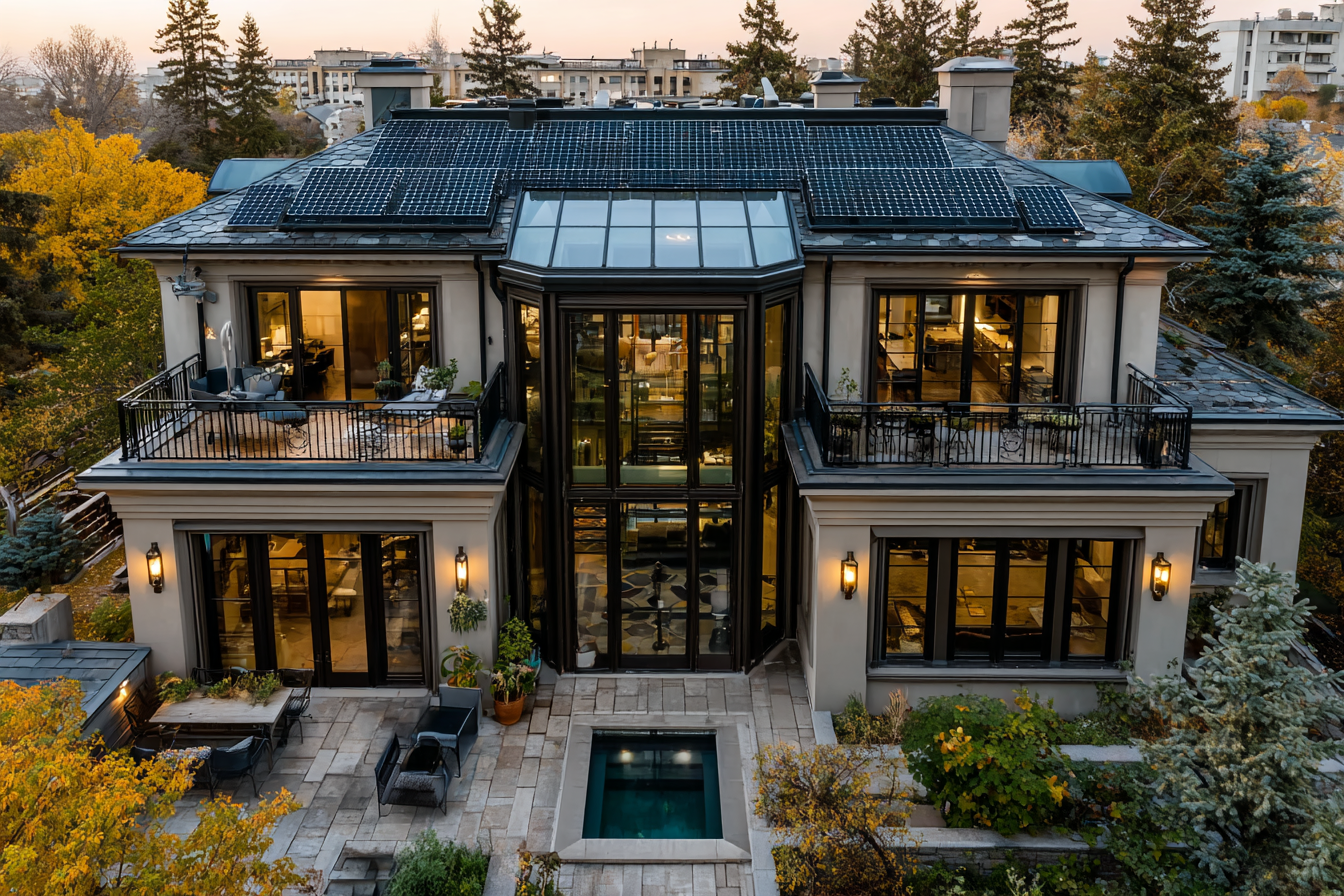
Rooftop Solar Design Tips for Homes with Dormers, Skylights, or Vents
Introduction
Have a beautiful roof—but worried solar panels will ruin the look?
You’re not alone. Many Canadian homes feature dormers, skylights, chimneys, and architectural detailing that complicate solar panel layouts. But here’s the good news: With a smart installer and a good design plan, your roof can still shine and generate clean power.
In this article, we break down how to design a solar panel layout for homes with complex rooflines—and how to avoid common mistakes that sacrifice both performance and curb appeal.
Understand the Constraints of Complex Roofs
Homes with features like:
- Dormers
- Multiple roof faces
- Chimneys or skylights
- Varying slopes or angles
…require more thoughtful solar design. Challenges include:
- Limited uninterrupted panel space
- Shading from vertical features
- Difficulty in aligning rows evenly
- Potential for visible wiring or conduit
Canadian context: Many century homes in Toronto, Halifax, and Ottawa have these features—and are still excellent solar candidates with the right approach.
Design Principles for Beautiful (and Functional) Layouts
To maintain visual harmony:
- Prioritize symmetry. Center the array on one section of roof if possible.
- Frame around features. Treat skylights or dormers as design elements to surround.
- Minimize “stray” panels. Avoid placing 1–2 extra panels in awkward positions for a few extra watts.
- Keep row spacing tight. Even spacing between rows avoids a cluttered look.
Tip: Use landscape orientation (wider than tall) to better fit shorter rooflines and match dormer shapes.
Don’t Let Aesthetics Compromise Performance (Too Much)
While a clean layout is important, don’t ignore solar basics:
- South-facing roofs still offer the best production
- Avoid shaded sections, even if they look symmetrical
- Panel-level optimizers or microinverters help in tricky layouts with partial shade
Ask your installer to provide:
- Aesthetic layout options with minimal production loss
- A performance report comparing design choices
Concealing Conduit and Racking
One thing that ruins even the best solar install? Exposed piping and wires.
- Request hidden conduit runs inside the attic or along roof ridges
- Paint exposed lines to match shingles or trim
- Use flush-mount racking that hugs the roof, especially for urban homes with street-facing arrays
Installer tip: Choose installers with experience on heritage homes or architecturally sensitive properties—they’ll be more attuned to aesthetic needs.
Real-World Canadian Examples
| City | Home Style | Solar Strategy |
|---|---|---|
| Montreal | Triplex with dormers | Panels split into 3 equal groups, symmetrically around skylights |
| Calgary | Mid-century with chimney + vents | Landscape orientation on each side of vent stack; inverter in garage |
| Halifax | Century home with mixed rooflines | Ground mount in backyard framed with hedging for clean street view |
Pro Tip: Ask for a 3D visual mockup of your install before signing the contract.
Conclusion
Having a complex roof doesn’t mean you have to compromise on clean energy—or curb appeal. With thoughtful layout design, panel-level tech, and a visual-first approach, your solar setup can be both functional and flattering.