

What Is Deep Lake Cooling? A Look at Toronto’s Groundbreaking Energy Solution
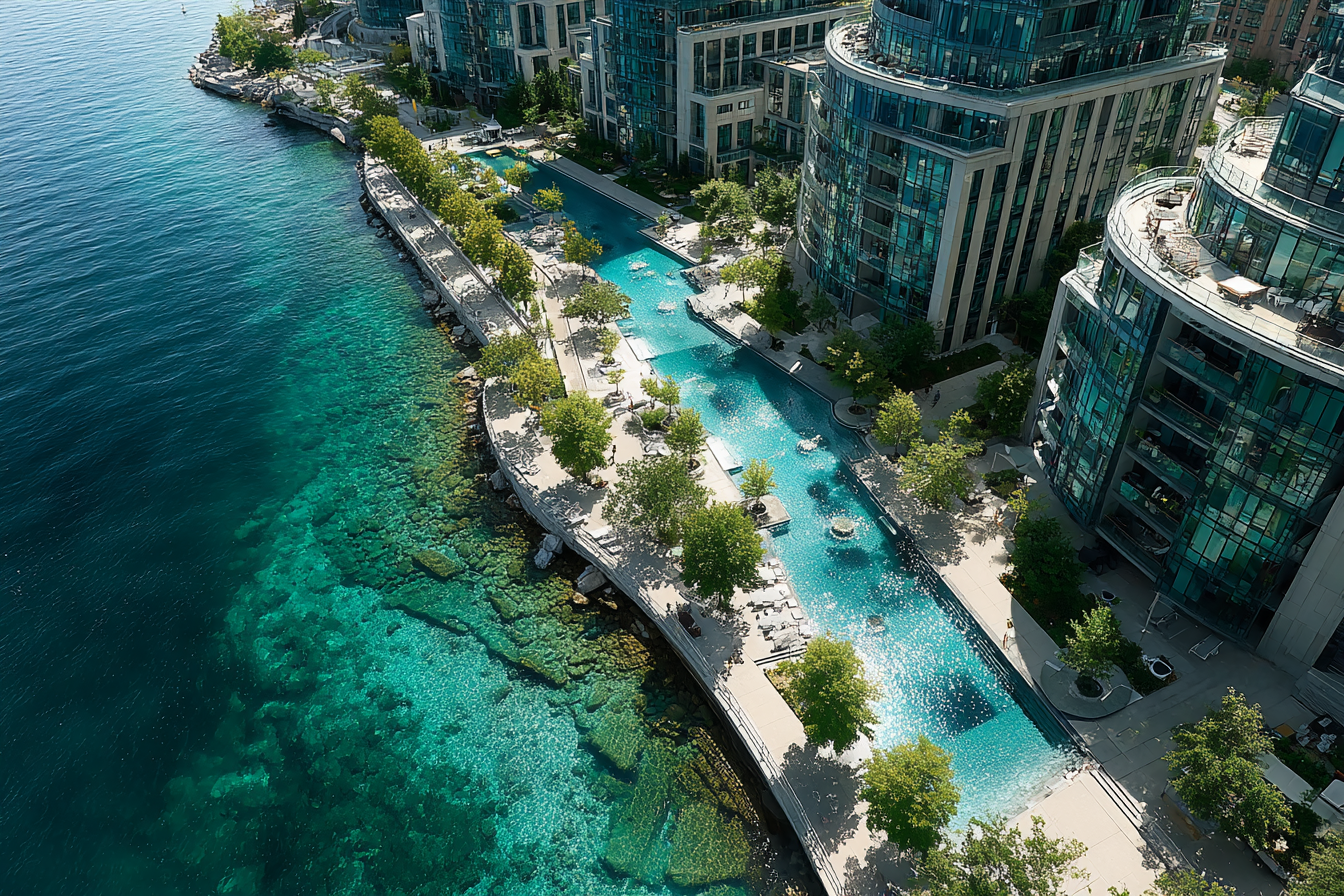
Written by Solenery
2 min read
Introduction
When most people think of clean energy, they think of solar panels or wind turbines. But in downtown Toronto, one of the world’s most innovative climate solutions isn’t on a rooftop—it’s deep under Lake Ontario.
It’s called Deep Lake Water Cooling (DLWC), and it’s quietly keeping more than 100 buildings cool using cold water from the bottom of the lake. In this post, we’ll explain how the system works, why it’s a model for other cities, and how it ties into Canada’s broader push for clean, resilient infrastructure.
How Does Deep Lake Cooling Actually Work?
Enwave’s Deep Lake Water Cooling system draws cold water (around 4 °C) from 83 metres below Lake Ontario, channels it through a closed-loop pipe system, and uses it to chill buildings in Toronto’s downtown core.
Key Components:
- Three intake pipes extend 5 km into Lake Ontario
- Heat exchangers transfer thermal energy without mixing drinking water
- Cooled water is distributed via district energy pipes
- After use, water enters Toronto’s potable water system (yes—it’s clean!)
This system replaces traditional air conditioning, which typically relies on electricity-hungry chillers or refrigerants with high global warming potential.
What Are the Benefits of Deep Lake Cooling?
DLWC delivers cooling with 75–90% less electricity than conventional systems—making it one of Canada’s most energy-efficient urban innovations.
Major Advantages:
- Energy Efficiency: Massive reductions in electricity use during peak summer demand
- Climate Resilience: Cooling isn’t affected by heatwaves or grid instability
- No Refrigerants: Avoids harmful hydrofluorocarbons (HFCs) used in AC units
- Cost Stability: Predictable long-term energy costs for building operators
Enwave reports that over 100 buildings—including hospitals, universities, data centres, and condos—are now connected.
Who’s Using Deep Lake Cooling in Toronto?
Some of the city’s biggest and busiest buildings stay cool year-round thanks to the lake.
Notable Buildings on the DLWC Grid:
- Royal Ontario Museum (ROM)
- Toronto General Hospital
- RBC Dexia Data Centre
- Bay Adelaide Centre
- University of Toronto
Together, they reduce Toronto’s carbon emissions by over 61,000 tonnes annually—the equivalent of taking 13,000 cars off the road.
Can Deep Lake Cooling Be Replicated Elsewhere in Canada?
Yes—if geography and infrastructure allow it.
Canadian Cities With Potential:
- Halifax, NS: Harbour proximity and large downtown core
- Victoria, BC: Mild climate and urban density
- Montreal, QC: Existing district energy systems and access to the St. Lawrence
- Winnipeg, MB: Opportunity for underground thermal storage in rock or aquifers
Where lakes aren’t viable, seasonal thermal storage (like borehole or gravel pit systems) are being piloted—see the Drake Landing Solar Community in Alberta.
Tip: If your city has a district energy provider, ask if sustainable cooling is on their radar.
How Does Deep Lake Cooling Fit into Canada’s Net-Zero Goals?
DLWC is more than a local solution—it’s a blueprint for how cities can cool buildings without fossil fuels or excessive grid strain.
Policy Connection:
- Helps reduce summer peak demand, one of the biggest causes of blackouts
- Avoids the need for new natural gas infrastructure
- Supports the goals of Canada’s Net-Zero Emissions by 2050 plan
- Eligible for green bonds and low-interest infrastructure financing
As cities densify and summers grow hotter, the importance of resilient cooling will only rise. DLWC proves that big cities can innovate below the surface—literally.
Conclusion
Toronto’s Deep Lake Water Cooling system is a powerful reminder that clean energy isn’t just about generating electricity—it’s also about how we use it. With massive energy savings, no refrigerants, and year-round comfort, it’s a made-in-Canada model for sustainable urban cooling.