
What Roof Direction Is Best for Solar Panels in Canada?
Introduction
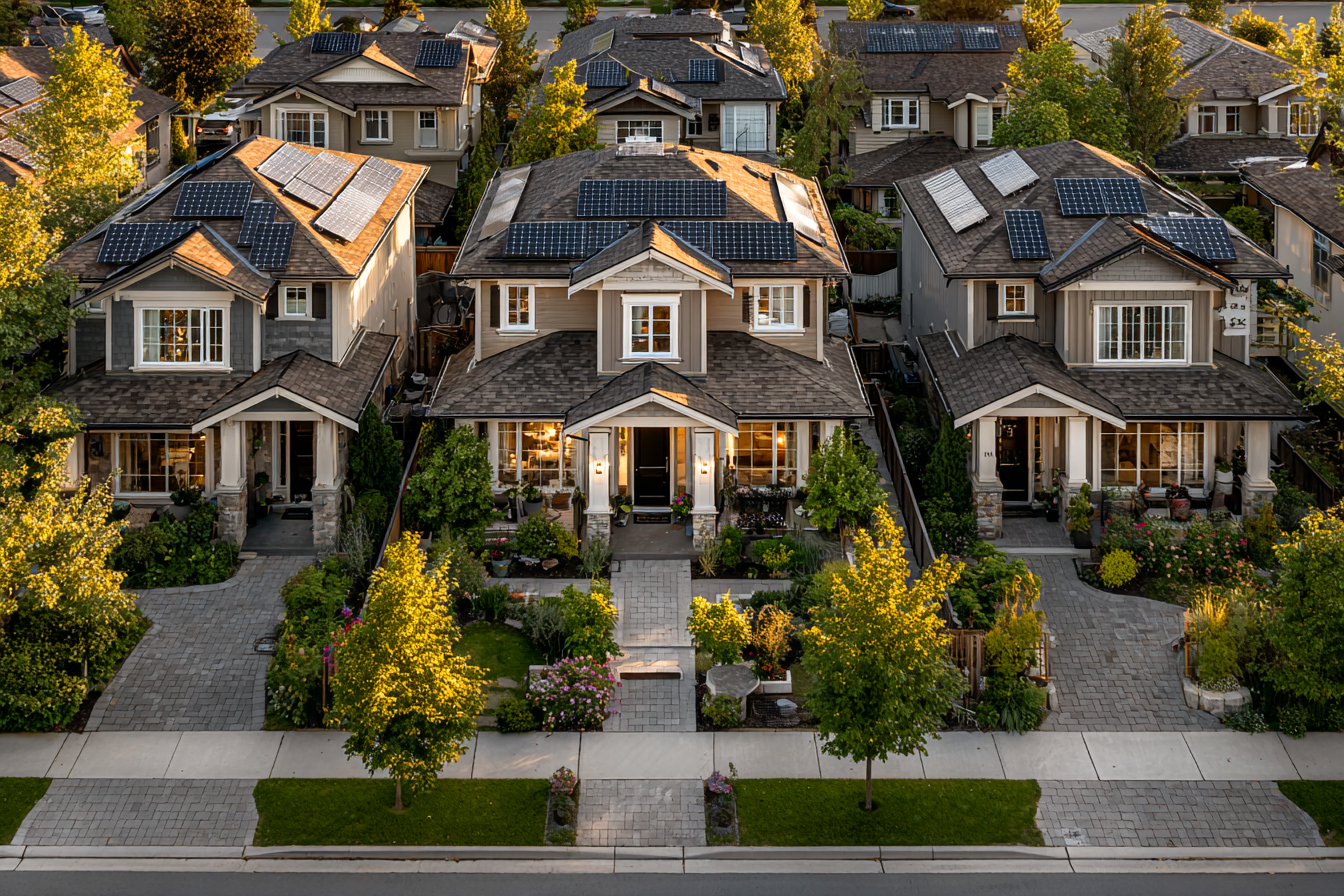
You’ve probably heard that south-facing roofs are best for solar panels—but is that always true, especially in Canada? What if your roof faces east or west? Can you still make solar work?
The direction your roof faces, known as roof orientation, plays a big role in how much sunlight your solar panels receive—and how much electricity they’ll generate. But it’s not the only factor, and east- or west-facing homes can often produce more than enough energy to make solar worthwhile.
In this post, we’ll break down how roof direction affects solar performance in Canadian climates, what’s considered ideal, and how to work with what you’ve got—wherever you live.
Why Direction Matters for Solar in Canada
Solar panels generate the most energy when the sun hits them directly. In Canada, the sun rises in the east, sets in the west, and travels across the southern sky—which is why a south-facing roof gets the most consistent sun exposure throughout the day.
But remember, solar doesn’t require perfect conditions to be effective.
See Solar Roof Direction Table
| Roof Direction | % of Optimal Solar Output | Notes |
|---|---|---|
| South | 100% | Ideal—max exposure all day |
| South-East / South-West | 90–95% | Excellent performance |
| East / West | 75–85% | Still viable, especially with higher hydro rates |
| North | 50–65% or lower | Usually not recommended unless unavoidable |
Good to know: In provinces like Ontario, BC, and Alberta, even 80% efficiency can still result in major savings due to high electricity prices and local rebates.
Can You Install Solar on East- or West-Facing Roofs?
Yes—and many Canadians do. In fact, some homeowners prefer east- or west-facing systems because:
Reasons why east- or west-facing roofs are used
- Morning or evening usage: If your home uses more power in the morning (e.g. heat pump, EV charging), east-facing panels can match your energy curve.
- Split arrays: Panels can be placed on both sides of your roof to catch morning and afternoon sun.
- High electricity rates: Even at 80–85% output, savings can still be significant in Ontario, Nova Scotia, Alberta, and PEI.
Example: A homeowner in Halifax with west-facing panels gets approximately 83% of the energy output of a south-facing system—and still cuts their power bill by $1,400 per year.
What About Flat Roofs or Unusual Orientations?
Flat roofs are more flexible than most people realize. Installers can tilt solar panels toward the sun using angled mounting racks. This allows them to optimize the direction and pitch regardless of where the roof faces.
Key considerations for flat roofs
- Racks can add cost (approximately $1,000–$2,000 depending on size).
- You may need ballasted mounting (weights instead of bolts) in snowy areas.
- Ideal for urban homes, duplexes, or older downtown buildings.
Toronto, Vancouver, and Calgary homeowners with flat-roof townhouses are great candidates for custom-mounted systems.
How to Check Your Roof Direction (DIY or Instantly)
Not sure which way your roof faces? Here are several quick methods:
How to check roof direction
- Use your smartphone compass app.
- Stand in front of your house and point toward the slope of your roof.
- Look up your property on Google Maps satellite view.
- Use Solenery’s Insights tool.
Bonus: Solenery automatically estimates your annual solar generation based on direction, shading, and local sun hours.
Tips to Maximize Output—Even with Less-Than-Ideal Direction
If your roof doesn’t face directly south, don’t worry. You can still get solid performance with a few adjustments:
Tips for maximizing solar performance
- Use high-efficiency panels to compensate for lower sunlight.
- Tilt panels at an optimal angle on flat or low-slope roofs.
- Trim nearby trees to increase sun exposure.
- Split arrays between east and west to balance usage.
- Pair solar with a battery to store afternoon energy for later use.
Example: In Alberta, net metering and Edmonton’s $0.50 per Watt solar rebate make even east-facing systems financially attractive. In BC, the $1,000 per kW BC Hydro rebate and PST exemption improve ROI for less-than-ideal orientation systems.
Conclusion
While south-facing roofs are the gold standard, east- and west-facing homes in Canada can still benefit significantly from solar panels. With smart design and today’s high-efficiency technology, solar is more flexible than ever. No matter your roof’s direction, there’s likely a solution that works for you.