
Solar Energy
Home Energy Upgrade Payback: Simple and Discounted Methods
Calculate home energy upgrade payback with a clear baseline, net annual benefit and simple...
4 min

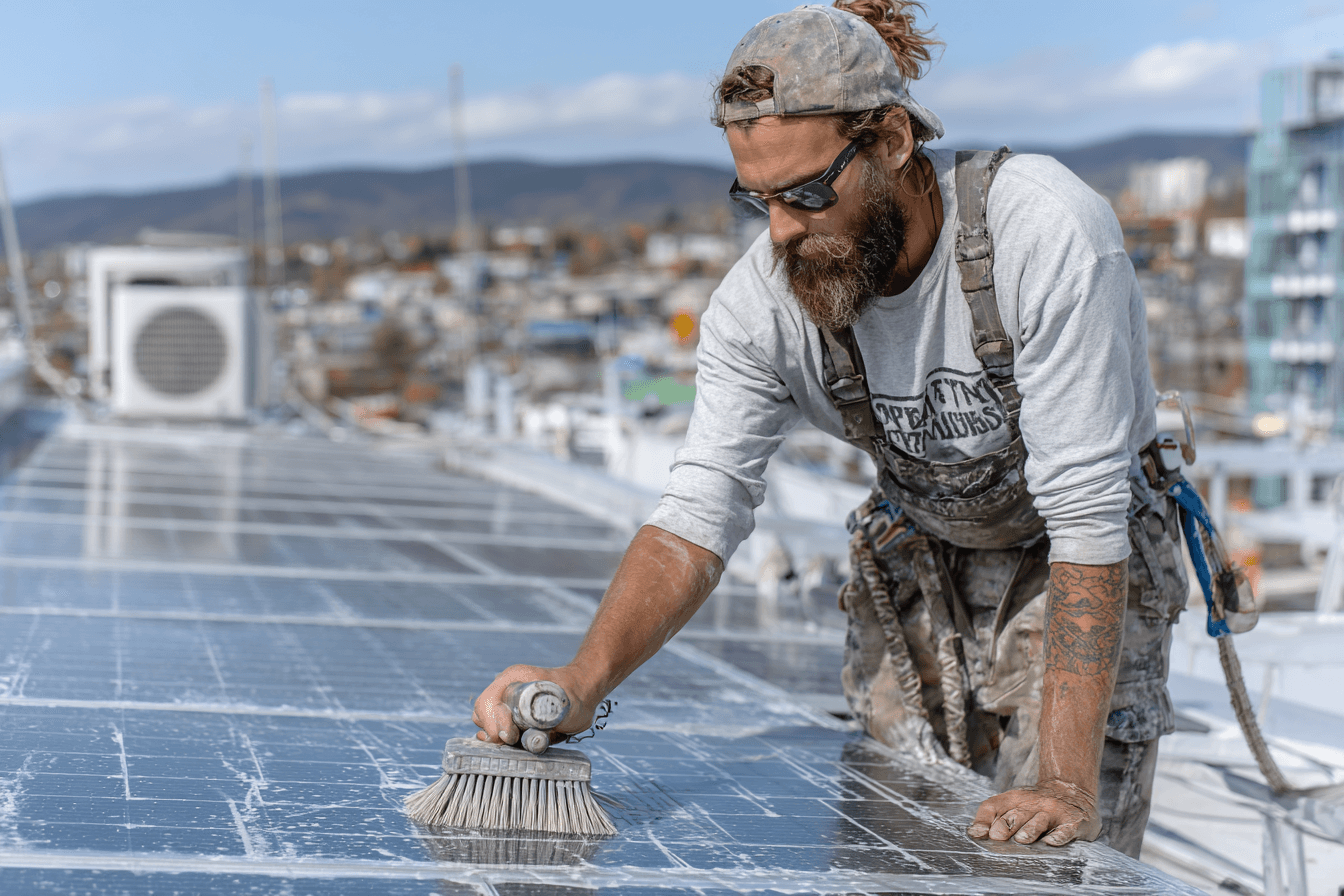
Learn how to clean solar panels through an equipment-specific service: assess soiling, question the method and access plan, and retain a useful work record.
Before deciding how to clean solar panels, Canadian homeowners should check whether cleaning is needed and arrange an equipment-compatible service. A cleaning schedule should not be based only on your province or the month. Start with your module manufacturer's instructions, visible soiling and your system's performance. For a rooftop array, arrange cleaning through a qualified solar maintenance provider rather than climbing onto the roof yourself.
The aim is to remove material that is blocking sunlight without damaging the modules, creating an electrical hazard or taking a fall. Cleaning is worth considering when a ground-level inspection shows persistent deposits, such as bird droppings or a film of construction dust. A low production reading alone does not prove the panels are dirty.
Before booking a visit, gather three things:
Rain can reduce the need for cleaning on some installations. Canadian Solar's current manual, for example, says sufficiently tilted modules may benefit from rain washing. That is manufacturer guidance for its modules, not a guarantee that rain removes every deposit from every array. See its maintenance and cleaning instructions, sections 7–8.
There is no reliable percentage improvement to promise for your home without evidence about the soiling and operating conditions. If a cleaning service promises a fixed output gain, ask how it will establish the baseline and separate cleaning effects from weather, shading and faults.
Ask the provider to explain its access method, fall protection and electrical precautions before work begins. Cleaning is not just a glass-washing job: solar modules can produce electricity in daylight, and wet or damaged equipment can present a shock hazard. Switching off an inverter does not make every part of the array safe to touch.
Canadian Solar's manual warns about daylight voltage and increased shock risk around wet, cracked modules. It also requires disconnection precautions before cleaning. Have a qualified person determine and carry out the procedure required for your system. Do not unplug connectors, open junction boxes or attempt electrical repairs yourself.
If you notice broken glass, exposed wiring, a loose component or an inverter fault, contact the installer before arranging washing. Do not spray or touch the damaged area.
Once the equipment's safety conditions have been met, the cleaning method should follow the applicable manual. Use this checklist when discussing the job with a provider:
| Check | What to ask |
|---|---|
| Tools | Are the tools approved for the module surface, non-abrasive and suitable for work around electrical equipment? |
| Water | Does the water quality meet the manufacturer's requirements, including any mineral-content limits? |
| Products | Is any cleaning agent explicitly allowed for these modules? Do not assume household dish soap or a window cleaner is acceptable. |
| Temperature | Will cleaning avoid hot modules and conditions that could create thermal stress or ice? |
| Pressure | Does the method stay within the exact module manufacturer's limits? A pressure washer is not a default household cleaning method. |
| Loading | How will the provider avoid standing on panels or putting concentrated loads on them? |
Do not scrape or rub dry dirt off the glass. Do not use abrasive pads, metal scrapers, or an unapproved chemical to attack a stubborn deposit. Stop and ask the installer or manufacturer about material that does not release with the approved method.
This checklist helps you assess a cleaning proposal. It does not replace the equipment instructions or the provider's safe-work procedure.
Keep a record of the service date, the deposits removed, the method used and any damage or faults found. Review monitoring afterwards with weather and shading in mind. If output remains unexpectedly low, ask for a system diagnosis rather than repeatedly paying for cleaning.
Nearby construction, trees, birds or long dry periods can change how quickly an array becomes soiled. Use those observations and the manufacturer's guidance to plan follow-up; avoid a universal monthly or seasonal washing rule.
Snow and ice need a separate decision. Do not climb onto a snowy roof or treat frozen material as ordinary dirt. Read our guide to snow on solar panels before deciding whether any intervention is appropriate.
Before accepting the visit, record the observed deposits, monitoring concern, exact module manual, proposed method, access arrangements and complete quoted price. Ask whether diagnosis is included or whether the quote covers cleaning only. Identify what the provider will do if damage or a fault is found before washing begins.
Afterward, keep the work date, areas treated, methods used, observations and follow-up recommendations. Ask for photographs obtained through the provider’s safe-work procedure rather than taking roof photographs yourself. Keep a separate record of any repair recommendation and the party responsible for assessing it.
Review subsequent production with weather and shading in mind. A higher reading the next sunny day does not by itself quantify a cleaning benefit. If the original concern remains unresolved, use the service record to request diagnosis rather than repeat the same cleaning without evidence.
Bring these questions to your installer or maintenance provider. A useful recommendation should explain what your array needs and how the work will be carried out safely.
Calculate home energy upgrade payback with a clear baseline, net annual benefit and simple...
Assess Ottawa winter solar production with a monthly evidence sheet covering snow assumptions,...
Check net-zero building code claims against the locally applicable code, defined performance...