
Solar in Canada: Find Your Incentives and Compare Installer Quotes
Find relevant solar programs, compare system options and plan installation quotes. Begin with your full address, confirm your property and select upgrades before requesting quotes from installers serving your area.
Enter your full address to begin a property check. An account is needed to continue the property plan; personalized rebate matching requires premium access. This does not apply for a rebate or request quotes.
- Find relevant rebates and understand how to apply
- Compare solar options
- Compare installation quotes as installers respond
- federal tax credit on business solar and batteries
- 30%
- for home solar and batteries in Ontario
- Up to $10,000
- per kW a year across 24 cities (NRCan)
- 937–1,360 kWh
- options and installation scope
- Compare
Solar for Your Business or Your Home
The incentives are different. Businesses get a federal tax credit plus provincial rebates; homeowners get provincial and utility rebates.
Compare solar options
| Option | When to consider it | What to request |
|---|---|---|
| Roof or ground mount | Compare usable area, shade, roof condition and land access. | Request layout, roof or foundation work, permits, electrical scope and interconnection conditions. |
| System size and inverter | Match generation and export assumptions to site use and the utility tariff. | Compare kW-DC and kW-AC, annual production assumptions, inverter design and warranties. |
| Storage or off-grid design | Compare backup needs and usable battery capacity; off-grid needs a separate load and autonomy design. | Ask what stays powered, for how long, and whether controls, backup generation and service are included. |
Before you hire: compare the full scope
Panel and inverter models, layout, production assumptions, roof/electrical work, interconnection and storage scope. Ask each provider to itemize equipment or materials, labour, extras, permits, exclusions, warranty and responsibility for rebate documents. Confirm eligible equipment, pre-approval and stacking with the program administrator before signing.
Budget separately: project cost → confirmed grant support → remaining cost. Any borrowing is repayable, with its own interest, fees and approval. Unconfirmed rebates are not awarded savings.
For businesses
Up to 30% back through the federal Clean Technology Investment Tax Credit, plus provincial rebates.
- 30% refundable credit on solar and battery equipment, or 20% if labour requirements aren't met
- Ontario: $770 per kW-AC for systems over 10 kW-AC, up to 1 MW-AC
- BC Hydro: $1,000 per kW, up to $10,000; Manitoba: $0.75 per watt
For homeowners
The federal Greener Homes Loan has closed, so home solar money now comes from provinces and utilities.
- Ontario: up to $10,000 for solar panels and battery storage
- BC Hydro: $1,000 per kW, up to $5,000, plus battery rebates
- Quebec: $1,000 per kW, up to 40% of the cost; Manitoba: up to $5,000
How Much Electricity Does Solar Produce in Canada?
NRCan estimates each kW of south-facing panels tilted at the site's latitude produces about 940 to 1,360 kWh a year across the 24 cities below, from 937 in St. John's to 1,360 in Regina. The Prairies get the most sun, the coasts the least. A 5 kW system in Toronto would produce roughly 5,800 kWh a year.
| City | Province | Yearly output per kW | Guide |
|---|---|---|---|
| Regina | SK | 1,360 kWh | Solar in Saskatchewan |
| Saskatoon | SK | 1,349 kWh | Solar in Saskatoon |
| Lethbridge | AB | 1,330 kWh | Solar in Lethbridge |
| Calgary | AB | 1,291 kWh | Solar in Calgary |
| Winnipeg | MB | 1,272 kWh | Solar in Manitoba |
| Red Deer | AB | 1,265 kWh | Solar in Alberta |
| Edmonton | AB | 1,244 kWh | Solar in Edmonton |
| Ottawa | ON | 1,200 kWh | Solar in Ottawa |
| Kingston | ON | 1,194 kWh | Solar in Ontario |
| Montréal | QC | 1,190 kWh | Solar in Quebec |
| Toronto | ON | 1,163 kWh | Solar in Toronto |
| Mississauga | ON | 1,159 kWh | Solar in Ontario |
| Kamloops | BC | 1,156 kWh | Solar in British Columbia |
| London | ON | 1,151 kWh | Solar in Ontario |
| Fredericton | NB | 1,148 kWh | Solar in New Brunswick |
| Guelph | ON | 1,142 kWh | Solar in Ontario |
| Québec City | QC | 1,137 kWh | Solar in Quebec |
| Kelowna | BC | 1,132 kWh | Solar in British Columbia |
| Charlottetown | PE | 1,104 kWh | Solar in PEI |
| Victoria | BC | 1,091 kWh | Solar in British Columbia |
| Halifax | NS | 1,073 kWh | Solar in Nova Scotia |
| Nanaimo | BC | 1,063 kWh | Solar in British Columbia |
| Vancouver | BC | 1,007 kWh | Solar in British Columbia |
| St. John's | NL | 937 kWh | Solar in Newfoundland |
NRCan's figures are lifetime averages that include typical system losses and are within about 10%. Shade, roof direction and tilt change your result. Read how the numbers are made on NRCan.
Federal Solar Incentives in 2026
One federal program funds solar today: the Clean Technology Investment Tax Credit, for businesses. It covers up to 30% of eligible solar and battery costs and drops to 15% for equipment available for use in 2034.
Confirm utility territory, municipal boundaries and audience eligibility. Where no municipal offer is listed, we have not verified an additional municipal rebate for this location. Program combinations need administrator confirmation; do not add maxima together.
| Program | For | Amount | Status |
|---|---|---|---|
| Clean Technology Investment Tax Credit | Businesses Taxable Canadian corporations | Refundable credit of up to 30% of eligible solar and battery equipment costs (20% if labour requirements aren't met). Up to 15% for equipment available for use in 2034 | Open Open until Dec 31, 2034 |
| Canada Greener Homes Loan | Homeowners Homeowners | Interest-free retrofit loan that covered solar (closed) | Closed Closed. The last day to apply was Oct 1, 2025 |
The Canada Greener Homes Loan and Grant are closed. The Greener Homes Loan stopped taking applications on Oct 1, 2025. Homeowners now rely on the provincial and utility rebates below. Read the federal program update.
What the Incentives Do to a Business Project
An Ontario warehouse, as an illustration. Compare each program separately; eligible costs, stacking and tax treatment must be confirmed.
200 kW rooftop system in Ontario
- Save on Energy Retrofit200 kW × $770 per kW-AC$154,000
- Federal Clean Technology ITC30% × $260,000 of equipment$78,000
Separate illustrative amounts, not an approved combined saving. Confirm stacking, eligible-cost limits and any tax-credit basis adjustments before estimating the remaining cost. Financing is repayable and is not rebate support.
Illustrative: $2.00 per watt installed, equipment about 65% of cost, labour requirements met. Your numbers depend on your building, utility and installer.
Solar Rebates by Province (2026)
Most solar money comes from provinces and utilities. Homeowners can get up to $10,000 in Ontario, $5,000 from BC Hydro and Efficiency Manitoba, and $1,000 per kW in Quebec. Businesses get $770 per kW-AC in Ontario and up to $10,000 from BC Hydro.
Confirm utility territory, municipal boundaries and audience eligibility. Where no municipal offer is listed, we have not verified an additional municipal rebate for this location. Program combinations need administrator confirmation; do not add maxima together.
| Program | Province | For | Amount | Status |
|---|---|---|---|---|
| BC Hydro solar and battery rebates (homes) | British Columbia | Homeowners Homeowners with a BC Hydro residential account | Solar: $1,000 per kW, up to $5,000. Battery: $500 per kWh, up to $1,500 ($5,000 if enrolled in Peak Saver). Each capped at 50% of cost | Open Open while funding lasts |
| BC Hydro solar and battery rebates (business) | British Columbia | Businesses Businesses that own or lease their property and hold an eligible BC Hydro account | Solar: $1,000 per kW, up to $10,000. Battery: $500 per kWh, up to $10,000. Each capped at 50% of cost | Open Open while funding lasts |
| Efficiency Manitoba solar rebate | Manitoba | Homeowners and businesses Manitoba homes and businesses | Homes: up to $5,000. Businesses: $0.75 per watt | Open Open |
| Home Renovation Savings (Save on Energy) | Ontario | Homeowners Owners of single detached, semi-detached, row, townhome or mobile homes connected to Ontario's grid | Solar: $1,000 per kW, up to 50% of cost and $5,000. Battery: $300 per kWh, up to 50% of cost and $5,000, and only with new solar. Taking the rebate rules out net metering | Open Open |
| Save on Energy Retrofit Program | Ontario | Businesses Ontario businesses. Your local utility must confirm the system can connect | $1,000 per kW-DC for systems up to 10 kW-DC; $770 per kW-AC for systems over 10 kW-AC, up to 1 MW-AC | Open Open |
| Hydro-Québec LogisVert (solar) | Quebec | Homeowners Homes and residential buildings of up to 19 units, with panels installed on or after June 30, 2025 | $1,000 per kW, up to 40% of the cost to buy and install | Open Open. Needs Hydro-Québec approval before installation |
Solar Programs by Province
Pick a province to see the solar rebates we have read on the official page, and open its full page for rates, net metering and financing.
Ontario
2 open solar programs- Home Renovation Savings (Save on Energy)Solar: $1,000 per kW, up to 50% of cost and $5,000. Battery: $300 per kWh, up to 50% of cost and $5,000, and only with new solar. Taking the rebate rules out net metering
- Save on Energy Retrofit Program$1,000 per kW-DC for systems up to 10 kW-DC; $770 per kW-AC for systems over 10 kW-AC, up to 1 MW-AC
What Your Utility Pays for Extra Solar Power
Whether exports are credited at the retail rate, banked, or bought at a lower price can matter more to payback than the rebate. These are the rules we have read on the utility or regulator page.
| Province and utility | How exports are credited | System size |
|---|---|---|
| British Columbia: BC Hydro | Exports earn a fixed credit of 10¢ per kWh, applied to the current bill and good only against energy charges. The older net metering schedule (1289) is closed to new customers | 100 kW AC inverter capacity |
| Alberta: Your electricity retailer | Systems under 150 kW are credited monthly at your retail rate, or at hourly wholesale prices if you install a suitable meter. Systems of 150 kW and above are credited at the hourly wholesale price. The rate is agreed with your retailer | 5 MW, sized to meet your own electricity needs |
| Saskatchewan: SaskPower | SaskPower posts the credit rate for exports on its net metering page and credits it against energy charges only. Check the posted rate before you size a system | 100 kW |
| Manitoba: Manitoba Hydro | Exports earn the excess energy price of 7.173¢ per kWh until March 31, 2027, applied against other charges on your monthly bill. This is not the retail rate | Under 100 kW. Generators of 100 kW or more are priced case by case |
| Ontario: Your local distribution company | Exports earn a credit that carries forward to later bills for up to 12 months. Credits offset energy used, not fixed monthly charges | Set by your local distributor and what the local grid can host |
| Quebec: Hydro-Québec | Exports go into a surplus bank that resets every 24 months. A balance left at reset is credited to your bill at the average cost of electricity supply. The system access charge is not credited | 1,000 kW, and no more than your estimated energy need |
Can You Get a Rebate for a Home Battery?
Yes, in Ontario and BC, and businesses can claim the federal tax credit. Ontario pays $300 per kWh up to $5,000 when the battery is paired with new solar. BC Hydro pays $500 per kWh up to $1,500, or $5,000 if you join Peak Saver. Quebec's LogisVert rebate doesn't cover batteries.
Confirm utility territory, municipal boundaries and audience eligibility. Where no municipal offer is listed, we have not verified an additional municipal rebate for this location. Program combinations need administrator confirmation; do not add maxima together.
| Program | Province | For | Amount | Status |
|---|---|---|---|---|
| Clean Technology Investment Tax Credit | Canada (federal) | Businesses Taxable Canadian corporations | Refundable credit of up to 30% of eligible solar and battery equipment costs (20% if labour requirements aren't met). Up to 15% for equipment available for use in 2034 | Open Open until Dec 31, 2034 |
| BC Hydro solar and battery rebates (homes) | British Columbia | Homeowners Homeowners with a BC Hydro residential account | Solar: $1,000 per kW, up to $5,000. Battery: $500 per kWh, up to $1,500 ($5,000 if enrolled in Peak Saver). Each capped at 50% of cost | Open Open while funding lasts |
| BC Hydro solar and battery rebates (business) | British Columbia | Businesses Businesses that own or lease their property and hold an eligible BC Hydro account | Solar: $1,000 per kW, up to $10,000. Battery: $500 per kWh, up to $10,000. Each capped at 50% of cost | Open Open while funding lasts |
| Home Renovation Savings (Save on Energy) | Ontario | Homeowners Owners of single detached, semi-detached, row, townhome or mobile homes connected to Ontario's grid | Solar: $1,000 per kW, up to 50% of cost and $5,000. Battery: $300 per kWh, up to 50% of cost and $5,000, and only with new solar. Taking the rebate rules out net metering | Open Open |
Canada's Electricity Strategy Names Rooftop Solar
Powering Canada Strong, released by Natural Resources Canada in May 2026, expects electricity demand to double by 2050 and counts rooftop solar and home batteries among the tools to meet it.
- 2×Electricity demand is expected to double by 2050
- $1T+Forecast cost to expand and modernize Canada's electricity systems
- 7 in 10Canadian households paying less by 2050
- $15BTotal energy cost savings Canadians could see
“This includes EVs, rooftop solar and home batteries, which allow owners to store energy and, in some cases, send it back to the grid.”
Find rebates, compare options and plan your next step
Start with public guidance and a property check. Confirm your property and choose upgrades before requesting quotes from installers serving your area. Availability varies; Solenery does not install equipment or decide government eligibility.
- 1
Find relevant rebates
Read public program information, then check your property. Confirm eligibility, pre-approval and required documents with the administrator before starting work. Entering an address does not submit an application.
- 2
Compare solar options
Use the comparison below and your property plan to discuss suitability. Compare the equipment and scope proposed by providers; this is not a live model catalogue.
- 3
Choose upgrades, then request quotes
Confirm your property and choose the work before requesting detailed quotes. Compare scope, equipment, exclusions and price as installers serving your area respond. Availability and response times vary.
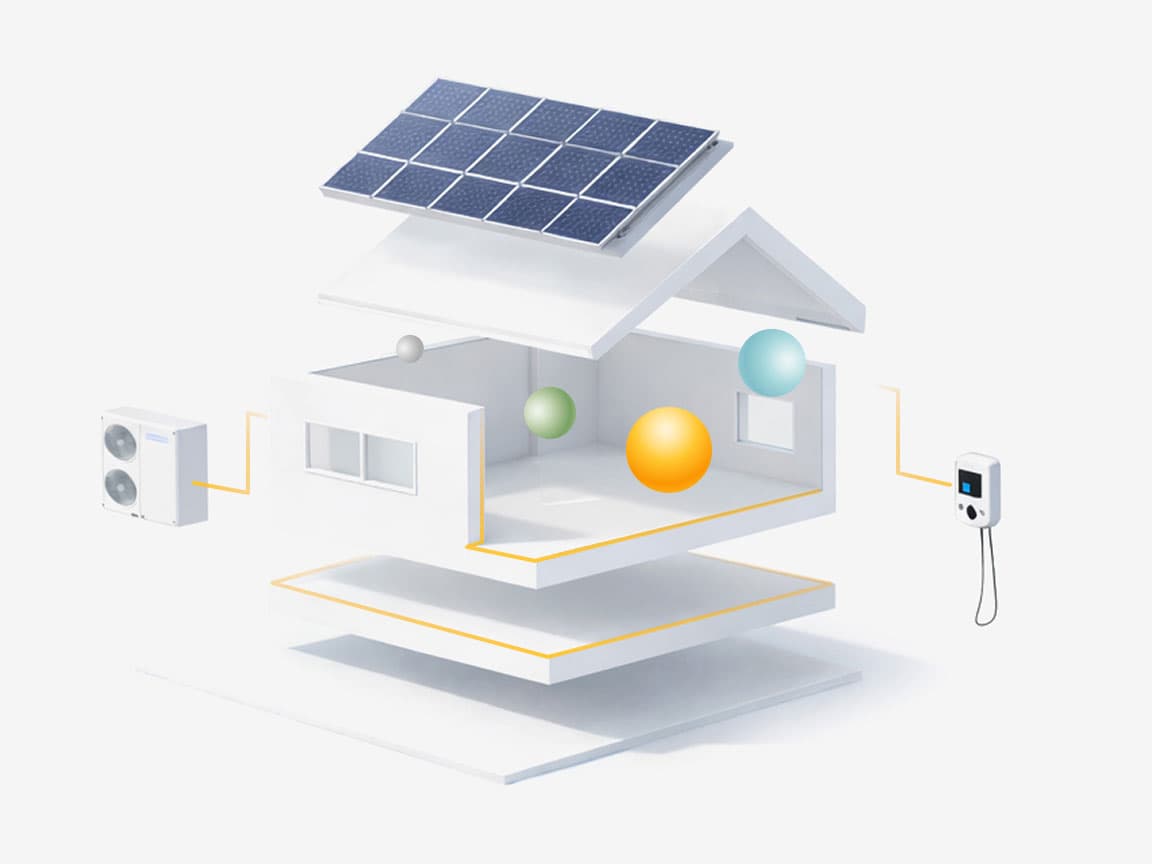
Illustration: plan equipment and supporting work together

Explore incentives with
Solenery AI Advisor
Start a short AI conversation to assess your property and discover which rebates and programs may apply to your property.





What is Solenery?
A short explainer on how Solenery matches your rebates and helps you compare contractor quotes.
Common Questions About Solar in Canada
Answers checked against government and official program pages.
Solenery helps you find relevant programs, understand how to apply and compare solar options. After property confirmation and upgrade selection, you can request installation quotes and compare them as installers respond; local availability varies.
Plan a quote requestService guides, comparisons and program information on this page are public. Enter your full address to begin a property check. An account is needed to continue the property plan; personalized rebate matching requires premium access. This does not apply for a rebate or request quotes.
About personalized matchingThe administrator decides eligibility and stacking. Confirm who submits each application—you or your provider—and obtain any required approval before work. Keep itemized quotes, eligible model evidence, invoices and receipts. Solenery does not automatically apply or reserve funding, and program maxima cannot simply be added together.
Review program conditionsRequest the same scope from each provider: panel and inverter models, layout, production assumptions, roof/electrical work, interconnection and storage scope, plus labour, extras, permits, warranty, exclusions and who prepares rebate documents. Compare confirmed support separately from project cost and repayable loans.
Compare project optionsFor many homes and businesses, yes, but it depends on your electricity rate, your roof and the rebates where you live. NRCan estimates each kW of panels produces about 940 to 1,360 kWh a year across the 24 cities we track, and provincial rebates can cover up to 50% of the cost in BC and 40% in Quebec. Use the public guidance to compare assumptions, then check your property for the available next steps.
Businesses can claim the federal Clean Technology Investment Tax Credit: up to 30% of eligible solar and battery costs for equipment available for use by the end of 2033. Homeowners rely on provincial and utility programs, such as up to $10,000 for solar and batteries in Ontario, $1,000 per kW up to $5,000 from BC Hydro, $1,000 per kW up to 40% of cost in Quebec, and up to $5,000 in Manitoba. The federal Greener Homes Loan closed on Oct 1, 2025.
No. The Canada Greener Homes Loan closed to new applicants on Oct 1, 2025, and the Greener Homes Grant is also closed. Homeowners now rely on provincial and utility solar rebates.
What replaced the Greener Homes Grant and LoanNo. The Clean Technology Investment Tax Credit is for taxable Canadian corporations, so it applies to business and commercial solar, not to solar on your own home. Homeowners should look at provincial and utility rebates instead.
NRCan estimates each kW of south-facing panels tilted at your latitude produces about 1,360 kWh a year in Regina, 1,291 in Calgary, 1,163 in Toronto, 1,073 in Halifax and 1,007 in Vancouver. A 5 kW system in Toronto would produce roughly 5,800 kWh a year. Shade, roof direction and tilt change the result.
Often, yes, but they interact. Government assistance, such as a provincial rebate, can reduce the cost the federal Clean Technology Investment Tax Credit is calculated on, so check the combined value with your accountant. Most provincial programs also cap rebates at a share of the cost, for example 50% for BC Hydro and 40% for LogisVert.
Most utilities credit you for it, but the rules differ by province. In Alberta, systems under 150 kW are credited monthly at your retail rate, or at hourly wholesale prices if you choose, and larger systems at wholesale prices. Ask your utility, or run Solenery's check, to see how credits work at your address.
No. Solenery is a marketplace: it helps you discover potentially relevant incentives, estimates your savings and connects you with vetted local installers so you can compare quotes. Public guides are available before sign-up. Continuing the property plan needs an account; personalized rebate matching requires premium access.
See what solar looks like for your property
Check relevant programs, confirm your property and select upgrades before requesting solar quotes. Compare equipment, scope and price as installers respond; availability varies by area.
Check rebates for your project
Enter your full address to begin a property check. An account is needed to continue the property plan; personalized rebate matching requires premium access. This does not apply for a rebate or request quotes.
Are you a solar installer?
Projects come to you: owners request quotes after seeing their eligible incentives, net cost and payback. Browse projects for free and pay a commission only on the deals you close.
Join the Professionals Network
How We Research This Page
Last updated: .
Every rebate amount, status and deadline on this page was read on the program's official page and is dated next to it. Program amounts and deadlines change. Use each dated source and confirm current terms with the administrator before you apply.
Facts and figures come from government departments, utilities and safety regulators, linked next to each figure and listed here. We don't publish price ranges: costs depend on your home, so we explain what drives them and let contractors quote.
Solenery is a Canadian clean energy platform connecting property owners with incentives and vetted professionals. It doesn't install equipment, issue rebates or submit government applications itself.
Sources
- CRA — Clean Technology Investment Tax Credit
- NRCan — Photovoltaic potential and solar resource maps
- NRCan — Powering Canada Strong (May 2026)
- NRCan — Canada Greener Homes Loan (closed)
- BC Hydro — Solar and battery rebates
- Efficiency Manitoba — Solar rebates
- Save on Energy — Home Renovation Savings
- Save on Energy — Retrofit Program update
- Hydro-Québec — LogisVert
- Government of Alberta — Micro-generation