
Find Licensed HVAC Contractors Across Canada
Compare quotes from vetted HVAC contractors for heat pump installation, furnace replacement and air conditioning. Solenery checks which heat pump rebates your address qualifies for first, so every quote you compare already accounts for them.
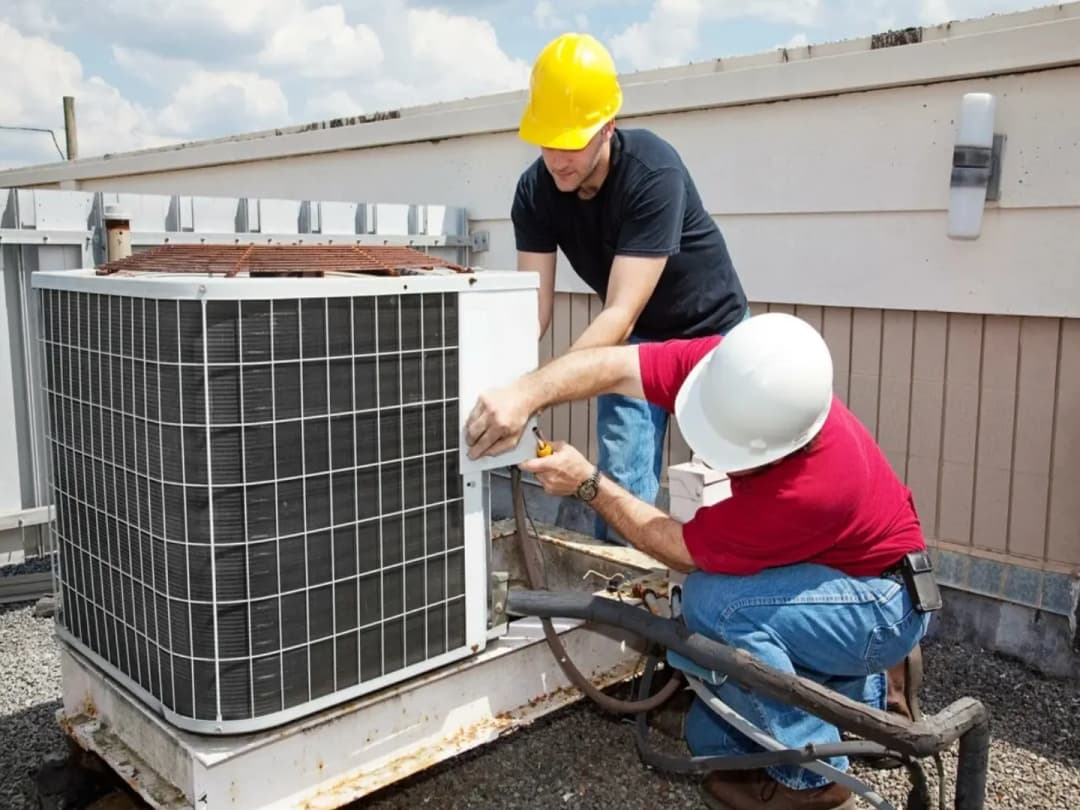
Why the Right HVAC Contractor Matters in Canada
Space heating is about 61% of the energy used in a Canadian home, so your heating system choice affects your energy bills more than any other upgrade.
What a good HVAC contractor gets right
- Sizing from a heat load calculation (CSA F280), not a rule of thumb
- Equipment on NRCan's qualified product list, which Ontario rebates require
- Permits, and a certified gas technician for any gas work
- Rebate paperwork filed correctly and on time
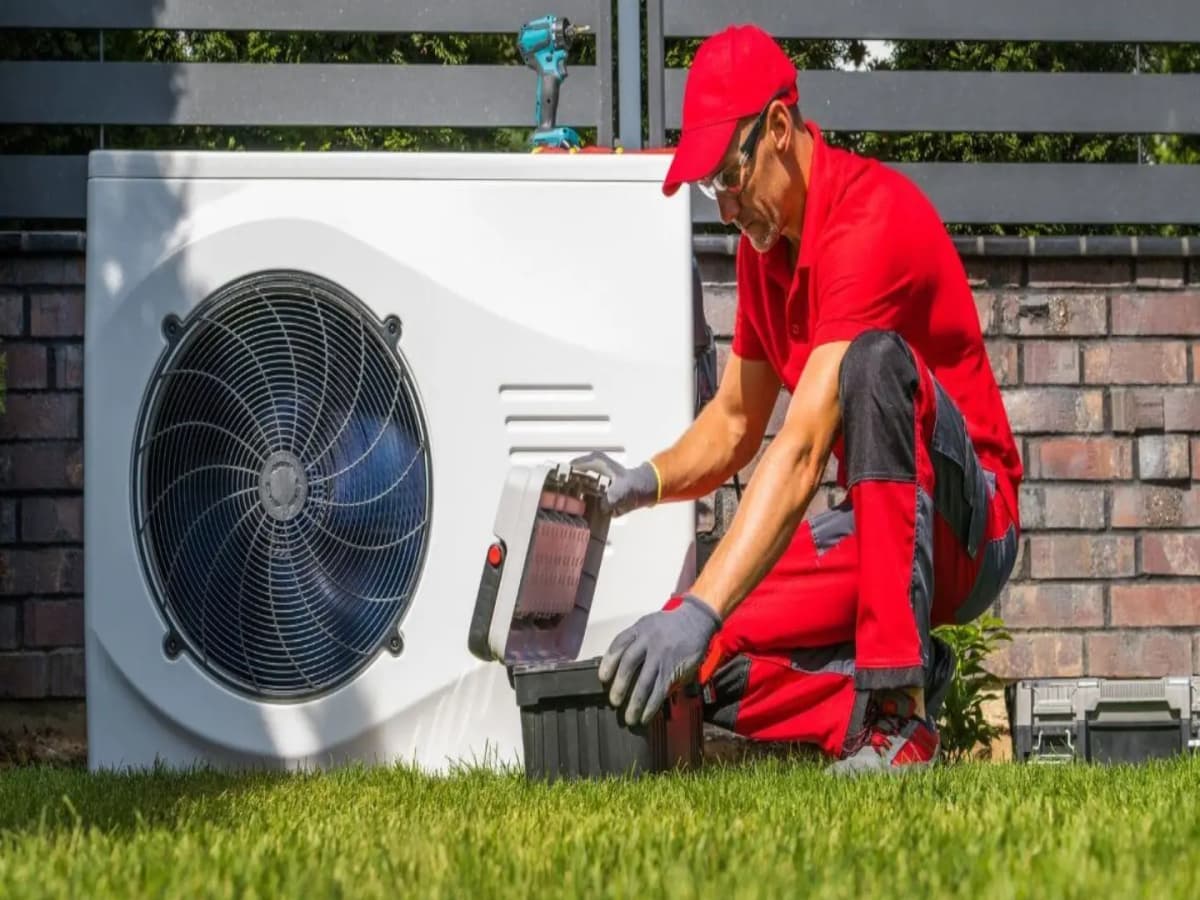
HVAC Services You Can Compare Quotes For
Tell us about your home and get quotes from HVAC contractors near you for:
- Ductless mini-split systems
- Ductwork installation and repair
- Smart thermostat installation
- Seasonal maintenance and tune-ups
Residential HVAC Contractors
For homeowners replacing an old furnace or AC, switching off oil or electric baseboards, or renovating.
Common residential HVAC projects
- Heat pump installation for heating and cooling
- Furnace replacement, including hybrid heat pump + furnace systems
- Central air conditioning installation and replacement
- Annual maintenance and seasonal servicing
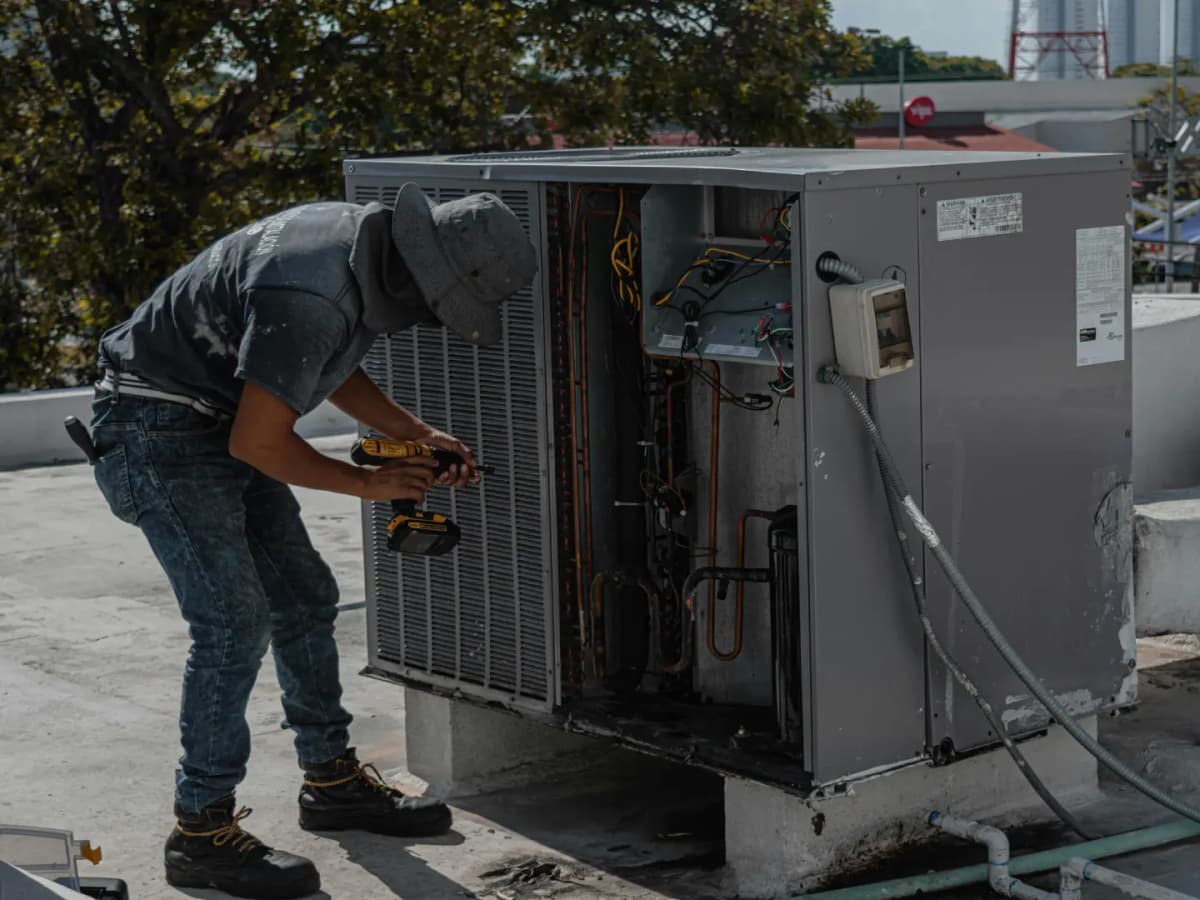
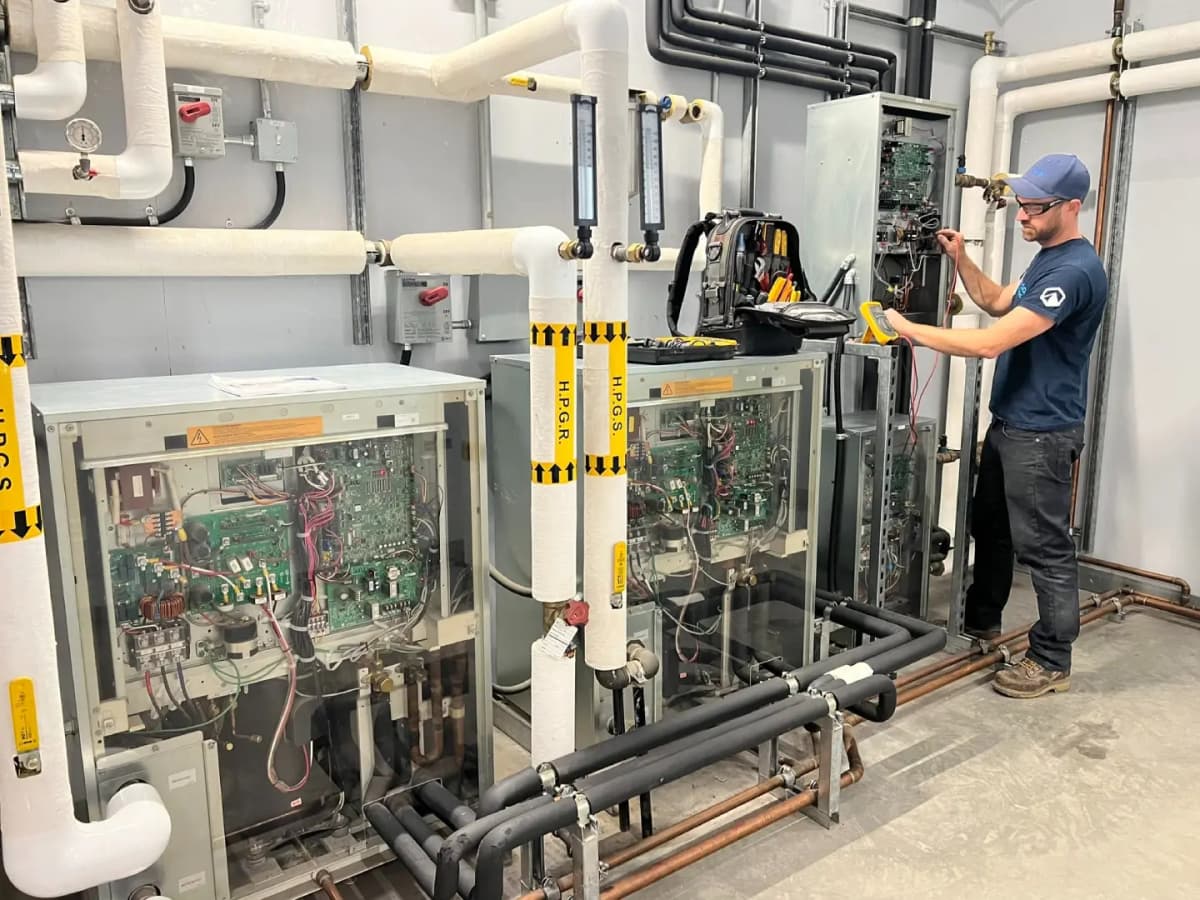
Commercial and Industrial HVAC Contractors
For offices, retail, warehouses and plants, where rooftop units, ventilation and process loads drive the design.
Common commercial and industrial HVAC projects
- Rooftop and split system installation and replacement
- Ventilation and air distribution for large spaces
- Energy-efficient equipment upgrades and controls
- Preventive maintenance programs
Check the technician's certificate matches the equipment size. In Ontario, the TSSA certifies gas technicians: a G2 can work on gas appliances up to 400,000 BTU/h, which covers home furnaces, while larger commercial equipment needs a G1.
What Affects the Cost of a Heat Pump or Furnace?
NRCan puts the average cost to buy and install a heat pump in Canada at $18,400, including electrical panel work and, for oil-heated homes, tank removal. Your price depends mostly on the system type, its size, your ductwork and your electrical service, and provincial rebates of up to $7,500 in Ontario can cover a large share.
- System type. Ground-source systems cost the most because of drilling or trenching, but NRCan says the extra cost can be recovered through energy savings in as little as 5 years.
- Size. A heat load calculation sets the capacity you need. Insulating and air sealing first can shrink it.
- Ductwork. Existing ducts may need changes; homes without ducts can use ductless mini-splits instead.
- Backup heat. In the coldest regions, a furnace or electric backup is often kept or added.
- Electrical capacity. Older 60 A or 100 A services may need a panel upgrade.
- Removal. Taking out the old furnace, and for oil homes the oil tank, adds to the job.
Running costs: NRCan estimates homes fully heated by oil save about $1,500 to $4,500 a year by switching to a heat pump (NRCan). Air-source heat pumps last 15 to 20 years and ground-source systems 20 to 25 (NRCan).
Heat Pump vs Furnace in Canada
A cold-climate air-source heat pump keeps heating at outdoor temperatures down to −30 °C and is up to 3 times as efficient as an oil furnace or boiler, according to NRCan. It also cools in summer. Most Canadian homes keep a furnace or other backup for the coldest days.
| Compared on | Cold-climate heat pump | Standard heat pump | Furnace |
|---|---|---|---|
| Efficiency | Up to 3× an oil furnace or boiler | Up to 2.5× an oil furnace or boiler | Burns fuel, so it can't deliver more heat than the fuel contains |
| Cold-weather heating | Works down to −30 °C | Output drops in deep cold; needs backup sooner | Full output at any temperature |
| Cooling | Yes | Yes | No, needs a separate AC |
| Emissions | Lower than oil everywhere in Canada; lower than gas in BC, MB, ON, QC and NB | Lower than oil | Highest with oil |
| Service life | 15–20 years | 15–20 years | Varies by model and maintenance |
| 2026 rebates | The main target of provincial rebates. See the table | Some programs | Rarely; SaskEnergy pays $325 for a 97% AFUE furnace |
How Should a Heat Pump Be Sized?
A heat pump should be sized from a room-by-room heat load calculation. In Canada that's the CSA F280 standard. NRCan also publishes an air-source heat pump sizing guide. An oversized unit cycles on and off and wastes energy. An undersized one leans on backup heat all winter.
Some programs reward doing it properly. Efficiency Manitoba, for example, pays a supplier bonus when a rebate application includes an F280 calculation. Ask every contractor quoting your job which method they used. The NRCan Air-Source Heat Pump Sizing and Selection Guide is free to read. Insulating and air sealing first can shrink the size, and price, of the unit you need.
HVAC Rebates by Province (2026)
The federal Greener Homes Grant and Loan are closed, and the Oil to Heat Pump Affordability program stopped taking applications on July 31, 2026. In 2026 heat pump money comes mostly from provinces: up to $7,500 in Ontario, up to $5,000 in Nova Scotia and up to $22,000 for oil homes in Newfoundland and Labrador.
The Greener Homes Grant is closed to new applicants, the Greener Homes Loan closed on Oct 1, 2025, and the Oil to Heat Pump Affordability program stopped taking applications on July 31, 2026. What replaced them: the no-cost Canada Greener Homes Affordability Program for income-qualified households, and the provincial programs below.
Federal programs
| Program | Amount | Who qualifies | Status |
|---|---|---|---|
| Canada Greener Homes Affordability Program (CGHAP) | No-cost heat pump installs and related retrofits | Low-to-median-income homeowners and tenants | Open Open in BC, Manitoba, Nova Scotia, PEI and Quebec through provincial partners |
| Oil to Heat Pump Affordability Program (OHPA) | Up to $10,000 to switch from oil to a heat pump | Homeowners heating with oil | Closed Intake closed July 31, 2026. Approved applicants must submit receipts by Jan 31, 2027 |
| Canada Greener Homes Loan | Interest-free retrofit loan (closed) | Homeowners | Closed Closed. The last day to apply was Oct 1, 2025 |
| Canada Greener Homes Grant | Grant after an EnerGuide evaluation (closed) | Homeowners, after an EnerGuide evaluation | Closed Closed to new applicants |
Provincial programs
| Program | Province | Amount | Who qualifies | Status |
|---|---|---|---|---|
| Home Renovation Savings Program (Save on Energy / Enbridge Gas) | Ontario | Cold-climate air-source heat pump up to $7,500; ground-source heat pump up to $12,000. Units must be on NRCan's qualified product list | Ontario homeowners heating with electricity, natural gas, oil, propane or wood | Open Open. No end date on the official page |
| CleanBC Better Homes - Home Renovation Rebate Program (HRR) | British Columbia | Heat pumps up to $4,000 | BC Hydro residential customers. Income-qualified households apply to the Energy Savings Program instead | Open Open |
| Hydro-Québec LogisVert | Quebec | Heat pumps $50 per 1,000 BTU/h at −8 °C, or $120 for cold-climate models | Hydro-Québec residential customers | Open Open |
| Efficiency Manitoba Air Source Heat Pump Rebate | Manitoba | Cold-climate air-source heat pump: $2,000 ducted, $1,500 ductless | Manitoba homeowners | Open Open |
| SaskEnergy Residential Equipment Replacement Rebate | Saskatchewan | $325 for a furnace rated 97% AFUE or higher; $750 for a boiler rated 95% or higher | SaskEnergy residential customers | Open Open. Terms updated Aug 17, 2026 |
| Efficiency Nova Scotia Home Energy Assessment | Nova Scotia | Up to $5,000 in rebates for the upgrades the assessment recommends, including heat pumps | Nova Scotia homeowners. The $199 assessment fee is waived for moderate-income households | Open Open |
| takeCHARGE Oil to Electric Incentive | Newfoundland and Labrador | Up to $22,000 to switch from oil or propane to electric heat, such as a heat pump, depending on income and household size | Homeowners heating with oil or propane. Income-qualified households get more | Open Open. No closing date set |
How to Choose an HVAC Contractor
Choose an HVAC contractor who sizes the system from a heat load calculation, installs equipment on NRCan's qualified product list, pulls the permits, and uses certified gas technicians for gas work. Compare at least three written quotes, and check the model numbers against your rebate program before you sign.
- Ask for the heat load calculation (CSA F280) behind the proposed size.
- Check the exact model is on NRCan's qualified product list. Ontario's rebates require it.
- Gas appliances need a certified gas technician. In Ontario that is a TSSA G2 for home furnaces.
- Compare quotes line by line: equipment model, ductwork changes, backup heat, removal of old equipment and permit fees.
- Red flags: sizing by square footage alone, no written quote, pressure to sign the same day, or rebate amounts that don't match the official program page.
- Moving to a heat pump may also need an electrical panel upgrade, and insulating and air sealing first can let you buy a smaller unit.
From Quote to Rebate: How a Project Works
Solenery is a marketplace, not a contractor. We check your incentives first, then help you compare quotes from vetted local pros, so you choose the right HVAC contractor with the full cost in view.
- Step 1
Check rebates first
Enter your address to see your programs. Some, like Nova Scotia's and Ontario's larger rebates, need an energy assessment before any work starts. - Step 2
Heat load calculation and quotes
Each contractor visits, works out the heating load and quotes a specific model. Ask for the calculation in writing. - Step 3
Check the model
Confirm the quoted model is on NRCan's qualified product list and meets your program's rules before you sign. - Step 4
Permits and installation
The contractor takes out any permits, installs the system and sets it up. - Step 5
Inspection
Gas and electrical work is inspected by the municipality or provincial safety authority. - Step 6
Claim your rebate
Submit invoices, model numbers and any post-install assessment before the program deadline.
Planning More Than One Upgrade?
HVAC Contractor FAQs
NRCan puts the average cost to buy and install a heat pump in Canada at $18,400, including electrical panel work and, for oil-heated homes, oil tank removal. The price depends on the system type, size, ductwork and electrical capacity. Provincial rebates can cover a large share, for example up to $7,500 for a cold-climate air-source heat pump in Ontario.
Yes. Cold-climate air-source heat pumps keep heating at outdoor temperatures down to −30 °C and are up to 3 times as efficient as oil heating, according to NRCan. Most homes keep a backup heat source for the coldest days.
The federal Greener Homes Grant and Loan are closed, and the Oil to Heat Pump Affordability program closed to new applicants on July 31, 2026. Provincial programs are now the main route: up to $7,500 for a cold-climate air-source heat pump in Ontario, up to $5,000 through Nova Scotia's assessment program, and up to $22,000 for oil and propane homes in Newfoundland and Labrador. Income-qualified households in BC, Manitoba, Nova Scotia, PEI and Quebec can get no-cost retrofits through the Canada Greener Homes Affordability Program.
The Canada Greener Homes Grant is closed to new applicants, and the Greener Homes Loan closed on Oct 1, 2025. Income-qualified households can use the Canada Greener Homes Affordability Program, and everyone else should look at provincial and utility rebates.
NRCan says air-source heat pumps last 15 to 20 years and ground-source heat pumps about 20 to 25 years. The ground loop itself can last around 75 years, so a replacement ground-source system usually reuses it.
From a heat load calculation, which in Canada is the CSA F280 standard. It accounts for your home's insulation, windows and air leakage room by room. Sizing by square footage alone often leads to an oversized, inefficient system.
Sometimes. A heat pump adds a large electrical load, and homes with older 60 A or 100 A service may need an upgrade. An electrician decides from a load calculation.
Once a year. Service furnaces before the heating season and heat pumps and AC before summer. Regular maintenance keeps efficiency up, and many manufacturers require it to keep the warranty valid.
Get Free HVAC Quotes
Enter your address to see the heat pump rebates you qualify for and compare quotes from vetted HVAC contractors near you.
How We Research This Page
Last updated: .
Every rebate amount, status and deadline on this page was read on the program's official page and is dated in the table caption. We re-check each program monthly, because amounts and deadlines change often. Always confirm with the program before you apply.
Facts and figures come from government departments, utilities and safety regulators, linked next to each table and listed below. We don't publish price ranges: costs depend on your home, so we explain what drives them and let contractors quote.
Solenery is a marketplace. It connects homeowners with contractors and doesn't install anything itself.
Sources