Skip to content
Home solar across Canada

Home Solar in Canada: Size It, Compare It, Claim the Rebate

Enter your address to see the solar rebates, net-metering rules and yearly output for your home, then compare quotes from vetted installers with the incentives already counted.

Free · No sign-up · See your rebates in seconds

  • NRCan output for 24 cities
  • Rebates read on official pages
  • Free, no sign-up
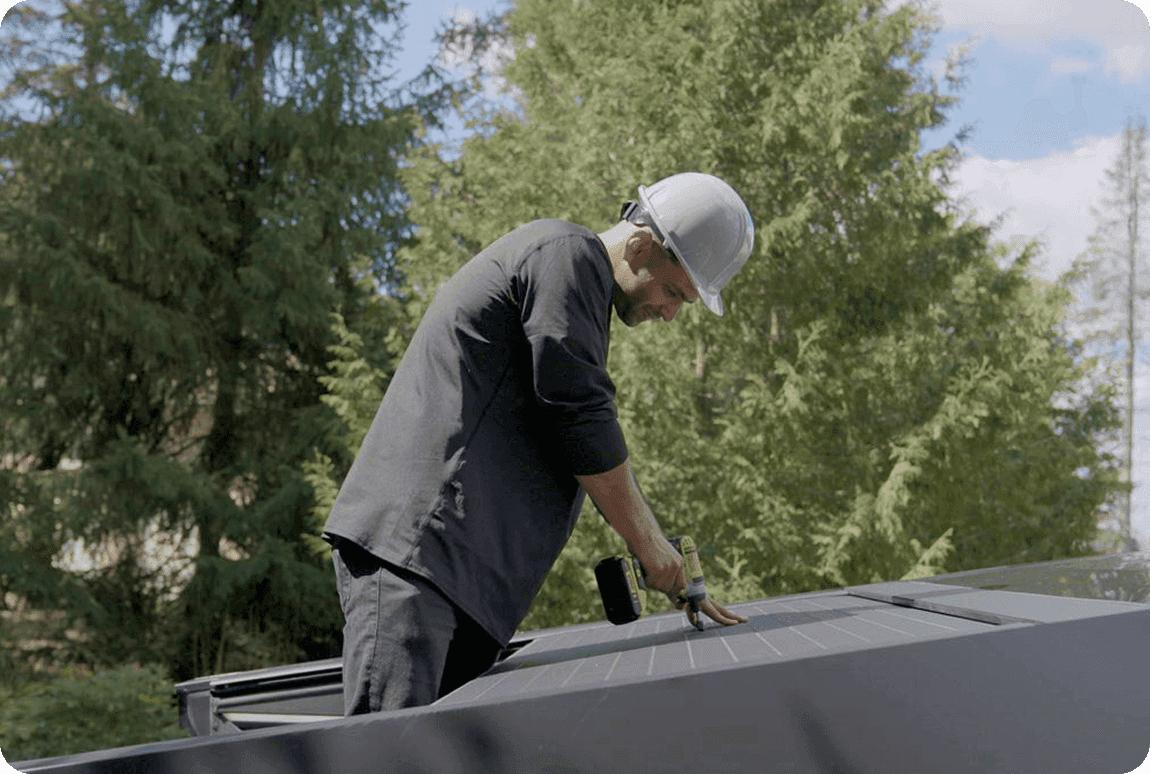
Rooftop solar panels on a Canadian homeUp to $10,000 in Ontario
Rebates checkedRe-checked monthly
a year per kW of panels, St. John's to Regina (NRCan)
937–1,360 kWh
Ontario solar and battery rebate
Up to $10,000
BC Hydro and Quebec, up to $5,000 and 40% of cost
$1,000 / kW
federal Greener Homes Loan, since Oct 1, 2025
Closed

How Big a Solar System Does My Home Need?

Quick answer

Divide your yearly electricity use by the yearly output per kW where you live. NRCan's figures run from 937 kWh per kW in St. John's to 1,360 in Regina. A home using 9,000 kWh a year in Toronto, at 1,163 kWh per kW, needs roughly a 7.7 kW system.

  • Start with your bills

    Add up 12 months of kWh from your electricity bills. Use the whole year: heating, cooling and any EV or heat pump you plan to add.
  • Roof direction and shade

    NRCan's output assumes south-facing panels tilted at your latitude. Shade, roof direction and tilt change your result, so ask installers for a site-specific estimate.
  • Don't oversize

    In several provinces exports earn less than the retail rate, and credits carry for limited periods (12 months in Ontario; Quebec's surplus bank resets every 24 months). Size to your own use unless a quote shows otherwise.
  • Plan for new loads

    A heat pump or EV charger raises your use. If one is coming within a few years, tell installers so the inverter and panel space allow for it.
Should I Take the Ontario Rebate or Net Metering?

Quick answer

In Ontario you choose. The Home Renovation Savings solar rebate pays $1,000 per kW, up to 50% of cost and $5,000, but only for load displacement: recipients can't also sign a net-metering agreement with their utility. Size the system for your own use if you take the rebate.

The rebate fits if

  • You use most of what you generateDaytime use, or a battery, so little is exported.
  • You want money back at installThe rebate lowers the upfront cost directly.

Net metering fits if

  • You export a lotCredits carry to later bills for up to 12 months and offset energy used.
  • A larger system makes senseYour local distributor sets size limits, so ask before you size up.

Do I Need a Battery With Solar?

Quick answer

No. A battery stores your own solar for evenings and outages, but it adds cost, and you can go solar without one. Ontario pays $300 per kWh up to $5,000 and only with new solar. BC Hydro pays $500 per kWh up to $1,500, or $5,000 if you join Peak Saver.

  • Ontario

    Battery rebate up to $5,000, and the battery must be paired with a new solar system and sized for it.
  • British Columbia

    BC Hydro: $500 per kWh up to $1,500, or $5,000 if enrolled in Peak Saver. Capped at 50% of cost.
  • Quebec

    LogisVert's solar rebate doesn't cover batteries.
  • Elsewhere

    We list a battery rebate only where we have read it on an official page.

Lease, PPA or Buy: What to Ask Before You Sign

Quick answer

With a lease or power purchase agreement you pay monthly instead of buying the system, and the company usually owns it. Rebates often go to the owner, so ask who claims what. Ontario's rebate, for example, goes to the homeowner who pays for the purchase and installation.

Ask the provider

  • Who owns the system and claims the rebate?
  • How much does the payment rise each year?Get the escalator in writing and total it over the term.
  • What happens if I sell the home?Ask whether the contract transfers, and what it costs to end it.
  • Who maintains and insures it, and what's the end of term?

Be cautious if

  • You're pressed to sign the same day
  • The quote leaves out the escalator or fees
  • You're told you'll get a rebate with no program page to read
Checked against official pages · Sept 23, 2026

Home Solar Rebates by Province

Open programs for homeowners, read on each official page. Full table, including businesses, is on the solar hub.

Source: each program's official page (linked) · as of Sept 23, 2026. Amounts change often, so confirm on the official page before you apply.
ProgramProvinceForAmountStatus
BC Hydro solar and battery rebates (homes)British ColumbiaHomeowners

Homeowners with a BC Hydro residential account

Solar: $1,000 per kW, up to $5,000. Battery: $500 per kWh, up to $1,500 ($5,000 if enrolled in Peak Saver). Each capped at 50% of costOpen

Open while funding lasts

Efficiency Manitoba solar rebateManitobaHomeowners and businesses

Manitoba homes and businesses

Homes: up to $5,000. Businesses: $0.75 per wattOpen

Open

Home Renovation Savings (Save on Energy)OntarioHomeowners

Owners of single detached, semi-detached, row, townhome or mobile homes connected to Ontario's grid

Solar: $1,000 per kW, up to 50% of cost and $5,000. Battery: $300 per kWh, up to 50% of cost and $5,000, and only with new solar. Taking the rebate rules out net meteringOpen

Open

Hydro-Québec LogisVert (solar)QuebecHomeowners

Homes and residential buildings of up to 19 units, with panels installed on or after June 30, 2025

$1,000 per kW, up to 40% of the cost to buy and installOpen

Open. Needs Hydro-Québec approval before installation

What Your Utility Pays for Extra Solar Power

Whether exports are credited at the retail rate, banked, or bought at a lower price can matter more to payback than the rebate. These are the rules we have read on the utility or regulator page.

Source: each utility or regulator page (linked) · as of Oct 15, 2026. Terms change with rate cases, so confirm with your utility before you size a system.
Province and utilityHow exports are creditedSystem size
British Columbia: BC HydroExports earn a fixed credit of 10¢ per kWh, applied to the current bill and good only against energy charges. The older net metering schedule (1289) is closed to new customers100 kW AC inverter capacity
Alberta: Your electricity retailerSystems under 150 kW are credited monthly at your retail rate, or at hourly wholesale prices if you install a suitable meter. Systems of 150 kW and above are credited at the hourly wholesale price. The rate is agreed with your retailer5 MW, sized to meet your own electricity needs
Saskatchewan: SaskPowerSaskPower posts the credit rate for exports on its net metering page and credits it against energy charges only. Check the posted rate before you size a system100 kW
Manitoba: Manitoba HydroExports earn the excess energy price of 7.173¢ per kWh until March 31, 2027, applied against other charges on your monthly bill. This is not the retail rateUnder 100 kW. Generators of 100 kW or more are priced case by case
Ontario: Your local distribution companyExports earn a credit that carries forward to later bills for up to 12 months. Credits offset energy used, not fixed monthly chargesSet by your local distributor and what the local grid can host
Quebec: Hydro-QuébecExports go into a surplus bank that resets every 24 months. A balance left at reset is credited to your bill at the average cost of electricity supply. The system access charge is not credited1,000 kW, and no more than your estimated energy need

How to Finance Solar

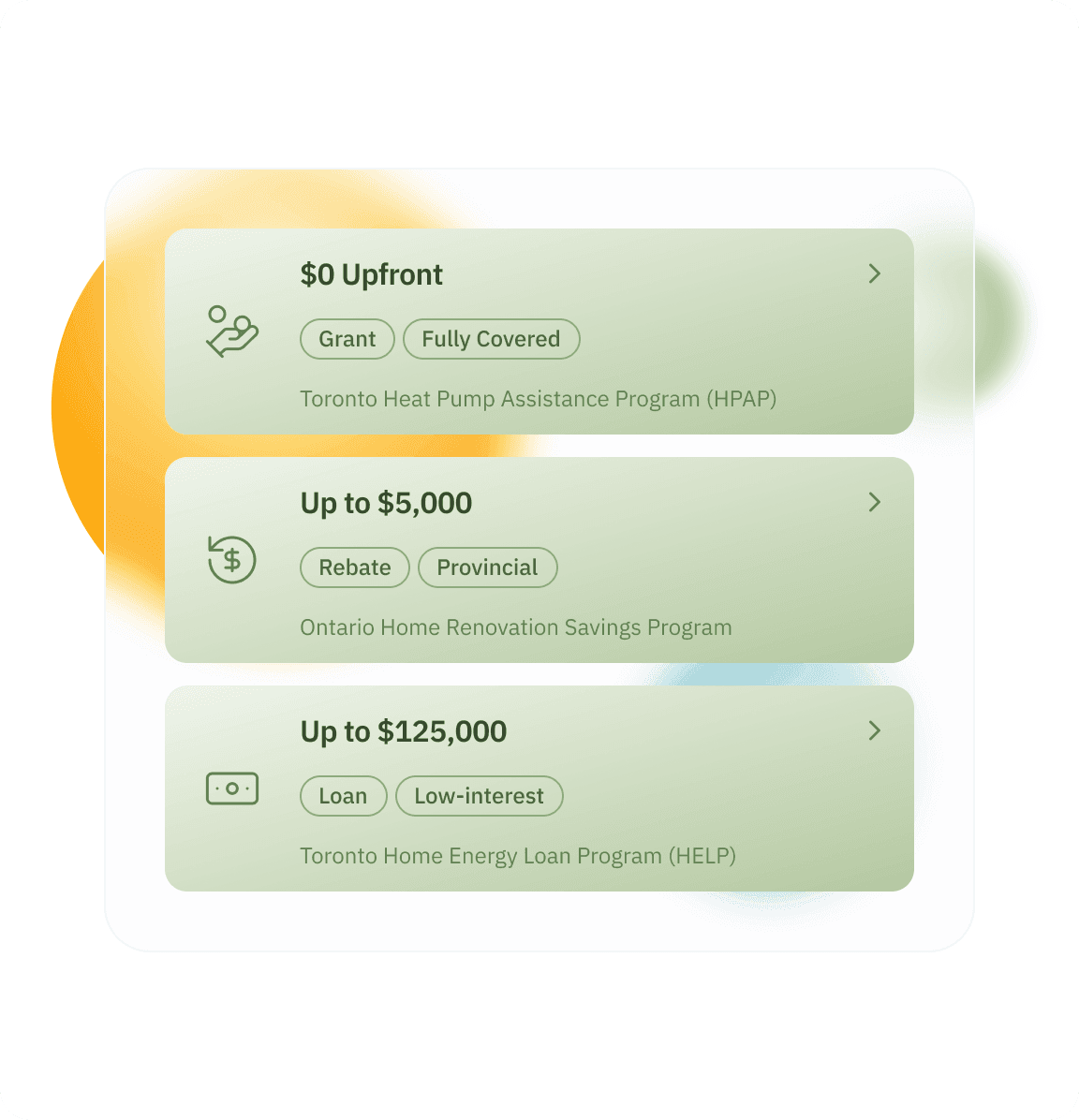
Some cities and utilities lend for solar and collect the repayment on your property tax or utility bill. A loan has to be paid back with interest, so check the rate and the fees first.

Toronto, ONOpen

Home Energy Loan Program (HELP)

Most you can borrow
The lesser of $125,000 or 10% of the property's assessed value
Rate
Published rates were valid to Sept 30, 2026: 3.34% (5 years), 4.01% (10), 4.46% (15) and 4.75% (20), plus a 2% administration fee. The page still showed those rates on Oct 15, 2026, so confirm the current ones
Term
5, 10 or 15 years. 20 years for windows, heat pumps, solar and geothermal only
Repaid through
Property tax bill, in 11 monthly instalments a year

Open to applicants

Ottawa, ONOpen

Better Homes Loan

Most you can borrow
The lesser of $125,000 or 10% of the property's assessed value, and at least $10,000
Rate
4.33% fixed, plus a 4% administration fee added to the loan
Term
20 years
Repaid through
Property tax bill, as a Local Improvement Charge. Borrowers enrol in the City's pre-authorized debit plan

Open to applicants

Manitoba Hydro customers, MBOpen

Home Energy Efficiency Loan

Most you can borrow
$12,500 per residence. Solar PV is financed at $3,000 per kW installed, to a maximum of $20,000
Rate
6.20% on approved credit for the first 5 years, then market rates
Term
Up to 5 years. Up to 15 years for heat pumps, furnaces, boilers and solar
Repaid through
Monthly payment on your Manitoba Hydro bill

Open. Detached or semi-detached homes. Approval is needed before any work starts

Saskatoon, SKOpen

Home Energy Loan Program (HELP)

Most you can borrow
$40,000, or up to $60,000 with proof the project cuts home energy use by 50% or more. Loans start at $1,000
Rate
The page lists these rates for 2026: 3.24% (5 years), 4.03% (10), 4.68% (15) and 4.83% (20). It gives no effective date, so confirm the current ones
Term
5, 10, 15 or 20 years
Repaid through
Property tax bill. Early repayment has no penalty, and the loan stays with the property if you sell

Open to applicants. $750 administration fee, waived with proof of low income. Solar PV panels and inverters are on the eligible list

Participating Alberta municipalities, incl. Calgary, Edmonton and LethbridgeOpen

Clean Energy Improvement Program (CEIP)

Most you can borrow
Set by each municipality's bylaw
Rate
Set by each municipality. Ask yours for the current rate
Term
Each municipality's bylaw sets the repayment period
Repaid through
Property tax bill

Calgary, Edmonton and Lethbridge are on the participating list. Red Deer is not. Confirm that solar PV is covered by your municipality's bylaw

Source: each loan's official page (linked) · as of Oct 5, 2026. Loans are repaid with interest, and they're separate from the rebates above. Other cities and utilities run similar programs: enter your address to see the ones near you.

From Quote to Rebate: How a Project Works

Solenery is a marketplace, not a contractor. We check your incentives first, then help you compare quotes from vetted local pros, so you choose the right solar installer with the full cost in view.

  1. 1

    Enter your address

    Anywhere in Canada. Solenery checks federal, provincial and utility programs against your property automatically.

  2. 2

    See your estimate

    Eligible incentives, estimated savings and payback, based on your roof, electricity use and location.

  3. 3

    Compare vetted installers

    Get quotes from local installers. For business projects, ask whether they meet the federal labour requirements that decide a 30% or 20% tax credit.

  4. 4

    Install and claim

    Most rebates need approval or documents before and after installation. Solenery helps you sequence the applications.

Solenery listing the incentive programs matched to an address

Step 1 in Solenery: the programs matched to your address

What is Solenery?

A short explainer on how Solenery matches your rebates and helps you compare contractor quotes.

Home Solar Questions

Answers checked against government and official program pages.

It depends on system size, roof, equipment and installer, so Solenery doesn't publish a price range. Get at least three quotes, compare the price per watt, and ask each installer to show the rebate and any financing on the quote.

No. The Canada Greener Homes Loan closed to new applicants on Oct 1, 2025, and the Greener Homes Grant is closed too. Home solar money now comes from provinces and utilities.

What replaced Greener Homes

NRCan estimates each kW of south-facing panels tilted at your latitude makes about 937 kWh a year in St. John's, 1,163 in Toronto, 1,291 in Calgary and 1,360 in Regina. Shade and roof direction change the result.

No. Recipients of the Home Renovation Savings solar rebate aren't eligible for a net-metering agreement with their utility. You choose one or the other.

It depends on your utility. Ontario credits carry forward up to 12 months, Quebec keeps them in a surplus bank that resets every 24 months, Manitoba Hydro pays a set excess price under 100 kW, and BC Hydro pays a fixed 10 cents per kWh. The table above lists each rule and its source.

Usually, yes. Ontario's rebate requires you to own the home and be the person paying for the purchase and installation. BC Hydro's rebate needs a BC Hydro residential account. Check each program's rules before you sign a lease.

No. Solenery is a marketplace: it checks which incentives your home qualifies for and connects you with vetted local installers so you can compare quotes. Using it is free, with no obligation.

See your home's solar numbers

Enter your address for the rebates, net-metering rules and yearly output that apply to your home, then compare quotes from vetted installers.

Free · No sign-up · No obligation

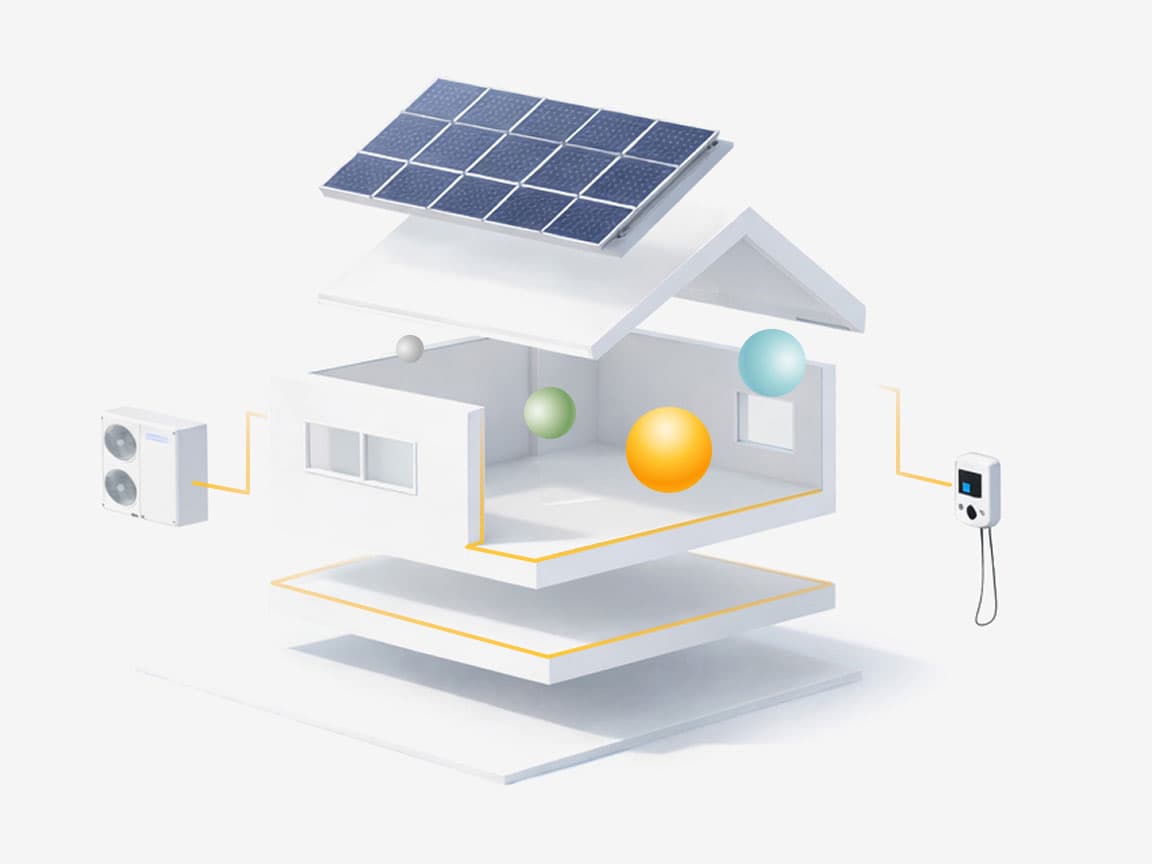
Cutaway illustration of a home with a heat pump and solar panels

Are you a solar installer?

Homeowners on this page are planning their projects now. Join Solenery Pro free and quote on projects in your area.

Join Solenery Pro free
Clean energy installer at work

How We Research This Page

Last updated: .

Every rebate amount, status and deadline on this page was read on the program's official page and is dated next to it. We re-check each program monthly, because amounts and deadlines change often. Always confirm with the program before you apply.

Facts and figures come from government departments, utilities and safety regulators, linked next to each figure and listed here. We don't publish price ranges: costs depend on your home, so we explain what drives them and let contractors quote.

Solenery is a marketplace. It connects homeowners with contractors and doesn't install anything itself.