
Solar Energy
Home Energy Upgrade Payback: Simple and Discounted Methods
Calculate home energy upgrade payback with a clear baseline, net annual benefit and simple...
4 min

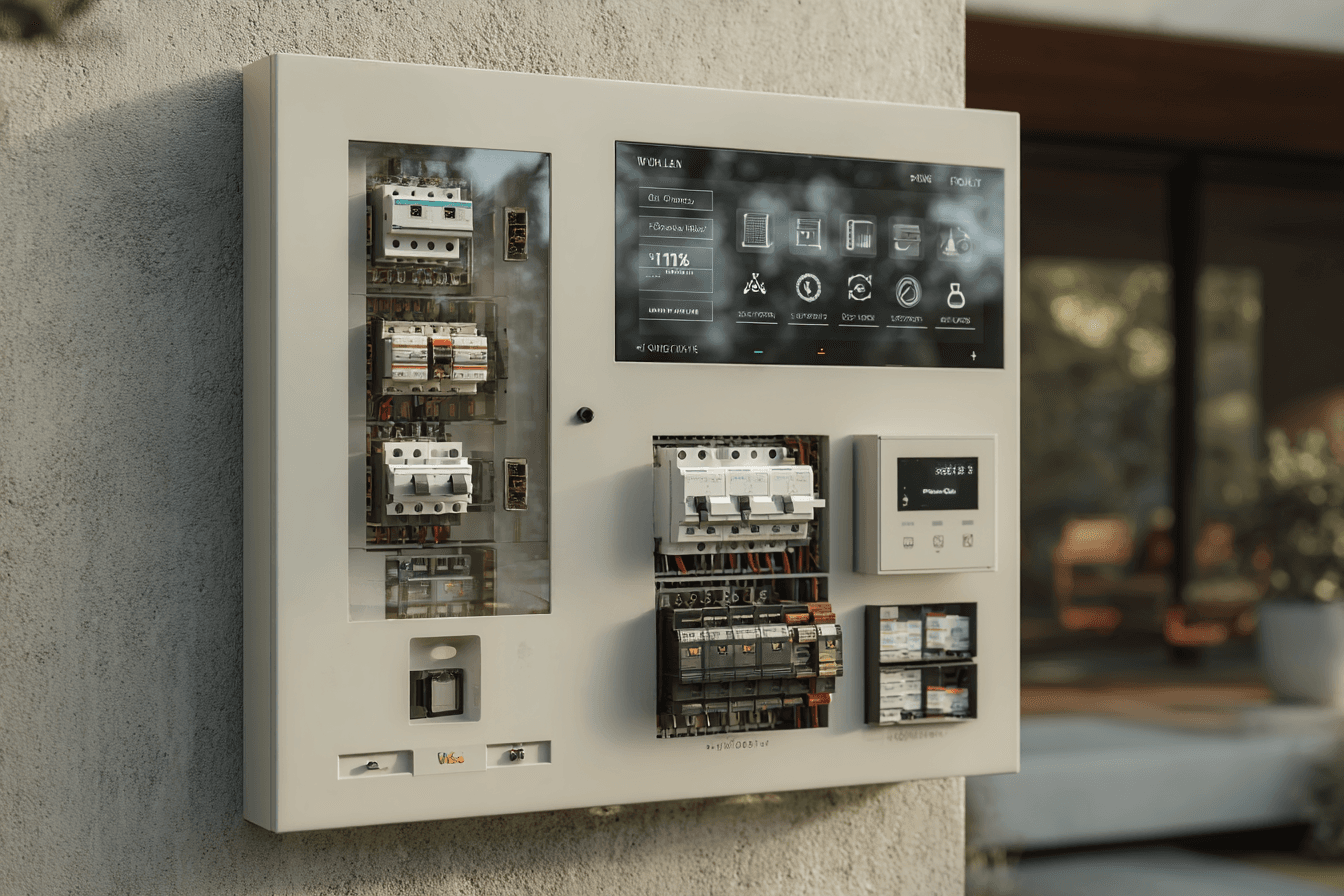
Build an integrated home energy control plan with supported interfaces, a rule register, clear owner overrides and installer-verified failure responses.
An integrated home energy control plan should start with a Canadian household’s specific need, then identify the measurements, supported controls and safe operating limits. Home energy management brings those functions together. It can help coordinate heating, vehicle charging and solar, but a dashboard alone does not make a home net zero or prove that electrical capacity is adequate.
A monitor reports energy use. A scheduling controller changes when a device runs. A professionally designed load-management system can manage specific electrical loads within an approved installation. A smart panel may combine some functions, but the details depend on the product and supported equipment.
Write down the problem first: understanding overnight use, coordinating EV charging, managing a limited service or prioritizing backup loads. Buying every feature at once can add complexity without solving that problem.
Ask the installer which equipment can communicate, what data is measured directly and what is estimated. Check whether functions depend on cloud access, paid subscriptions or proprietary hardware. Find out what continues to work if internet service is unavailable or a supplier stops supporting the product.
For scheduling, compare the home's actual tariff and export arrangement. In Ontario, for example, OEB net-metering guidance distinguishes consumption-related credits from other charges. “Use all solar immediately” and “always charge overnight” are not universally interchangeable money-saving rules.
Have a qualified electrical contractor assess service capacity, approved equipment and required permits. A consumer automation rule must not be treated as a substitute for electrical protection or a compliant load-management design. Do not use general smart plugs to switch high-power fixed equipment unless the equipment and installation explicitly support it.
For backup, define essential loads and confirm how the battery, inverter and transfer equipment work together. A monitoring app cannot itself supply electricity during an outage.
| Use case | Rule to define with the installer | Acceptance question |
|---|---|---|
| EV charging | Preferred charging period and required energy by departure. | Can the approved system meet the vehicle need while respecting electrical limits? |
| Heating or cooling | Permitted schedule and household comfort requirements. | Does it preserve the documented equipment and backup strategy? |
| Solar and storage | Supported priorities under the actual utility arrangement. | Are measurements and controls appropriate to the installed configuration? |
| Backup priorities | Which loads the designed backup system supports. | Do equipment, capacity and transfer arrangements match that purpose? |
Each row needs confirmed interfaces and responsibilities. Record the trigger, permitted owner override, failure response, data dependency and person who can change technical settings. A feature name in an app does not answer all those questions.
Technical Safety BC’s EV energy-management bulletin illustrates the equipment, load-calculation and safe-state questions behind a regulated charging arrangement. That is a BC technical example, not approval of a consumer automation rule elsewhere.
Start with one measurable goal and document the starting settings. Test normal operation, manual override and failure behaviour with the installer. Review energy use and comfort after commissioning rather than assuming a percentage saving.
NRCan's guidance on standby power also reminds buyers that connected devices consume energy. Choose controls that solve a clear need and remain understandable to everyone living in the home.
Ask the delivery team to verify normal operation, permitted overrides and failure responses through its approved commissioning procedure. Do not disconnect safety or backup systems as a household experiment. Keep the resulting settings and service instructions with the rule register.
Give household users a clear explanation of the controls they may use and the service contact for an unexpected response. Review the register when a vehicle, tariff, heating system or software arrangement changes. The useful result is a coordinated set of rules that remains supportable, rather than a dashboard whose behaviour nobody can explain.
Calculate home energy upgrade payback with a clear baseline, net annual benefit and simple...

Assess Ottawa winter solar production with a monthly evidence sheet covering snow assumptions,...

Check net-zero building code claims against the locally applicable code, defined performance...