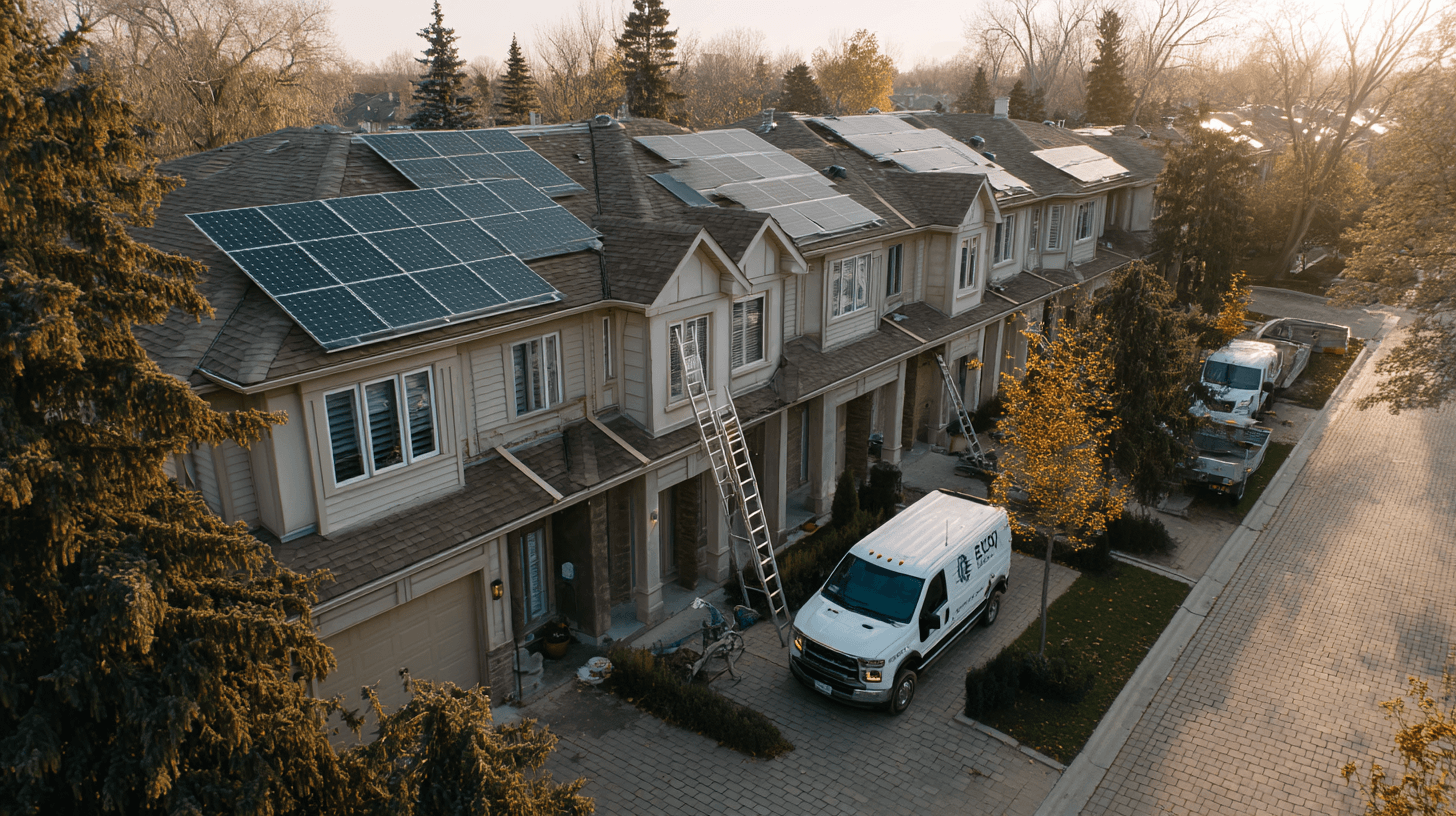
Business Operations
NGO Partnership Delivery Formats: Five Scoped Contributions for Energy Vendors
Compare five NGO partnership delivery formats for clean energy vendors, with defined outputs,...
3 min


Turn a clean energy demonstration into a reviewable proposal with a worksheet for objectives, estimates, alternatives, dependencies and the next decision.
A clean energy demo-to-proposal worksheet should translate what the buyer saw into a scope and decision they can review later. A demonstration should help a buyer decide what to investigate or approve next. For solar and HVAC projects, the most useful presentation connects the building’s needs to a proposed scope and shows what remains uncertain. It should not imply that a screen animation is proof of performance.
Ask whether the meeting is for initial feasibility, comparison of options or approval of a final scope. Invite the people responsible for technical review, operations and budget. A detailed equipment presentation may be premature when the owner has not decided whether to replace the roof first.
State the question the meeting will answer and the evidence that will be available. Keep unresolved design or utility conditions visible.
For solar, distinguish system capacity, estimated generation and bill impacts. Those are different quantities. For HVAC, explain the assessment inputs, distribution approach and how the design addresses the stated comfort or operating problem.
Show alternatives on a consistent basis: the same study period, energy-price assumptions, maintenance treatment and financing approach. If one scenario assumes an incentive, label it conditional and also show the project without that benefit. A public calculator cannot establish property-specific eligibility; Solenery’s personalized discovery and address matching remain within the premium property flow.
Include equipment, scope, exclusions, design responsibilities, approval dependencies, payment milestones, expected disruptions, warranties and service arrangements. Explain what would trigger a change order. The document should remain useful when forwarded to someone who missed the demonstration.
Use real project photographs only with permission. If including performance claims, retain their supporting evidence. Canada’s Competition Bureau explains that product performance claims require adequate and proper testing; attractive graphics do not replace support. Performance-claim guidance.
| What came up in the meeting | What belongs in the proposal | Review needed |
|---|---|---|
| Owner wants a particular comfort or energy outcome. | Stated objective and assessed baseline. | Confirm the observation and relevant design inputs. |
| A graphic shows an estimated result. | Estimate, units, assumptions and limitations. | Technical reviewer checks the model and claim. |
| Buyer asks about an alternative. | Comparable scope and relevant cost/operating differences. | Use consistent inputs and label missing information. |
| Site or approval question remains open. | Dependency, owner and effect on scope or timing. | Responsible person resolves it before the affected commitment. |
| A next step is discussed. | Specific review, authorization or assessment requested. | Confirm who can decide and what evidence they need. |
In a fictional meeting, a contractor shows a monitoring dashboard and the buyer asks whether it proves the proposed system’s future bill saving. The proposal should explain what the displayed data represents and provide the separate basis for any project estimate. A sample screen is neither the buyer’s measured history nor proof of their future consumption.
If the display uses a demonstration property or synthetic data, identify it accurately. Do not allow a screenshot to lose that context when it is copied into a proposal or forwarded to another approver.
Before issuing the document, ask a colleague who missed the meeting to identify the scope, alternatives, assumptions and next decision. Correct the parts that depend on an unwritten sales explanation. Keep the current proposal version linked to the questions it answers.
Ask what evidence or decision is still missing. Record the responsible person and an agreed follow-up date. A suitable next step may be an engineering review rather than an installation booking.
Track scope revisions, unanswered questions and proposal outcomes. Improve the document where buyers repeatedly need clarification instead of assuming more follow-up messages will resolve it.
Compare five NGO partnership delivery formats for clean energy vendors, with defined outputs,...
Reconcile partner referrals with an event-to-payment ledger for source history, duplicate...
Use co-marketing templates for clean energy partners to document the brief, landing-page...