Heat Pumps
York HH8 and Affinity Heat Pump Review
A licensed brand now under Bosch that shares platforms with Coleman and Luxaire. What a Quebec...
5 min

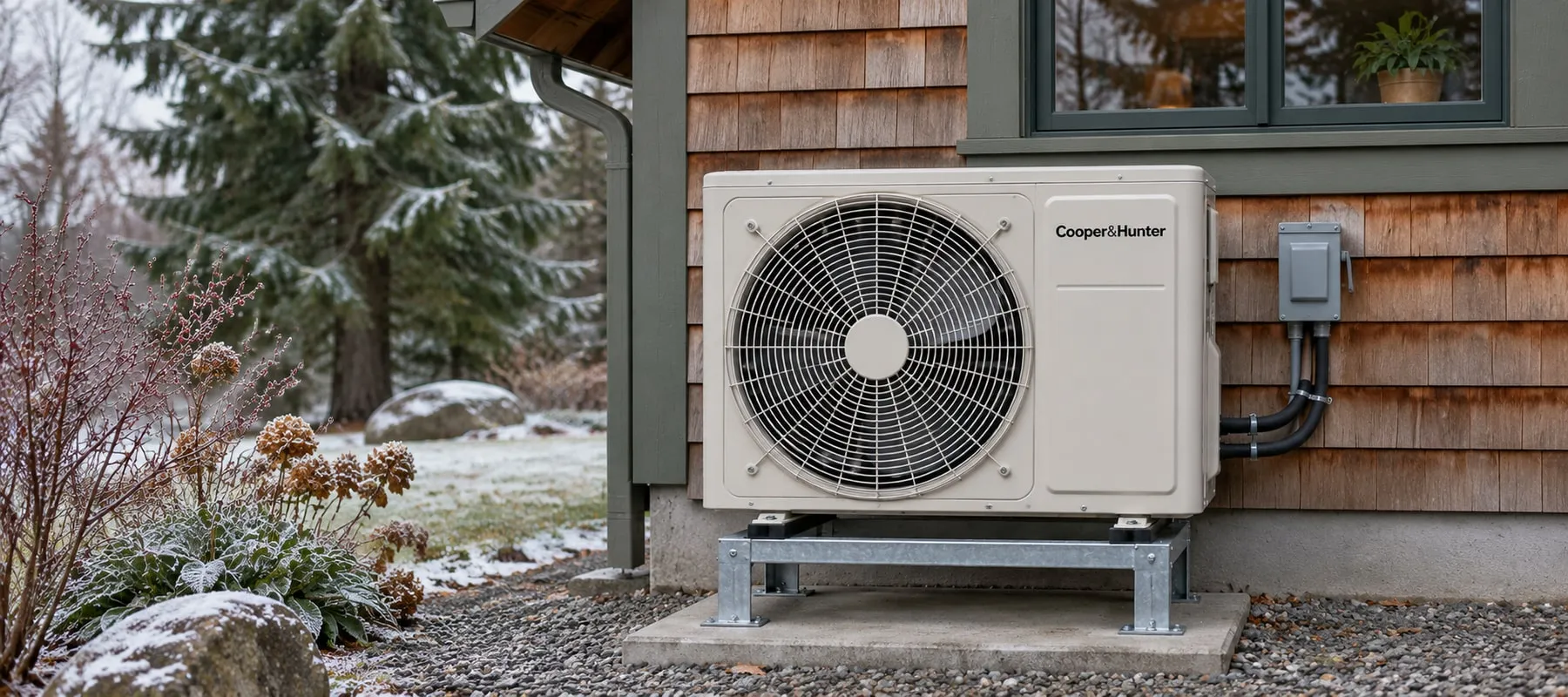
Strong efficiency numbers at a mid-tier price, undercut by a warranty with strings. Cold-weather proof comes from a distributor’s 2017 test.
Cooper & Hunter is a US-headquartered ductless brand with strong efficiency ratings at a price below Mitsubishi or Daikin. Its Hyper Heat outdoor units are rated to −22 °F (−30 °C), but the only test-style evidence is a 2017 reprint on a distributor's site. The warranty is where buyers get caught: coverage depends on professional installation, timely registration and where the unit was bought, and labour and refrigerant are never covered.
According to Filterbuy, a US mini-split retailer that discloses it sells competing systems, Cooper & Hunter was founded in 1996, is headquartered in Doral, Florida, and has its systems manufactured overseas. It lists:
These are manufacturer ratings and cooling-season-heavy. A Canadian retailer guide, Minisplits.ca, says Hyper Heat models are designed to keep efficiency down to −30 °C and recommends them for the Prairies and Northern Canada, which is sales material. A low operating limit does not say how much heat the unit delivers at that point, so ask for capacity at your design temperature.
A distributor site, USComfortSide, reprints a September 2017 laboratory comparison. It says air-source heat pumps were tested at −22 °F (−30 °C) for the first time and that all three worked normally. The Cooper & Hunter unit was a 12,000 BTU CH-12FTXHV-B, compared with a Daikin and a Panasonic. The test is nine years old, is hosted by a company with a stake in the result, used a model configured differently from typical Canadian combinations, and publishes nothing we could use about output at −30 °C. Treat it as a hint. We found no NEEP data, no independent field monitoring and no Canadian owner report from a long cold spell.
The US policy, as summarized by Filterbuy, is 7 years on the compressor and 5 on parts for the original owner. It applies only if:
For 2026, Cooper & Hunter also describes a registration-free "Out-of-Box" path, but Filterbuy says only R-454B and R-32 units from authorized distributors qualify, and the same model sells in R-410A and R-454B versions. Dealers in a Pro-Tech Dealer Program can offer extended coverage of up to 10/10 or 12/12 years by tier. A year-six compressor failure could therefore mean a free part and a four-figure labour bill. Sources conflict: Minisplits.ca says these mini-splits "typically" carry 5 to 10 years on parts and compressors and mentions no conditions. We put more weight on the Filterbuy summary, which gives the conditions, but we could not check it against the manufacturer's text, and we read no Canadian certificate. South Mini Splits links to the manufacturer's policy without restating terms. Ask in writing for the Canadian warranty for your model.
Solenery does not set prices, and Cooper & Hunter publishes none for installed systems. The brand is not in Furnaceprices.ca's October 9, 2026 brand tables. The third-party figures disagree:
| Source | Scope | Range |
|---|---|---|
| Filterbuy (US retailer) | Single zone, equipment | $700 to $2,000 |
| Filterbuy | Single zone, installed | $2,000 to $4,800 |
| Filterbuy | Three to five zones, equipment only | $4,900 to $7,000 |
| Furnaceprices.ca (Oct 9, 2026), any ductless brand | Single-zone / multi-zone installed | $5,000 to $8,000 / $8,000 to $16,000+ |
Filterbuy's figures are for the US market and come from a seller of competing systems. The Furnaceprices.ca range is general, and it runs a quote-request service. Electrical work, wall access and line-set length move prices more than the badge. Get two written Canadian quotes for the same model combination.
Eligibility depends on the exact outdoor and indoor combination, and the refrigerant version can matter. Check both model numbers against the federal product-list guidance.
Explore heat-pump rebates you may qualify for through a property assessment.
Explore heat-pump rebatesIt suits budget-conscious buyers who will use a licensed installer, register the warranty promptly and clean the filters. It is a weaker fit if you want one unit as primary heat at −30 °C without backup, or a proven Canadian service record. Compare better-documented cold-climate brands, such as Mitsubishi or Daikin, if published low-temperature capacity data matters.
A licensed brand now under Bosch that shares platforms with Coleman and Luxaire. What a Quebec...
A Whisperline heat pump is part of a building loop, so replacing one is a building decision....
A ground-source brand where the buried loop matters as much as the unit. What WaterFurnace...