Heat Pumps
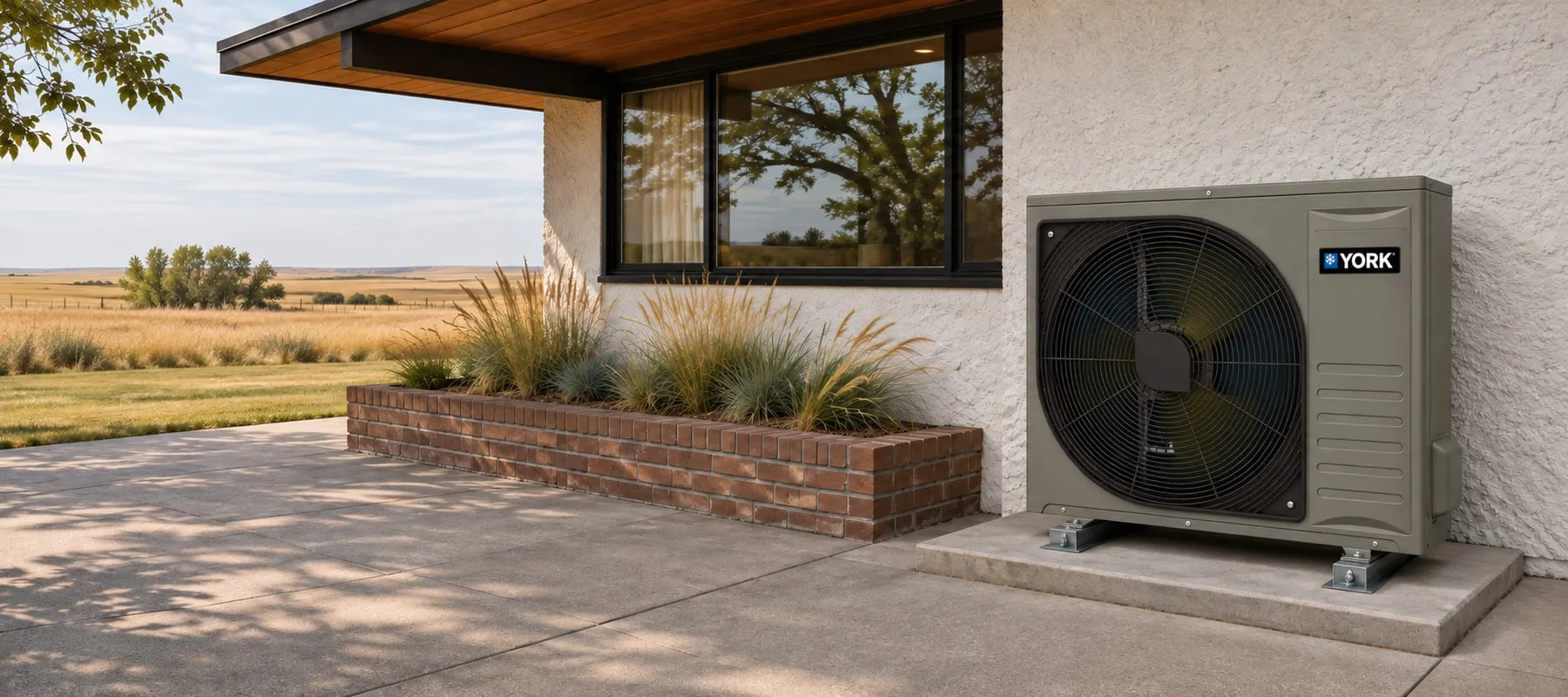
York HH8 and Affinity Heat Pump Review
A licensed brand now under Bosch that shares platforms with Coleman and Luxaire. What a Quebec...
5 min

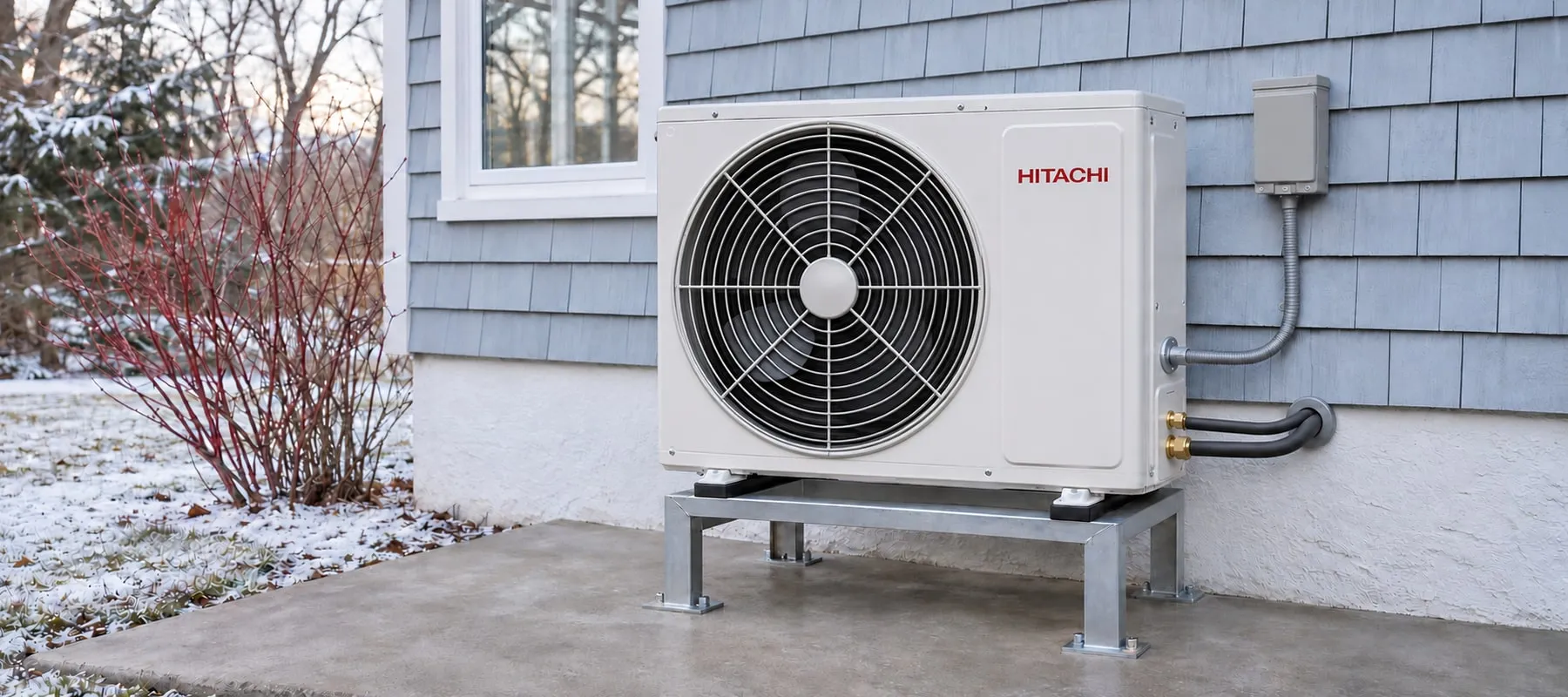
A premium variable-speed line that reached Canada in 2025 with almost no owner history. The warranty has a short registration window and no labour.
Hitachi's airHome line is a premium ductless range that reached North America in 2025 under Bosch Home Comfort. It is built on variable-speed inverter compressors, with an H-series for cold climates, but there is almost no Canadian owner evidence yet. Extended warranty coverage needs registration within 60 days, and labour is not included. Choose the installer and the exact model pairing first.
Furnaceprices.ca, a lead-generation site (page updated September 1, 2026), says the Bosch Home Comfort Group brought the airHome series to Canada and the US in 2025. ACHR News reported on August 1, 2025 that Bosch had closed on the Johnson Controls residential and light commercial HVAC business and the Johnson Controls-Hitachi Air Conditioning joint venture, and that Bosch holds long-term licences to the York and Hitachi brand names. So the maker's trail runs through Johnson Controls-Hitachi to Bosch. We could not confirm Canadian distribution details: a trade-press article naming a Canadian distribution partner blocked our access. See Bosch for the group's own range, and Fraser-Johnston and Coleman for other Johnson Controls labels. Whether Bosch's own ductless equipment shares platforms with Hitachi's was not in any source we read.
Furnaceprices.ca lists eight models, all variable speed:
| Series | Models and ratings reported | Installed range |
|---|---|---|
| Standard single-zone | airHome 800 (26.5 SEER2, 12.0 HSPF2), 600 (23.0 / 11.4), 400 (20.0 / 10.0) | $4,500 to $8,500 |
| Cold-climate H-series | H700 (11.2 HSPF2), H500 (10.3), H300 (9.4) | $4,200 to $7,600 |
| Ducted | airCore 700 (19.5 SEER2, 9.7 HSPF2) | $6,500 to $11,000 |
| Multi-zone | airHome Multi (23.0 SEER2, 10.0 HSPF2) | $8,000 to $14,000 |
Those are the reviewer's figures, not Hitachi's, and Hitachi's Canadian pages blocked our access. The same page says Hitachi rates its cold-climate models for operation down to roughly −22 °F (−30 °C), and that the Adaptive Defrost and Dry Mode functions are now common on premium mini-splits. Earlier research also took capacity figures at −20 °C and −30 °C from a Quebec retailer listing that was rate-limited when we tried it, so we are not repeating them. The separate air365 Max VRF system, a commercial product with HeatForce, is said by its makers to keep 100% heating capacity down to −13 °F and 90% down to −22 °F, but that says little about a home ductless unit.
We found no NEEP data, lab test or Canadian field measurement for the airHome line. Furnaceprices.ca warns that cold-climate performance varies by model and capacity. Confirm that the exact outdoor and indoor pairing has the cold-climate rating you expect, and ask for output at −15 °C and −25 °C.
Furnaceprices.ca says every Hitachi heat pump carries 5 years on parts and 7 on the compressor, extending to 10 and 10 when registered within 60 days of installation, with no labour or unit-replacement coverage, and that Quebec residents get the extended terms without registering. Hitachi's own US warranty page blocked our access, and a Quebec retailer's listing of 10 years plus 6 years labour, described there as the distributor's own offer, could not be re-read. So the labour question has two answers we could not reconcile. Ask for the Canadian warranty document, the registration deadline, who registers, and who pays labour if a compressor fails.
Solenery does not set prices. Third-party ranges:
| Source | Scope | Installed range |
|---|---|---|
| Furnaceprices.ca brand table (Oct 9, 2026) | Ductless Hitachi | $6,500 to $11,500 |
| Furnaceprices.ca review page (Sept 1, 2026) | Series ranges above | $4,200 to $14,000 |
| Reliance Home Comfort (2026 guide) | Ductless single-zone / multi-zone, any brand | $5,999 to $7,500+ / $9,500 to $22,000+ |
Reliance Home Comfort is an installer, and Furnaceprices.ca runs a quote-request service. Multi-head systems sit at the high end of those ranges. Get three written quotes naming the exact models, and compare the labour warranty as well as the price.
Eligibility depends on the exact outdoor and indoor combination. Furnaceprices.ca says all models are ENERGY STAR certified, but confirm that on the exact pairing against the federal product-list guidance before you sign.
Explore heat-pump rebates you may qualify for through a property assessment.
Explore heat-pump rebatesHitachi airHome may suit homeowners whose installer already knows the line and will stand behind labour, especially for single-room or open-plan heating. It is a harder recommendation for anyone who wants a long Canadian owner track record. Compare established ductless brands such as Mitsubishi or Daikin on installer support and written warranty terms, not on temperature ratings alone.
A licensed brand now under Bosch that shares platforms with Coleman and Luxaire. What a Quebec...
A Whisperline heat pump is part of a building loop, so replacing one is a building decision....
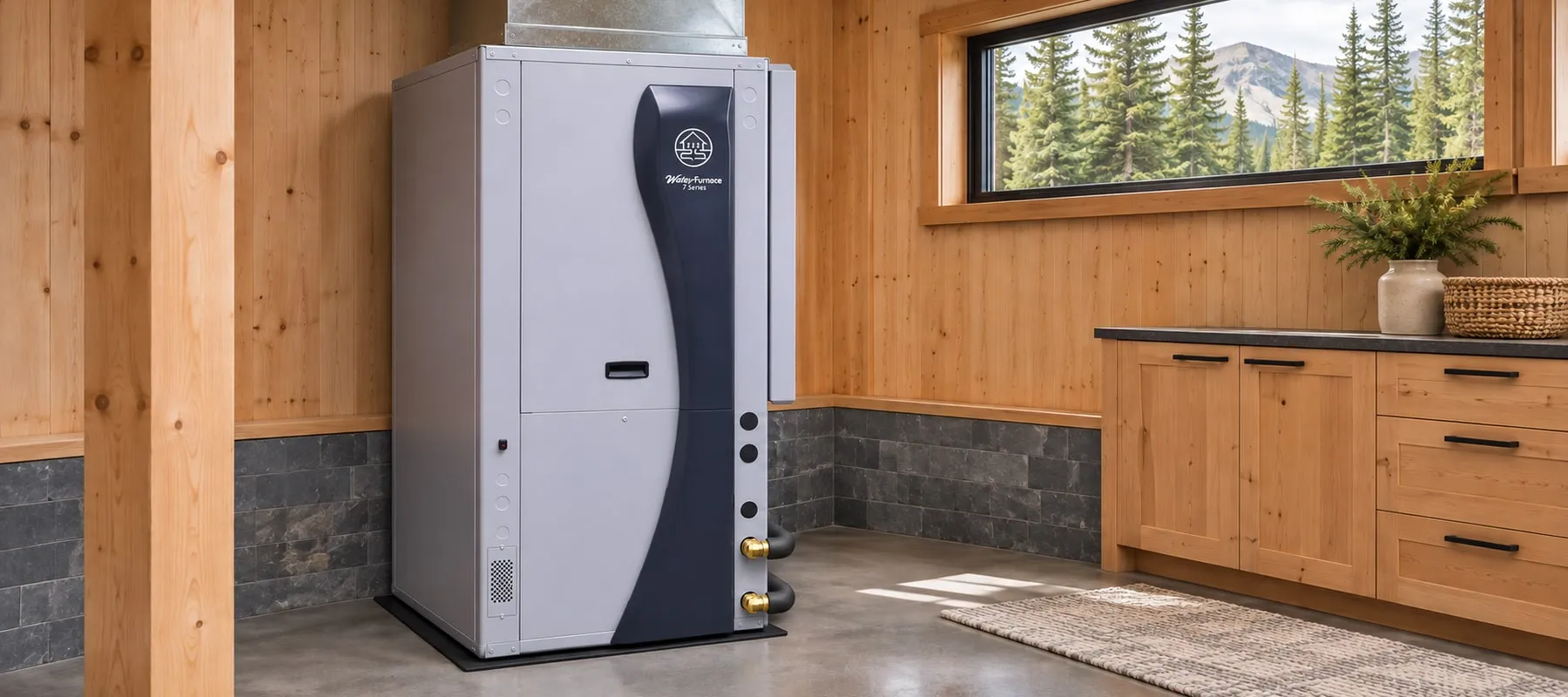
A ground-source brand where the buried loop matters as much as the unit. What WaterFurnace...