Net Zero
Net-Zero Planning Mistakes: Seven Checks Before Committing
Find seven net-zero planning mistakes with a symptom, evidence check and corrective action...
3 min

Canadian clean energy demonstrations can help a homeowner ask better questions about a proposed upgrade. They show how technologies work in real settings, while the evidence and project status still need checking. They also reveal limits, operating changes and renewal costs. These five examples are useful learning cases, rather than a ranking of the most successful projects or proof that every approach can be copied elsewhere.
Drake Landing tested solar district heating with seasonal storage for a community of 52 homes. Its story now includes a major qualification: the Town of Okotoks says decommissioning began in 2024 and that most homes were converted to natural-gas furnaces after the required reinvestment was judged unaffordable. It should not be promoted as an unchanged, ongoing model of net-zero heating. Town account.
Lesson: evaluate renewal funding, maintenance and the owner’s exit options alongside annual performance. A technically important demonstration can still face a difficult lifecycle decision.
This office building opened in 2009. Manitoba Hydro describes an integrated efficient-building design using features such as winter gardens, daylight and a solar chimney, and records LEED Platinum certification in 2012. It is a purpose-built office example, not a deep retrofit of an existing tower. Owner’s account.
Lesson: investigate how systems work together. A building’s result cannot be attributed to one isolated feature or transferred automatically to a different site.
Alectra lists POWER.HOUSE among its past innovation projects. It describes residential solar-plus-storage and energy management operating as a virtual power plant. A separate Power.House Hybrid project also appears in its historical portfolio. These should not be conflated or treated as a current nationwide enrolment offer. Alectra project record.
Lesson: check the exact project, operating arrangement and participation status before promising grid-service revenue or household access.
UBC describes a facility using urban wood-waste biomass for campus thermal energy, with cogeneration arrangements that have evolved over time. Its role links campus infrastructure with research and teaching. It is not evidence that building-integrated PV forms part of the described biomass process. UBC facility information.
Lesson: examine fuel supply, emissions monitoring, operating modes and subsequent modifications. Do not assume that the original design description represents every later operating condition.
Enwave describes district cooling that uses the cold resource of Lake Ontario for connected Toronto buildings. This is established energy infrastructure, rather than a new household pilot or a universal solution for every city beside water. Operator’s account.
Lesson: assess network access, local geography, customers, approvals and long-term operations together. A successful network depends on more than the cooling resource itself.
When evaluating any demonstration, ask what was tested, what was measured, who reported it and what changed afterward. Use a case study to frame feasibility questions, then assess the new site on its own evidence.
| Case lesson | Question before applying it to your home |
|---|---|
| Drake Landing: lifecycle renewal | Who will maintain and fund replacement of the proposed system? |
| Manitoba Hydro Place: integrated design | Which features interact, and is the comparison actually relevant to this building? |
| POWER.HOUSE: program and equipment scope | Is a compatible service available under current utility terms? |
| UBC: operating changes | Which version and operating mode does the evidence describe? |
| Toronto district cooling: network fit | Does the property have a feasible connection and supported service arrangement? |
Record the original source, the dates it covers and whether it describes a proposal, a measured result or a later transition. Keep a project’s intended benefit separate from its reported outcome. Do not add results from different operating periods into a single unchanged success story.
For a household decision, identify the scale difference as well: a campus or neighbourhood system has ownership, infrastructure and operating obligations that a room appliance does not. Use the lesson to request evidence from your own design team, rather than copying a technology solely because it appears in a well-known project.
Find seven net-zero planning mistakes with a symptom, evidence check and corrective action...

Evaluate five clean energy innovation areas with a readiness matrix covering application...
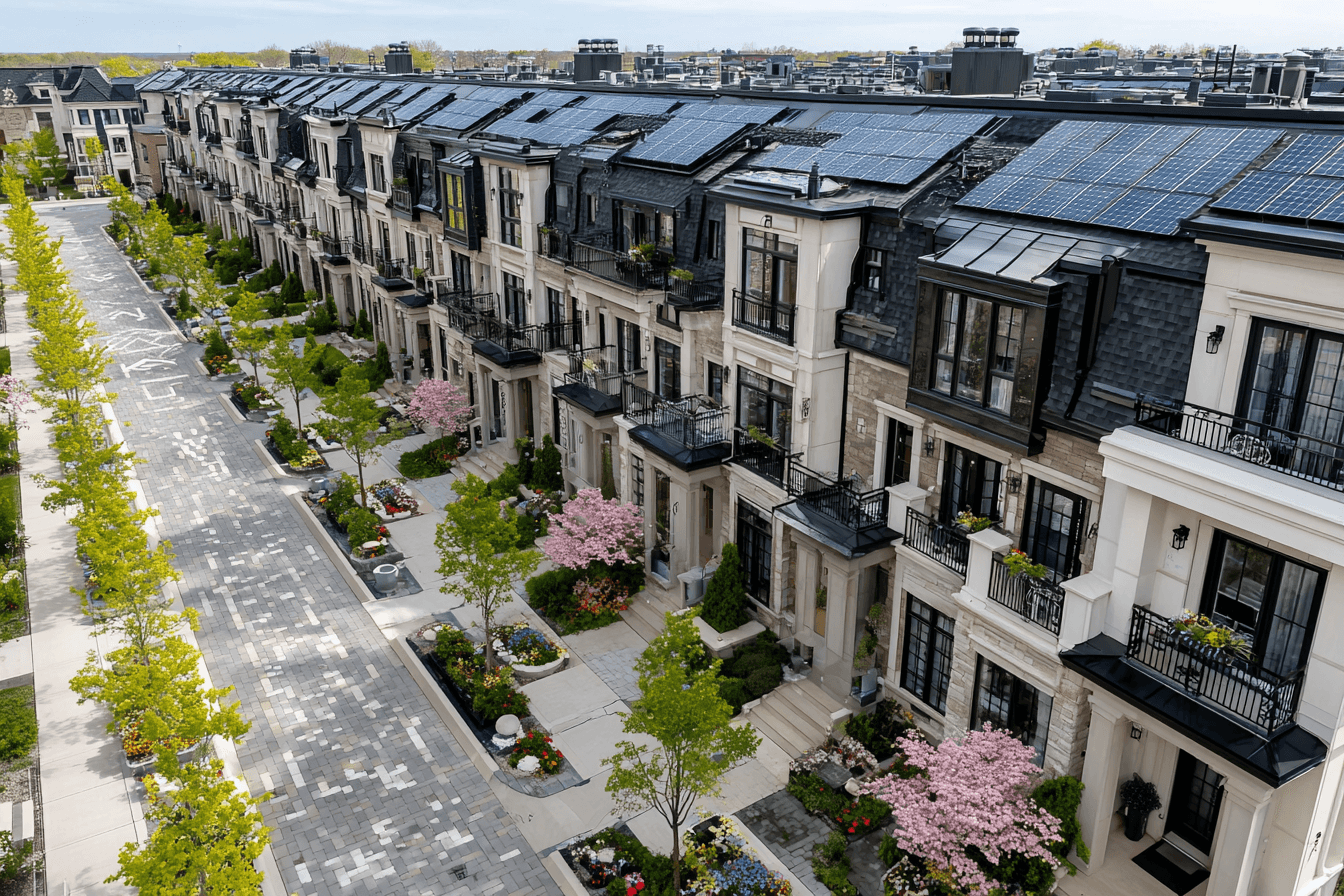
Read Berczy Glen geoexchange planning as a documented shared-infrastructure case, with questions...