
Marketing
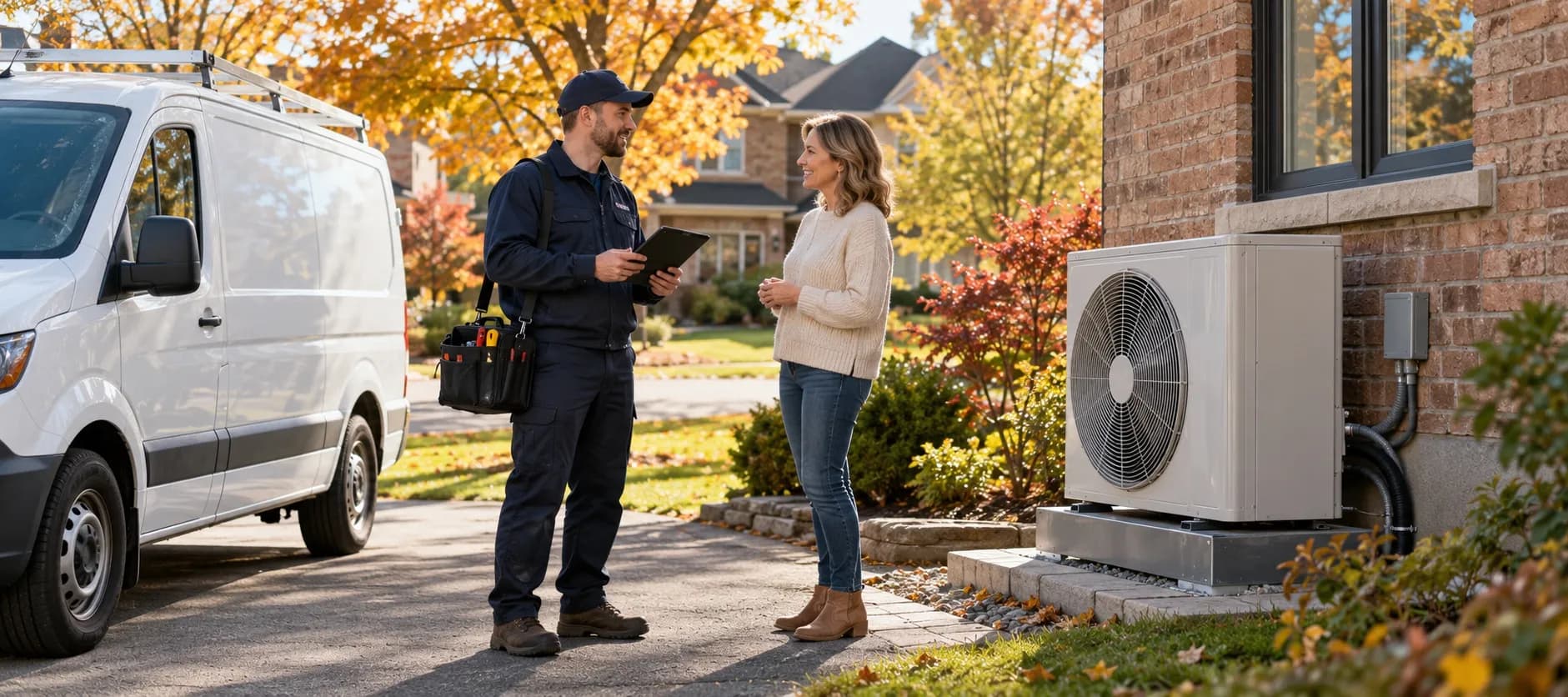
HVAC Lead Intake Routing Worksheet: Service, Replacement and Maintenance
Route HVAC leads by urgent service, planned replacement and maintenance with a practical intake...
4 min

A solar marketing enquiry handoff should carry the campaign promise into a clear assessment and proposal process. Solar marketing should help a suitable customer understand the next decision. A form submission may mean “I am comparing installers,” “I need to replace my roof” or “I want a feasibility assessment.” Those are different starting points, and none guarantees a signed installation contract.
Define the property types, utility territories and installation work your team can support. Build campaign pages around those boundaries. A residential rooftop offer and a commercial retrofit offer should explain different assessment inputs and decision paths.
Local relevance comes from accurate service details: utility connection steps, roof considerations, who performs design and what the quote includes. Avoid assuming that everyone in a province shares the same motivation or budget.
State one next step. “Request a preliminary assessment” is clearer than presenting a generic rebate headline beside several competing booking buttons. Explain what information the customer will provide and what the assessment can establish.
Use photographs and project details you have permission to share. Distinguish measured production from design estimates and disclose the period and assumptions behind savings figures. A case study should include constraints, not just a successful outcome.
Useful articles can explain shade, roof age, inverter choices and quote comparisons. Google’s people-first guidance emphasizes content that helps readers complete their purpose; repeating service keywords does not supply that help. Google guidance.
Describe incentives as conditions to assess, not a universal reduction in price. Show the project scope before incentives and name any unconfirmed dependency. Solenery’s personalized rebate discovery and address-based matching are premium features through the existing property flow; public marketing should explain that boundary clearly.
A deadline belongs in an advertisement only when it is verified and relevant. Policy uncertainty does not justify claiming that a customer must sign now to protect an unconfirmed benefit.
Record the inquiry source, service fit, assessment completed, proposal issued and outcome. Review the reasons proposals stall: missing roof information, connection uncertainty, financing, scope mismatch or a customer’s changed plans.
Compare campaigns on accepted opportunities and completed projects alongside the cost of sales and delivery. Use each review to change one concrete element, such as intake questions or the quote checklist. More traffic is useful when the team can turn appropriate demand into well-scoped work.
| Handoff field | What marketing and sales should agree |
|---|---|
| Audience and service boundary | Actual property types, service area and work the team can assess. |
| Offer | What the requested preliminary assessment includes and what it cannot confirm. |
| Evidence | Approved project examples, source assumptions and permission for identifiable material. |
| Intake | Information needed now, explanation of its use and a route for missing facts. |
| Response | Named owner, actual coverage and next decision offered to the customer. |
| Proposal readiness | Required assessments and unresolved dependencies before a supported offer. |
Test the whole path with a fictional enquiry. The landing page, form confirmation and sales response should describe the same task. If the advertisement offers an assessment but the next message assumes a signed purchase, fix the mismatch before increasing traffic.
A fictional homeowner requests solar after seeing a project example, then explains that roof replacement is planned. Record that fact and the questions requiring design or roofing coordination. Do not keep presenting the campaign’s illustrative generation or timing as though it already applies to this property.
The next useful outcome might be an assessment-input checklist and a coordinated review, rather than an immediate installation proposal. Preserve the campaign source and actual route so the review can distinguish unsuitable targeting from a suitable customer needing a different sequence.
Inspect a sample of enquiries after the campaign. Ask whether they fit the stated service, understood the offer and reached the promised response. Review the current proposal version and customer questions with technical staff.
Change one specific weakness, such as a misleading assessment label or missing roof question, and record the next review. The aim is a dependable path from a relevant enquiry to a credible scope, rather than treating every form as a sale.
Route HVAC leads by urgent service, planned replacement and maintenance with a practical intake...

Review three hypothetical clean energy partnerships through distinct handoff tests, customer...
Design a co-branded clean energy campaign around a testable buyer task, complementary roles,...