
Energy Efficiency
Deep Lake Water Cooling for Buildings: Understand Toronto’s Shared System
Assess deep lake water cooling for buildings through Toronto’s district-energy example, with a...
3 min

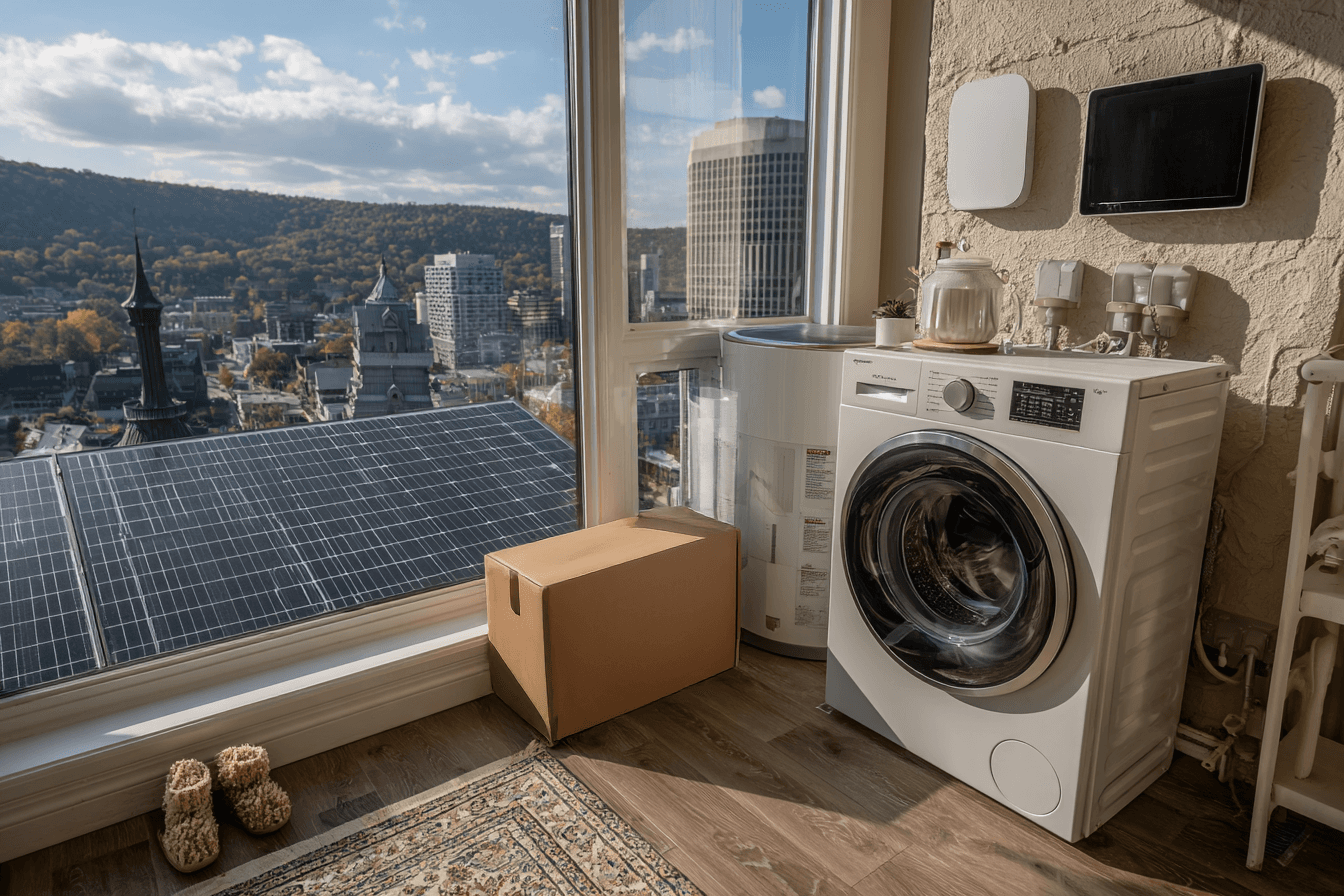
Decide whether to repair or replace an appliance using a keep/repair/replace worksheet, comparable EnerGuide data and a transparent energy-only calculation.
To repair or replace an appliance in a Canadian home, compare keeping it in suitable use, repairing an identified problem and buying an equivalent replacement. If it still works safely, start by checking how it is used and what it consumes. Replacing it may reduce energy use, but the avoided energy cost alone may not justify the purchase. Reliability, capacity, repairability and needed features also matter.
Check the manual for loading, cleaning and settings. Use suitable full loads rather than overloading laundry or dishwashing equipment. Try lower-energy cycles that still meet the task, and address damaged seals or an identified fault through appropriate service.
Where a compatible plug-in meter can be used safely, record consumption over representative operation. For fixed or high-power appliances, use reliable equipment data or ask a professional rather than improvising electrical measurement. Seasonal temperatures and household routines can change the result.
The EnerGuide label provides standardized annual energy-consumption information for covered appliances. Compare models of similar type, capacity and features. The label is useful for shopping; it is not a promise that your household will use exactly that amount.
Ask for the complete delivered cost: appliance, taxes, installation, electrical or venting changes and removal of the old unit. If an old refrigerator becomes a second running refrigerator, the replacement may not produce the household reduction you expected.
| Option | Evidence to gather | Cost boundary |
|---|---|---|
| Keep and use appropriately | Safe condition, actual need, suitable settings and representative consumption. | Ongoing energy and required routine care. |
| Repair an identified problem | Diagnosis, written repair scope, parts availability and service terms. | Repair payment plus expected operation after the work. |
| Replace | Comparable capacity, EnerGuide information and required installation changes. | Complete purchase, delivery, installation and retirement costs. |
Keep the same household task across the options. A larger replacement or an old appliance retained as an extra unit changes total demand. The shopping comparison should make that change visible instead of assigning all differences to efficiency.
Ask the service provider what the repair actually addresses. A repair quote does not promise a particular remaining lifetime; note that uncertainty rather than inventing an exact number of future years.
Hypothetical example: a new appliance costs $900 more than keeping a serviceable existing one and is expected to use 250 kWh less each year. At an assumed marginal price of $0.15/kWh, energy savings are $37.50 per year. A simple energy-only payback is 24 years, before repairs, financing or changing prices.
That does not decide the purchase by itself. A failing appliance or a major repair changes the comparison. It does show why an unsupported claim of “hundreds saved” should not replace the calculation.
Running a cycle at a cheaper tariff period may lower its cost without lowering its kWh. Check your actual plan and safe operating instructions. Consider rebates only after current eligibility and purchase timing are verified; routine habits do not automatically create an incentive entitlement.
Use a lower and higher plausible consumption difference to see whether the energy-only conclusion is sensitive to the estimate. Keep those scenarios labelled as assumptions. Do not combine a measured old-appliance period with a new-product label and call the difference a guaranteed household saving without considering the different bases.
Record the preferred option, the evidence behind it and the non-energy reasons that matter, such as needed capacity or a documented reliability concern. Keep any required disposal arrangements in the scope. This makes the purchase decision reviewable even when energy savings alone are modest.
Assess deep lake water cooling for buildings through Toronto’s district-energy example, with a...

Make a smart glass window comparison around the room’s comfort problem, complete assembly...
Plan furnace filter replacement with an equipment-specific specification card, safe owner-access...