
Energy Efficiency
Deep Lake Water Cooling for Buildings: Understand Toronto’s Shared System
Assess deep lake water cooling for buildings through Toronto’s district-energy example, with a...
3 min

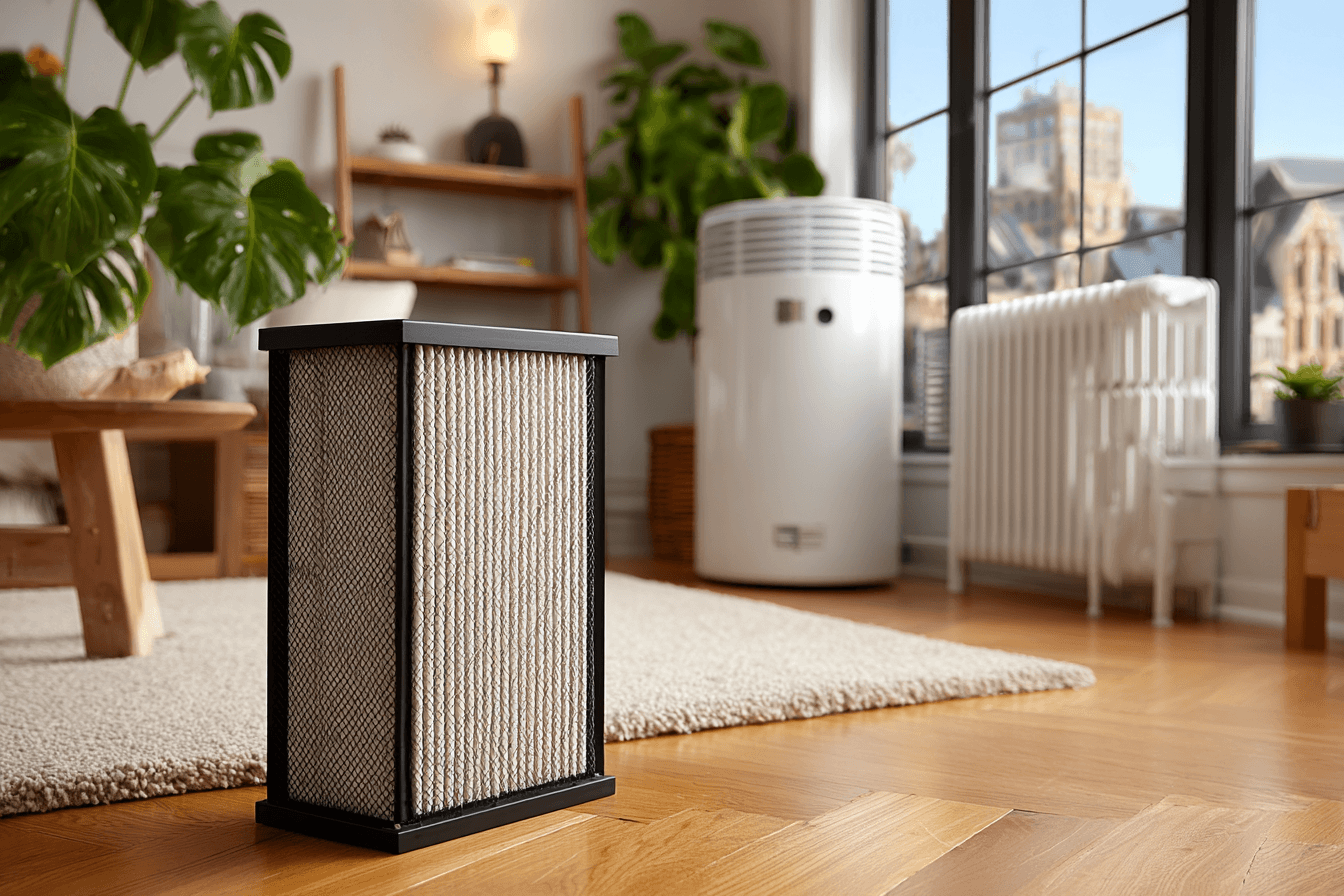
Plan furnace filter replacement with an equipment-specific specification card, safe owner-access instructions and an inspection record instead of savings promises.
Furnace filter replacement is a useful equipment-care task for Canadian homeowners. Changing a loaded filter helps preserve the airflow your heating and cooling system was designed to deliver. It is routine equipment care, not a guaranteed percentage reduction in your gas or electricity bill. The effect depends on the filter, blower, system condition and how restricted the old filter was.
NRCan's maintenance guide identifies regular filter care as an important part of heating and cooling upkeep. The correct replacement and interval still come from the equipment and filter instructions.
Record the full dimensions and part number from the existing filter, then confirm them against the manual or installer documentation. A nominal size printed on the frame may differ from measured dimensions. The filter should fit the designed holder rather than leaving gaps.
Ask which filtration rating and pressure drop the system supports. A higher MERV rating is not automatically better for an existing blower. If allergies, smoke or indoor air quality are the concern, discuss filtration and ventilation together with a qualified professional rather than making medical assumptions about a filter swap.
Keep one card beside the purchase record, with the equipment model, approved filter reference, nominal and actual dimensions, permitted filtration specification and manual page. Add the supplier or compatible replacement reference confirmed by the installer. A photograph of the old frame is supporting information, not proof that the previous owner installed the correct filter.
| Before buying | Before fitting |
|---|---|
| Match the documented dimensions and type. | Use only the owner-access procedure and shutdown instructions. |
| Confirm compatibility rather than choosing by price or MERV alone. | Check the specified airflow direction and holder fit. |
| Identify disposable versus reusable media. | Record what was fitted and the date. |
If the manual and old filter disagree, ask the service provider which specification applies. Do not cut media to fill a gap, stack filters or improvise a retaining arrangement. Correct fit and compatibility belong together.
Set an initial reminder based on the manual, and inspect more often when usage or dust increases. Pets, renovation work and continuous fan operation may change loading. Calendar months and province names alone do not establish how dirty a filter is.
Follow the prescribed shutdown and owner-access instructions. Replace disposable filters; clean reusable ones only by the specified method. Observe airflow-direction markings and secure the holder correctly. Do not operate without the filter or stack filters to increase filtration.
Persistent weak airflow, unusual cycling or rooms that remain cold require diagnosis. Avoid closing multiple registers in an effort to force heat elsewhere; changing distribution can create other airflow problems.
Keep a brief record of replacement dates and filter types. When arranging service, share that record and explain any comfort change. Ask for evidence before accepting a savings claim or an expensive filter upgrade. Treat maintenance as part of the running cost of the system, without assuming it qualifies for a rebate or automatically determines warranty coverage.
Record the date, installed filter reference, visible loading and unusual dust-producing events. Use the manufacturer’s inspection guidance as the starting point and review the actual pattern with the provider. A reminder should prompt a check, rather than require a clean disposable filter to be discarded without reason.
If a replacement is needed unusually often, describe the change in usage, renovation work or household conditions. Ask whether it needs further assessment. Do not respond by removing the filter or substituting an unsuitable lower-resistance product.
After a professional visit, keep the service findings alongside the specification card. That creates a reliable record for the next purchase and helps separate routine filter care from a continuing airflow or comfort problem.
Assess deep lake water cooling for buildings through Toronto’s district-energy example, with a...

Make a smart glass window comparison around the room’s comfort problem, complete assembly...

Choose home lighting automation with a room-use matrix, realistic avoided-hours calculation and...