
Energy Efficiency
Smart Glass Window Comparison: Check Comfort, Ratings and Controls
Make a smart glass window comparison around the room’s comfort problem, complete assembly...
3 min

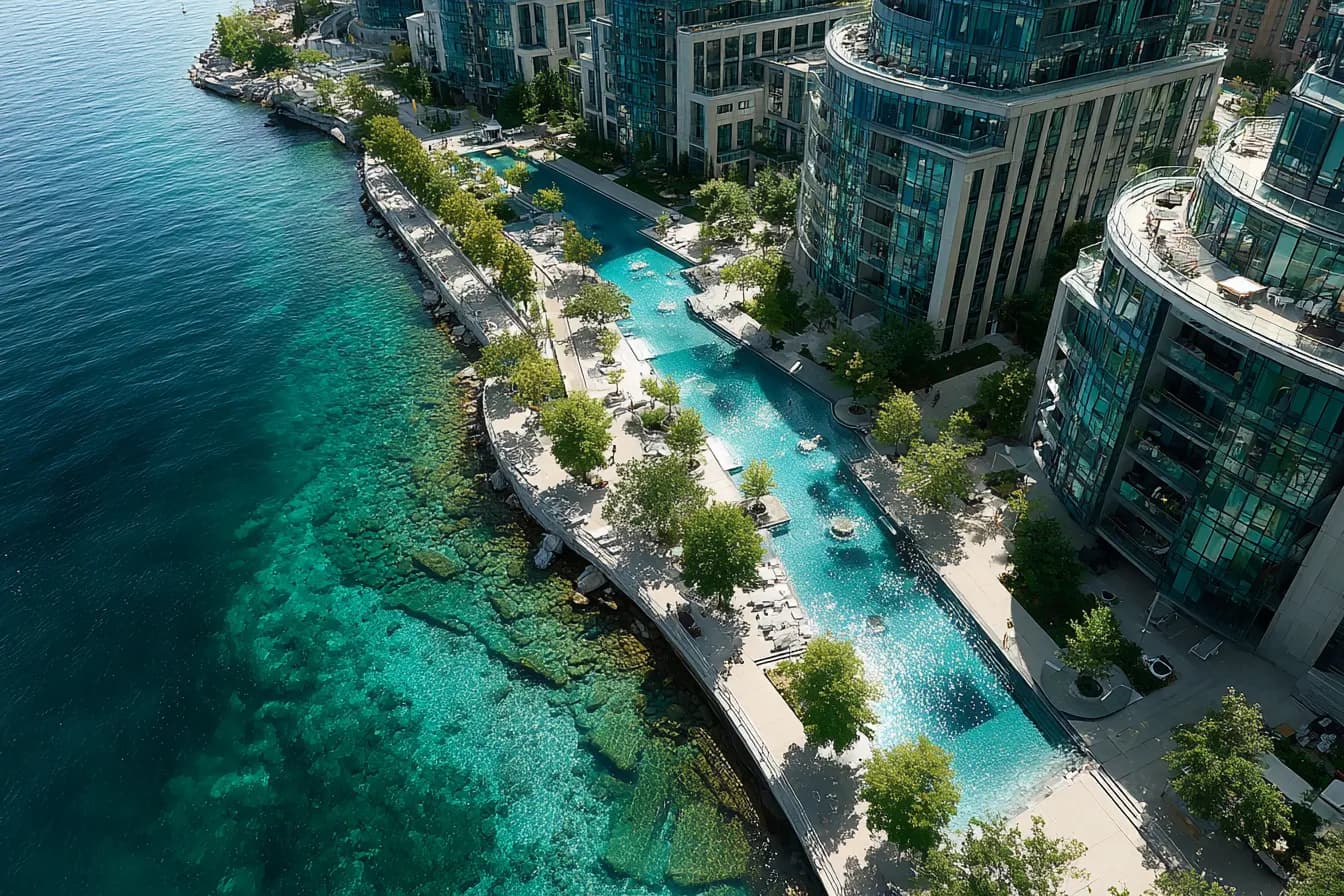
Assess deep lake water cooling for buildings through Toronto’s district-energy example, with a network-to-building interface and service-feasibility checklist.
Deep Lake Water Cooling for buildings is a shared-infrastructure option for a building owner to assess with the network operator. Toronto’s system uses the cold resource of Lake Ontario as part of a district system serving buildings in downtown Toronto. It is an example of meeting cooling demand through shared infrastructure rather than installing a separate conventional cooling plant in every connected building.
Enwave's Toronto overview describes the network and examples of hospitals, offices, campuses and residential buildings it serves. Availability depends on the network and building connection; a household cannot assume eligibility because it lives near a lake or in Toronto.
Cooling means removing heat from occupied spaces. In a district system, a network and building-side heat-exchange arrangement transfer that heat to the cooling source. This is not the same as pumping untreated lake water through apartment radiators or delivering lake water as a household appliance service.
Enwave's district-energy explanation describes multiple buildings connected to a central energy source and the development of its Toronto system. The actual arrangement includes infrastructure, pumping, controls and building interfaces, so it should not be described as independent of electricity or automatically free of all refrigerants throughout every connected building.
A district connection may change the need for on-site cooling equipment, mechanical-room space and maintenance responsibilities. Evaluate these as part of a complete service proposal rather than assuming a fixed percentage saving. Enwave identifies Brookfield Place and the TD Centre as examples; those operator accounts are not a guarantee of another property's costs.
| Interface question | Evidence for the building owner |
|---|---|
| Service availability | Operator’s feasibility response and proposed connection route. |
| Delivered conditions | Capacity, temperatures, seasonal requirements and measurement basis. |
| Building modifications | Mechanical, electrical and control scope prepared by the qualified team. |
| Ownership and service | Boundary between operator and owner equipment and maintenance duties. |
| Reliability | Defined outage response, redundancy and service responsibilities. |
| Cost | Connection work and service-charge structure, including relevant demand terms. |
Keep the existing building’s cooling requirement and condition in the assessment. A service connection may avoid some equipment work while adding other interfaces and obligations. Request the complete alternative, including any on-site equipment that remains.
Do not assume a cold-water source makes the system off-grid. Pumps, controls and building systems still need a supported operating arrangement. Have the designer explain the actual system boundaries rather than extending an operator’s case example to every component in another building.
A suitable cold-water resource is only one requirement. Demand density, pipe routes, environmental approvals, capital cost and long-term operation also matter. Other district approaches can use different energy sources, but they need their own engineering and business case.
For a condo or building owner, the next step is a feasibility discussion with the operator and qualified designers. The proposal needs to describe the building connection and the service it would actually receive.
Retain the service proposal, building-side design assumptions, commercial conditions and unresolved questions together. Identify which party must supply the next piece of evidence before a connection decision can be made. A district-energy example is most useful when it clarifies those interfaces, rather than suggesting every building beside a lake can purchase the same result.
Make a smart glass window comparison around the room’s comfort problem, complete assembly...

Plan furnace filter replacement with an equipment-specific specification card, safe owner-access...

Choose home lighting automation with a room-use matrix, realistic avoided-hours calculation and...