Heat Pumps
Cold Climate Heat Pump Challenge: How to Read the Evidence
Read Cold Climate Heat Pump Challenge evidence by separating specifications, test results and...
3 min

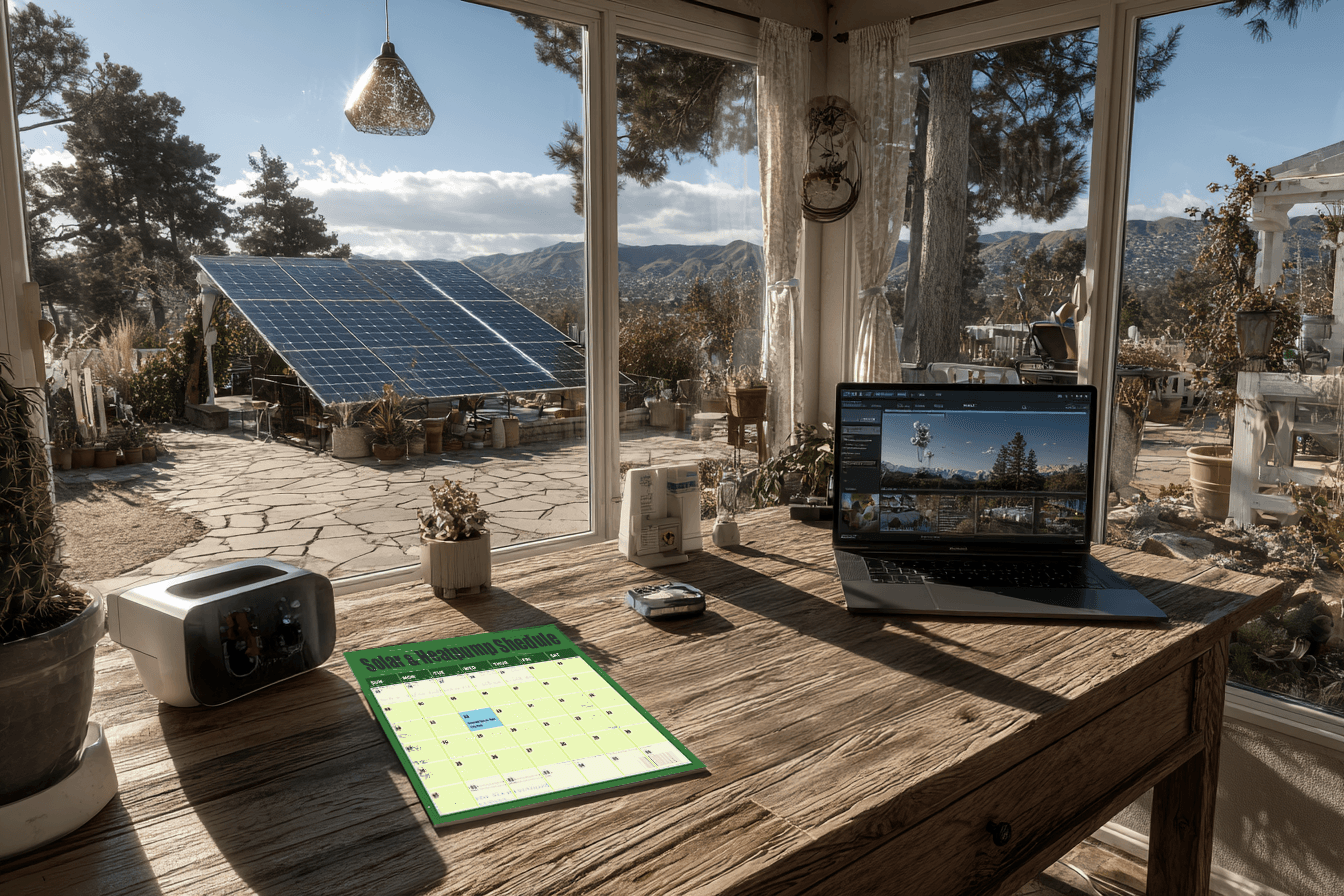
Build a solar and heat pump maintenance schedule with manual-based reminders, named responsibilities and seasonal records without automatic washing rules.
A solar and heat pump maintenance schedule should organize the requirements of your installed equipment, with a named person for each task. Canadian homeowners can use seasonal reminders to review those requirements, but the calendar should not prescribe washing, filter replacement or technical work simply because a month has arrived.
Start with the exact manuals, service agreement and installer instructions. Record which activities are safe owner tasks and which require a qualified provider.
List module and inverter models, heat-pump indoor and outdoor units, filters, controls and relevant accessories. Keep the manuals, commissioning record, warranty documents and service contacts together. Include access arrangements for equipment in shared or restricted spaces.
For every required recurring task, record the manual page, interval or trigger, responsible person, next due date and evidence of completion. Ask the installer to resolve missing information instead of copying another household’s schedule.
| Checkpoint | Owner planning or observation | Provider coordination |
|---|---|---|
| At handover or equipment change | File manuals and confirm permitted filter access. | Explain care requirements, controls and commissioning records. |
| Before heavy heating use | Review due filter tasks, service contacts and outdoor observations. | Arrange prescribed or overdue heating-system inspection. |
| During winter | Keep safe access, record repeated alarms and observe snow/ice conditions. | Assess recurring icing, drainage or loss of comfort. |
| Before heavy cooling use | Review filters and report unresolved comfort or drainage concerns. | Arrange relevant pre-season care and investigate problems. |
| After a significant storm or alert | Check monitoring and observe from safe ground. | Assess visible damage, persistent faults or unsafe conditions. |
| Annual record review | Reconcile completed work, subscriptions, contacts and upcoming requirements. | Confirm changes to the equipment-specific service plan. |
This table is a planning framework, not a universal service interval. NRCan’s maintenance guide supports regular filter care and professional pre-season checks. It directs owners to the equipment guidance for filter frequency.
Use separate reminders where indoor units or filter types differ. Record whether the task is inspection, cleaning or replacement. Clean only media identified as washable and follow the manual’s shutdown, drying and refitting instructions.
If dust, pets, renovations or usage change how quickly a filter loads, review the inspection pattern within the instructions and ask the provider for guidance. Do not automatically replace every filter monthly or assume every indoor unit has the same care method.
Check that monitoring is available and note persistent alerts or unexplained changes. Keep production observations with weather, new shading and service records. A low-output day does not establish a need for washing.
The Canadian Solar manual illustrates why module inspection and cleaning require equipment-specific precautions. Use the instructions for your own modules, rather than treating an example manual as permission to touch an array.
Roof access, electrical inspection and any cleaning that requires hazardous access belong with qualified providers. Do not add an owner snow-removal task merely to complete a winter checklist.
A scheduled visit is not a reason to postpone a hazard or loss of heat in dangerous weather. Follow the equipment emergency instructions and seek appropriate assistance. Record recurring comfort problems, persistent ice or visible damage for assessment rather than waiting for the next seasonal reminder.
Mark the completion date, person, work performed and any follow-up. Attach the receipt or service report when relevant. A reminder without a completion record does not show whether care happened.
At the annual review, move unresolved findings into named actions with dates and contacts. Adjust the coming year’s reminders for actual equipment changes and documented requirements. The calendar becomes useful when it tells you what is due, who does it and where the instructions are kept.
Read Cold Climate Heat Pump Challenge evidence by separating specifications, test results and...
Recognize signs your heat pump needs service, distinguish urgent hazards from recurring...
Build a heat pump filter cleaning schedule for each indoor unit, distinguish washable and...