
Energy Efficiency
Deep Lake Water Cooling for Buildings: Understand Toronto’s Shared System
Assess deep lake water cooling for buildings through Toronto’s district-energy example, with a...
3 min

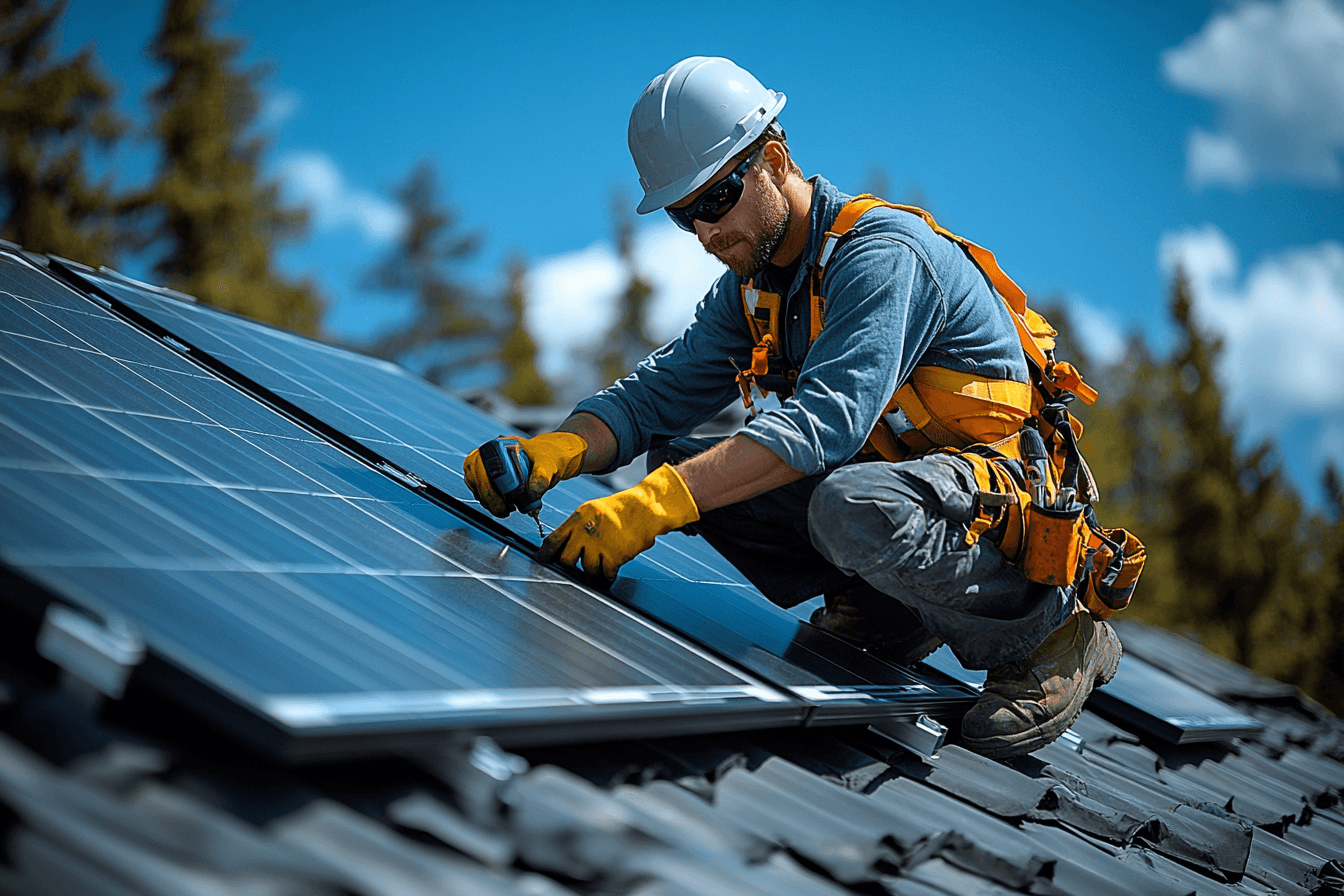
Plan DIY solar maintenance with a clear owner and professional task checklist, useful monitoring records and equipment-specific service questions.
For Canadian homeowners, DIY solar maintenance should centre on observing performance, keeping records and arranging the right service. Electrical inspections, repairs and work that requires hazardous access belong with qualified professionals. Decide who owns each task before a fault occurs, rather than treating every low-production day as a reason to clean the panels.
This checklist helps divide responsibility for an existing residential system. It does not provide roof-access, wiring or cleaning instructions. Your module, inverter and mounting documentation, together with the installation and service agreements, determine the requirements for your equipment.
Collect the equipment model numbers, commissioning documents, warranties, installer contact and monitoring instructions. Identify the party responsible for the roof, modules, inverter and connection. If the equipment is leased or owned by someone else, check the agreement before arranging work; the homeowner may not be authorized to commission repairs.
Use the following division as a starting point, then confirm it with the installer. A maintenance task is not automatically suitable for an owner because it looks simple.
| Task | Homeowner role | Professional role |
|---|---|---|
| Production monitoring | Record missing data, alerts and changes using the normal owner interface. | Investigate unexplained losses and check equipment operation. |
| Visible condition | Photograph a concern from a safe, accessible position without touching equipment. | Inspect modules, wiring, mounting, flashing and other components as appropriate. |
| Cleaning | Ask whether soiling warrants attention and supply the equipment details. | Assess access, electrical hazards and a manufacturer-compatible method. |
| Faults or damage | Keep people away from suspected damage and report observations. | Diagnose, isolate and repair within the relevant qualifications. |
| Service records | Keep reports, invoices, dates and correspondence. | Explain findings, work completed and any unresolved issue. |
A monitoring gap and a generation fault are different problems. Check whether the app reports a communications interruption, but stay within normal owner controls. Do not reset protection devices, change installer settings or open an enclosure to make an alert disappear.
Record the date, displayed message, recent weather and whether the problem affects a single component or the whole system, if the app shows that distinction. Compare similar periods cautiously: cloud, shade, snow and day length can change output. One sunny afternoon is not a reliable annual performance test.
For example, suppose the app stops reporting after a household router replacement. Tell the installer that timing before requesting a panel-cleaning visit. The missing data may need a communications check; the observation alone does not prove that either generation or the internet connection is at fault.
The Canadian Solar installation manual, sections 7 and 8, reserves electrical and mechanical inspection and maintenance for qualified personnel. It also describes electrical hazards during cleaning. Those instructions apply to its listed modules; obtain the matching instructions for your own equipment.
A soft brush, garden hose or extension pole does not resolve electrical hazards, damaged glass, overhead services or falling snow. Do not walk on modules, reach toward connectors, scrape ice or improvise repairs. Ask the service provider how the proposed work meets both the equipment instructions and the site’s access requirements.
Snow introduces a separate seasonal question. Our guide to snow on solar panels explains the production context. Any intervention still needs an equipment-specific assessment; a general article cannot approve a method for your roof.
Request a written scope rather than a vague annual “solar tune-up.” Does the visit cover the inverter, visible cabling, mounting, roof interfaces and monitoring, or only washing? Which observations require additional testing? Who handles a roof issue discovered during the visit?
Confirm access costs, warranty-labour limits and whether a diagnostic charge is payable even if no repair follows. Schedule work according to the equipment instructions, installation conditions and observed issues, rather than assuming every Canadian system needs the same interval.
Use one log with columns for date, observation, photograph or alert, person contacted, work agreed, result and next action. After service, retain the findings and ask how performance will be checked. A completed invoice alone does not explain whether an intermittent fault was resolved.
Your next step is to fill the responsibility sheet and ask the installer to confirm the gaps. That makes DIY solar maintenance useful: the owner supplies clear observations, and the appropriate professional performs the work the system needs.
Assess deep lake water cooling for buildings through Toronto’s district-energy example, with a...

Make a smart glass window comparison around the room’s comfort problem, complete assembly...

Plan furnace filter replacement with an equipment-specific specification card, safe owner-access...