
Solar Energy
Do You Need a Heat Pump Permit in Canada? (And What About Solar?)
Most heat pump installations need an electrical permit, and many need a mechanical (HVAC) permit...
4 min

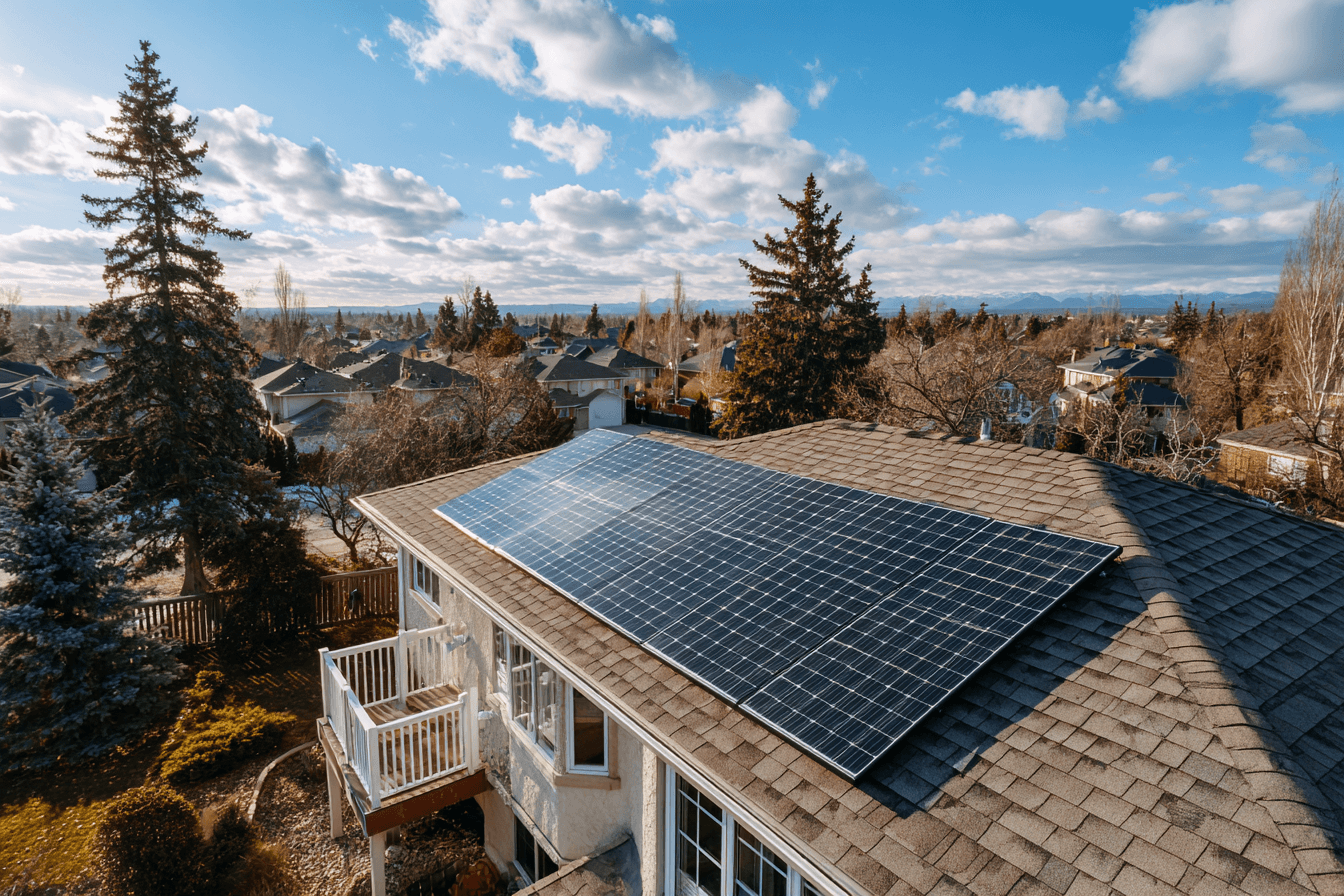
How much a 5 kW solar system produces in Canadian cities, based on NRCan data, and how to turn that output into a savings estimate for your home.
A 5 kW solar system in Canada produces roughly 5,000 to 6,800 kWh of electricity a year in most major cities, depending on where you live. That range comes from Natural Resources Canada’s solar data for major cities, for well-oriented, unshaded panels. Sunny Prairie cities are at the top of the range, and coastal cities at the lower end. Your savings depend on that output and on what you pay for electricity.
“5 kW” is the system’s rated size, its kilowatt-peak (kWp), under standard test conditions. It isn’t how much power it delivers all the time. A 5 kW system typically uses 12 to 13 panels rated at about 400 W each, and takes up roughly 25 m² (about 270 sq. ft.) of panel area. See what kWp means and how much roof space you need for solar panels.
These estimates multiply 5 kW by Natural Resources Canada’s photovoltaic potential for each city, for south-facing panels tilted at the latitude angle:
| City | kWh per kW per year (NRCan) | 5 kW system, kWh per year |
|---|---|---|
| Regina | 1,360 | 6,800 |
| Saskatoon | 1,349 | 6,745 |
| Calgary | 1,291 | 6,455 |
| Winnipeg | 1,272 | 6,360 |
| Edmonton | 1,244 | 6,220 |
| Ottawa | 1,200 | 6,000 |
| Montréal | 1,190 | 5,950 |
| Toronto | 1,163 | 5,815 |
| Fredericton | 1,148 | 5,740 |
| Halifax | 1,073 | 5,365 |
| Vancouver | 1,007 | 5,035 |
| St. John’s | 937 | 4,685 |
NRCan’s figures are long-term averages for well-oriented systems. East- or west-facing, shaded or snow-covered panels produce less; see snow on solar panels.
Production is strongly seasonal. In Toronto, for example, NRCan’s data shows a latitude-tilted system producing nearly twice as much in June as in January.
Ask your installer for a site-specific estimate of annual production (kWh), and how they accounted for these factors.
Want an estimate for your address? Enter your postal code.
Yearly savings ≈ yearly production (kWh) × the value of each kWh to you
The value of each kWh depends on your electricity rate and on how your utility credits power you send to the grid. For example, Ontario uses net metering, while BC Hydro’s new self-generation rate credits surplus at a fixed rate. See the solar interconnection process in Canada.
Hypothetical example: a 5 kW system in Ottawa producing about 6,000 kWh a year, with every kWh worth $0.13, would save about 6,000 × $0.13 = $780 a year. At $0.16 per kWh, it would be about $960.
To include system cost, incentives, rising electricity prices and panel degradation, use our solar ROI calculator in Excel. Check current incentives in NRCan’s directory of provincial and territorial incentives.
Compare its expected output with your yearly electricity use, shown on your bills. If you use 9,000 kWh a year in Toronto, a 5 kW system producing about 5,800 kWh would cover roughly two-thirds of it on paper. If you plan to add an electric vehicle or heat pump, your use will rise, so consider leaving room to expand.
A 5 kW solar system produces about 5,000 to 6,800 kWh a year in most major Canadian cities, according to NRCan’s data (less in cloudier places such as St. John’s). Look up your own municipality, adjust for your roof, and multiply by what each kWh is worth to you to estimate your savings.
On average over a year, about 14–19 kWh per day in most major Canadian cities, based on NRCan’s data. It’s much more in summer and much less in winter.
It depends on your usage. In many cities a 5 kW system produces about 5,000–6,800 kWh a year. Compare that with the yearly kWh on your bills.
About 12 to 13 panels at around 400 W each. Higher-wattage panels mean fewer panels.
Most heat pump installations need an electrical permit, and many need a mechanical (HVAC) permit...
A step-by-step guide to connecting home solar to the grid in Ontario: your local utility, ESA...

A step-by-step checklist of the permits, approvals and documents a Canadian home solar project...