
Solar Energy
Do You Need a Heat Pump Permit in Canada? (And What About Solar?)
Most heat pump installations need an electrical permit, and many need a mechanical (HVAC) permit...
4 min

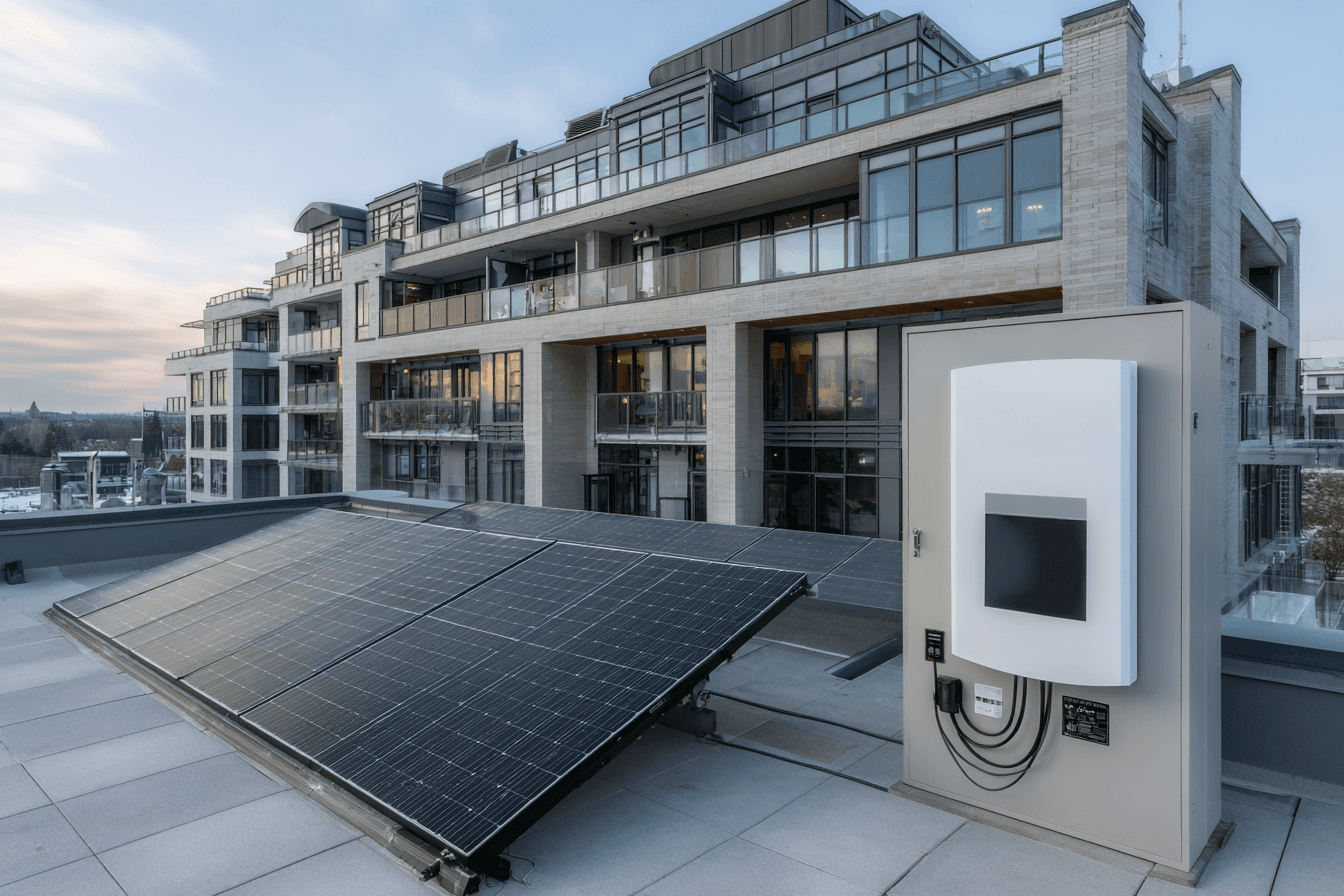
kWp (kilowatt-peak) is a solar system’s rated size, not the energy it produces. Here’s how kWp relates to kWh, cost and sizing for Canadian homes.
The kWp meaning is simple: kWp stands for kilowatt-peak, the rated power of a solar system under standard test conditions. It tells you how big the system is, not how much electricity it will produce. A 6 kWp system has panels whose combined lab rating is 6 kilowatts. How much energy it actually produces over a year, measured in kWh, depends on where you live, which way the panels face, shade and weather.
The easiest way to understand the kWp meaning is to compare it with kWh.
| Term | What it measures | Example |
|---|---|---|
| kWp (kilowatt-peak) | The system’s rated power: its size | “A 6 kWp system” |
| kWh (kilowatt-hour) | Energy produced or used over time | “It produces about 7,000 kWh a year” |
Think of kWp like the size of a water pipe, and kWh like the amount of water that flows through it over a year. A bigger pipe can move more water, but how much actually flows depends on conditions.
“Standard test conditions” are lab conditions used to rate every panel the same way. On a real roof, panels rarely hit their full rating for long, and output varies with the sun’s angle, temperature, snow and cloud.
To estimate yearly production, multiply the kWp by how much one kWp produces per year in your area. Natural Resources Canada publishes this figure for thousands of municipalities in its photovoltaic potential maps. For south-facing panels tilted at the latitude angle:
| City | kWh per kWp per year | A 6 kWp system produces about |
|---|---|---|
| Regina | 1,360 | 8,160 kWh |
| Calgary | 1,291 | 7,750 kWh |
| Winnipeg | 1,272 | 7,630 kWh |
| Ottawa | 1,200 | 7,200 kWh |
| Montréal | 1,190 | 7,140 kWh |
| Toronto | 1,163 | 6,980 kWh |
| Halifax | 1,073 | 6,440 kWh |
| Vancouver | 1,007 | 6,040 kWh |
Estimates for well-oriented, unshaded panels. East- or west-facing and shaded roofs produce less.
Hypothetical example: a Toronto home uses 9,000 kWh a year. 9,000 ÷ 1,163 ≈ 7.7 kWp. With 400 W panels, that’s about 19–20 panels.
Next, check whether they’ll fit using our guide to roof space for solar panels.
Good installers include these factors in their production estimate.
The kWp meaning comes down to this: it’s the size of your solar system, not its output. Multiply kWp by your local production figure to estimate kWh, compare quotes on both kWp and kWh, and use your own usage to decide how big a system you need. To weigh cost against savings, try our solar ROI calculator in Excel or see how much a 5 kW solar system produces.
kWp means kilowatt-peak: the rated power of a solar system under standard test conditions. It describes the system’s size, not how much energy it produces.
No. kWp is capacity (power), while kWh is energy produced or used over time. A 6 kWp system in Toronto produces roughly 7,000 kWh a year, according to NRCan’s data.
Divide your yearly electricity use in kWh by the yearly production per kWp for your location, from NRCan’s photovoltaic potential maps.
Not usually. kWp is the combined rating of your panels, so increasing it means adding panels or replacing them with higher-rated ones.
Most heat pump installations need an electrical permit, and many need a mechanical (HVAC) permit...
A step-by-step guide to connecting home solar to the grid in Ontario: your local utility, ESA...

A step-by-step checklist of the permits, approvals and documents a Canadian home solar project...