Solar Energy
Do You Need a Heat Pump Permit in Canada? (And What About Solar?)
Most heat pump installations need an electrical permit, and many need a mechanical (HVAC) permit...
4 min

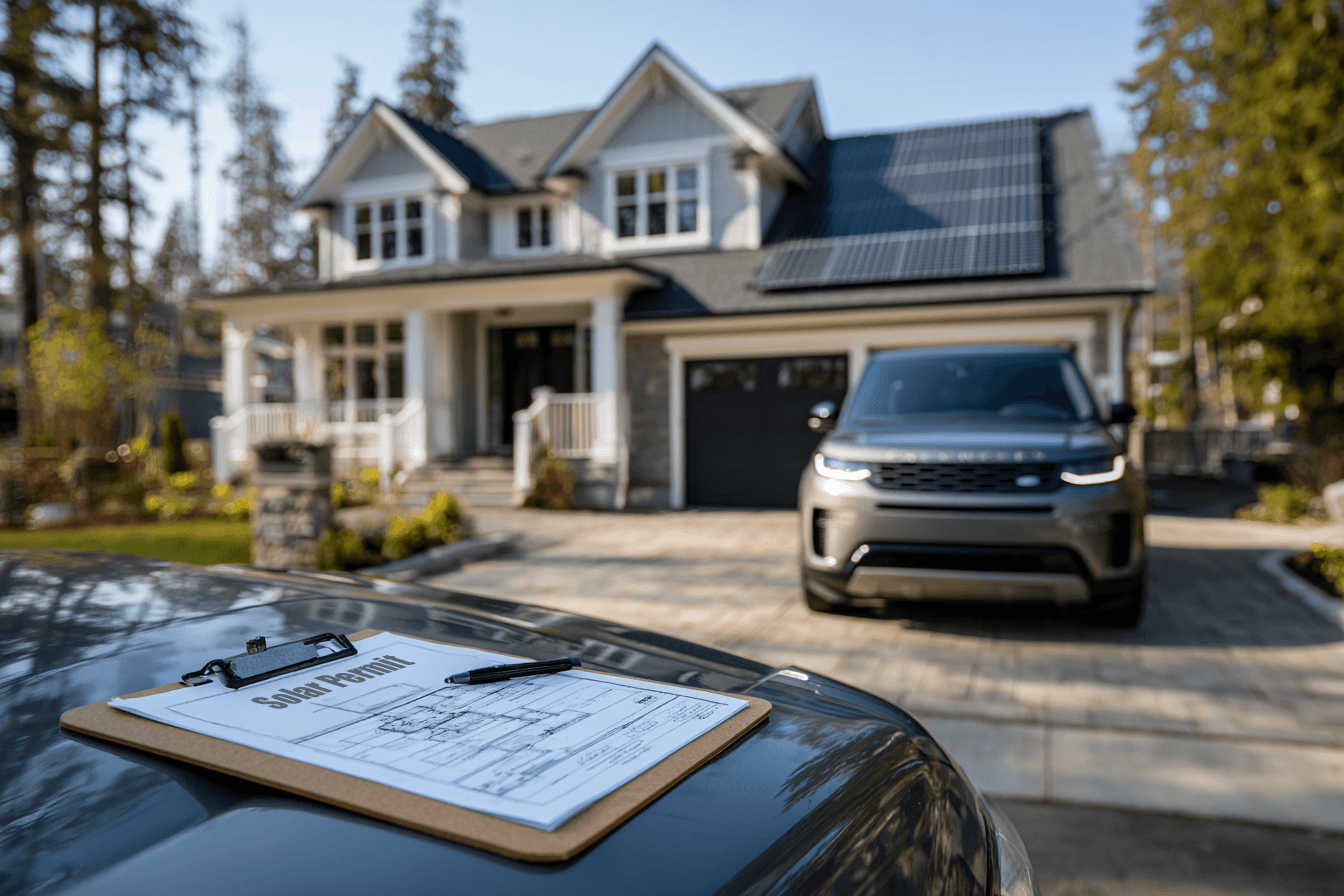
Most rooftop solar projects in Canada need an electrical permit, and many need a building permit and utility approval too. Here’s how to tell.
Yes: almost every home solar project in Canada needs at least one solar panel permit. Grid-connected systems almost always need an electrical permit and inspection. Many also need a building permit, depending on the size of the array and your municipality, and approval from your electric utility before the system can connect to the grid. A good installer applies for most of these for you, but you are still responsible for making sure it’s done.
| Approval | Do you need it? | What it covers | Who usually applies |
|---|---|---|---|
| Electrical permit and inspection | Almost always | Safe wiring under the electrical code | Your licensed electrical contractor |
| Building permit | Often: depends on array size, roof and municipality | Roof strength and how the racking is attached | Your installer, sometimes with an engineer |
| Utility connection approval | For any grid-tied system | Permission to connect and export power | Your installer, on your behalf |
| Zoning, heritage or condo approval | Sometimes | Where panels can go and how visible they are | You or your installer |
Solar panels produce electricity, so the installation must meet the electrical code and be inspected. The authority depends on your province:
A building permit is the second solar panel permit many homes need. It checks that your roof can safely carry the panels, and the snow and wind loads on them. Rules vary by province and municipality. In Ontario, for example, a building permit is required for solar collectors mounted on a building with a face area of 5 m² or more, and the design must be done by a licensed professional engineer. See the City of Ottawa’s solar collector permit page and the City of Toronto’s solar collector guide.
Almost every home rooftop array is larger than 5 m², so in Ontario you should expect a building permit. Ground-mounted systems and older or heavily loaded roofs may need extra review anywhere in Canada.
If your system is connected to the grid, your electric utility must approve the connection, usually before installation starts. The rules and credit programs differ by utility. Our guide to the solar interconnection process in Canada explains the steps, and there’s a separate guide for solar interconnection in Ontario.
Some homes need extra approvals, for example in a heritage district, a condo or strata, or where zoning limits the height or placement of equipment. Read our guide to solar bylaws in Canada for what to check.
In most cases, your installer or their licensed electrician applies. Before you sign a contract, ask:
Keep copies of every permit, inspection report and approval. You may need them for incentive applications, your insurer or a future sale of your home. Our solar permit checklist lists them in order, and our guide to solar approval documents by province explains each one.
Unpermitted work can mean failed inspections, delays connecting to the grid, problems with insurance claims, and orders to open up or remove the work. Some incentive programs also require proof of permits and inspections. It’s always cheaper to get the permit first.
Timing varies with your municipality, the time of year and how complete the application is. Busy spring and summer seasons can add weeks. See our solar installation timeline for a stage-by-stage view.
Plan on at least an electrical permit and utility approval for any grid-connected system, and often a building permit too. Choose an installer who handles solar panel permits in your municipality, and keep copies of every approval. Before you hire, check our guide to contractor certifications in Canada.
Almost always. At a minimum, a grid-connected system needs an electrical permit and inspection, plus approval from your utility. Many municipalities also require a building permit.
Some provinces let homeowners do certain electrical work with a homeowner permit, but solar involves roof work, structural checks and utility requirements. Most homeowners use a licensed installer. Check your province’s rules before starting.
Usually. It still needs an electrical permit and utility approval, and your municipality may require a building permit or have zoning rules about where it can go.
Most heat pump installations need an electrical permit, and many need a mechanical (HVAC) permit...
A step-by-step guide to connecting home solar to the grid in Ontario: your local utility, ESA...

A step-by-step checklist of the permits, approvals and documents a Canadian home solar project...