
Heat Pumps
Cold Climate Heat Pump Challenge: How to Read the Evidence
Read Cold Climate Heat Pump Challenge evidence by separating specifications, test results and...
3 min

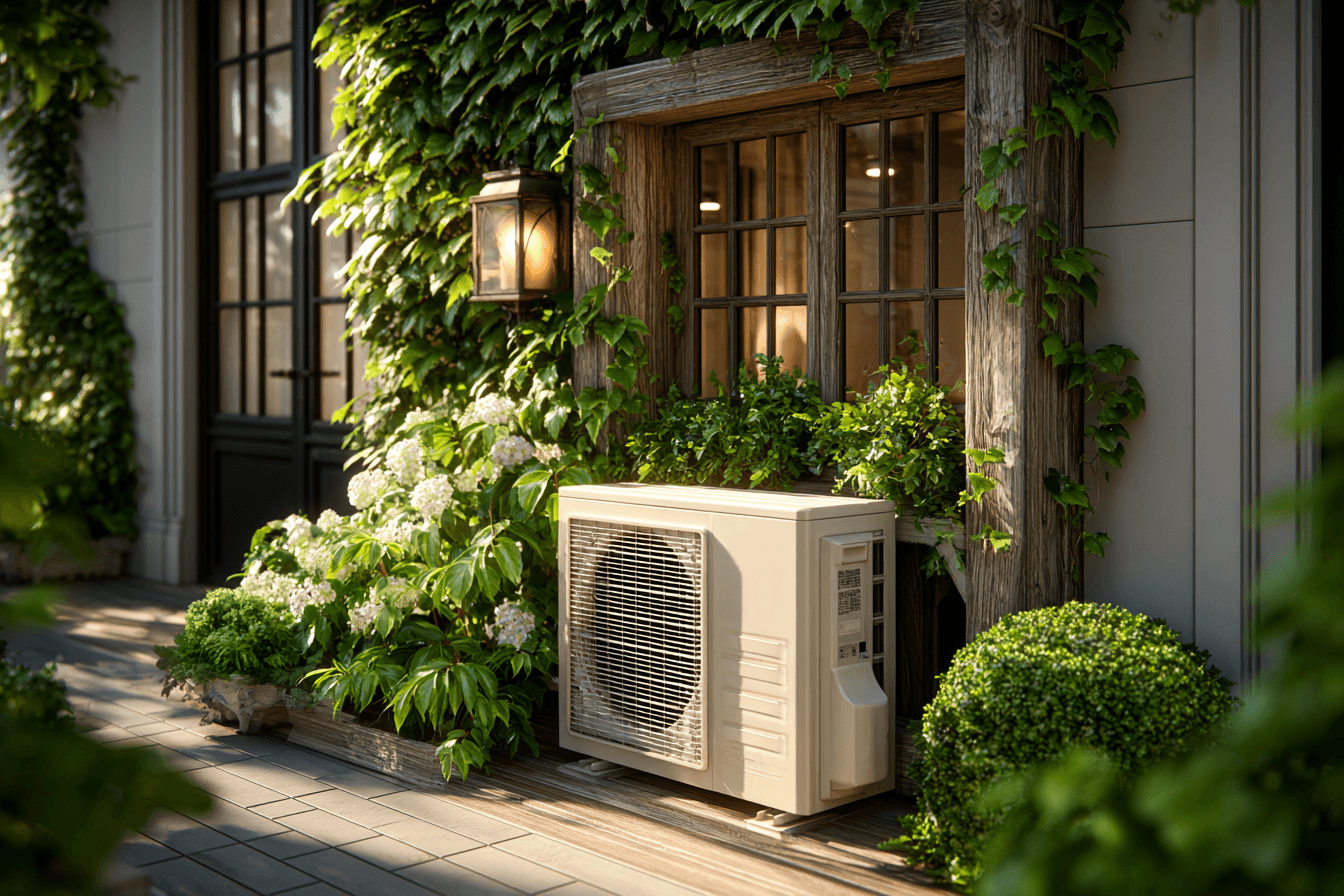
Screens, plants and placement ideas that hide a heat pump’s outdoor unit while keeping airflow, snow clearance and service access.
You can hide a heat pump behind a screen, planting or a well-chosen location, as long as the outdoor unit can still breathe. The outdoor unit exchanges heat with the air around it. If you block that airflow, it works harder, uses more electricity and may wear out sooner. The goal is to soften how it looks, not to box it in.
Explore heat-pump rebates you may qualify for through a property assessment.
Explore heat-pump rebatesA heat pump’s outdoor unit pulls air across its coil and pushes it out through the fan. If a screen, fence or shrub is too close:
Every model has its own minimum clearances for the sides, back, front and top. You’ll find them in the manufacturer’s installation manual. Some manufacturers can deny warranty claims when those clearances aren’t met. Check the manual, or ask your installer, before you build anything.
The easiest way to hide a heat pump is to put it somewhere discreet from the start. If you’re planning a new installation, ask your installer about:
Keep noise and your neighbours in mind too. Our guide to heat pump noise in winter explains why location matters.
Angled or spaced slats hide the unit while letting air pass through. They work well next to decks and patios.
A three-sided cedar or composite fence with an open top and an open or removable front hides the unit from view and leaves room for service.
Perforated or slatted aluminum or powder-coated steel suits modern homes and holds up to snow and road salt.
A trellis beside the unit, or a pergola well above it, draws the eye away from the unit without enclosing it. Don’t place a solid roof directly over the fan discharge.
| Material | Why it works | Watch out for |
|---|---|---|
| Cedar slats | Naturally rot-resistant, warm look | Gaps too narrow for airflow |
| Composite panels | Low maintenance | Solid panels with no openings |
| Aluminum or steel slats | Durable, modern | Sharp edges near service areas |
| Lattice | Inexpensive, easy to paint | Small openings that clog with snow |
Avoid solid vinyl or plastic panels without openings; they trap heat and moisture. Leave the top open wherever possible, and make at least one side removable or hinged so a technician can reach the unit.
Plants can hide a heat pump and soften the view year-round if you choose and place them carefully:
Avoid:
Frequent icing is a sign that airflow or drainage needs attention. Learn what normal looks like in our guide to the heat pump defrost cycle.
Some municipalities regulate where outdoor mechanical equipment can go, how close it can be to property lines and how much noise it can make. Condo and townhouse boards may have their own rules. Check with your municipality before moving a unit or building a large structure. Our guide to heat pump permits in Canada covers what to ask.
To hide a heat pump well, start with placement, then use open, slatted screens or carefully spaced evergreens. Always follow the model’s clearance requirements, keep the top open and leave a way in for service. If you’re still choosing a system, our cold-climate heat pump buying guide can help.
It depends on the model. The manufacturer’s installation manual lists the minimum clearances for each side and the top. Keep screens and plants outside those distances.
Don’t cover the unit while it’s in use; it needs airflow to heat your home. A roof or overhang well above the unit can help keep falling snow and ice off, as long as it doesn’t block the fan discharge.
It’s not recommended. Paint can interfere with the coil and may affect your warranty. A screen is a safer way to blend the unit in.
When the same yard includes solar equipment, plan the planting for both systems. Heat-pump planting must preserve the exact model’s air intake, discharge and service space. Solar planting needs a separate shade assessment: consider mature tree height, seasonal shadows, falling debris and access to the array. A screen that suits an outdoor heat pump can still shade nearby solar panels.
Canadian Solar’s July 2026 module installation manual, printed page 8, warns against persistent shading and calls for maintenance that prevents plants or debris from shading modules. Its requirements apply to the relevant Canadian Solar equipment; use the instructions for your actual modules and heat pump when reviewing your own plan.
Ask the solar designer and heat-pump installer to mark the planting area, expected mature growth, equipment clearances, drainage and service routes on one drawing. Agree who will keep vegetation within that reviewed plan. There is no single planting distance that works for every panel layout, outdoor unit or property, and landscaping does not replace electrical, structural or local approval checks.
Read Cold Climate Heat Pump Challenge evidence by separating specifications, test results and...

Build a solar and heat pump maintenance schedule with manual-based reminders, named...

Recognize signs your heat pump needs service, distinguish urgent hazards from recurring...