
Heat Pump vs Furnace in Canada: Which Is Better in Winter?
Compare a heat pump and furnace in Canadian winter: efficiency, costs, cold-weather performance, backup heating and questions to ask an installer.
Table of contents
A heat pump vs furnace decision in Canada comes down to more than a single efficiency rating. Your winter temperatures, electricity and fuel prices, existing ductwork, and the amount of heat your home loses all matter. A cold-climate heat pump can use less energy to deliver the same heat, but it is not automatically the cheapest option for every household.
The short answer: A properly sized heat pump is usually more energy efficient than an electric or gas furnace while it is operating. Its output and efficiency fall as outdoor temperatures drop, so some Canadian homes need backup heat. Compare annual costs using your local rates and a home-specific heating estimate before choosing a system.
Heat pump vs furnace: the key differences
| System | How it heats your home | Cooling | What to check |
|---|---|---|---|
| Cold-climate air-source heat pump | Moves heat from outdoor air indoors using electricity | Yes | Heating capacity and efficiency at your area's design temperature |
| Gas or propane furnace | Burns fuel to create heat and distributes it through ducts | No; separate air conditioning is needed | Annual fuel utilization efficiency (AFUE), fuel price and venting |
| Electric resistance furnace | Converts electricity into heat in resistance elements | No; separate air conditioning is needed | Electricity rate and electrical capacity |
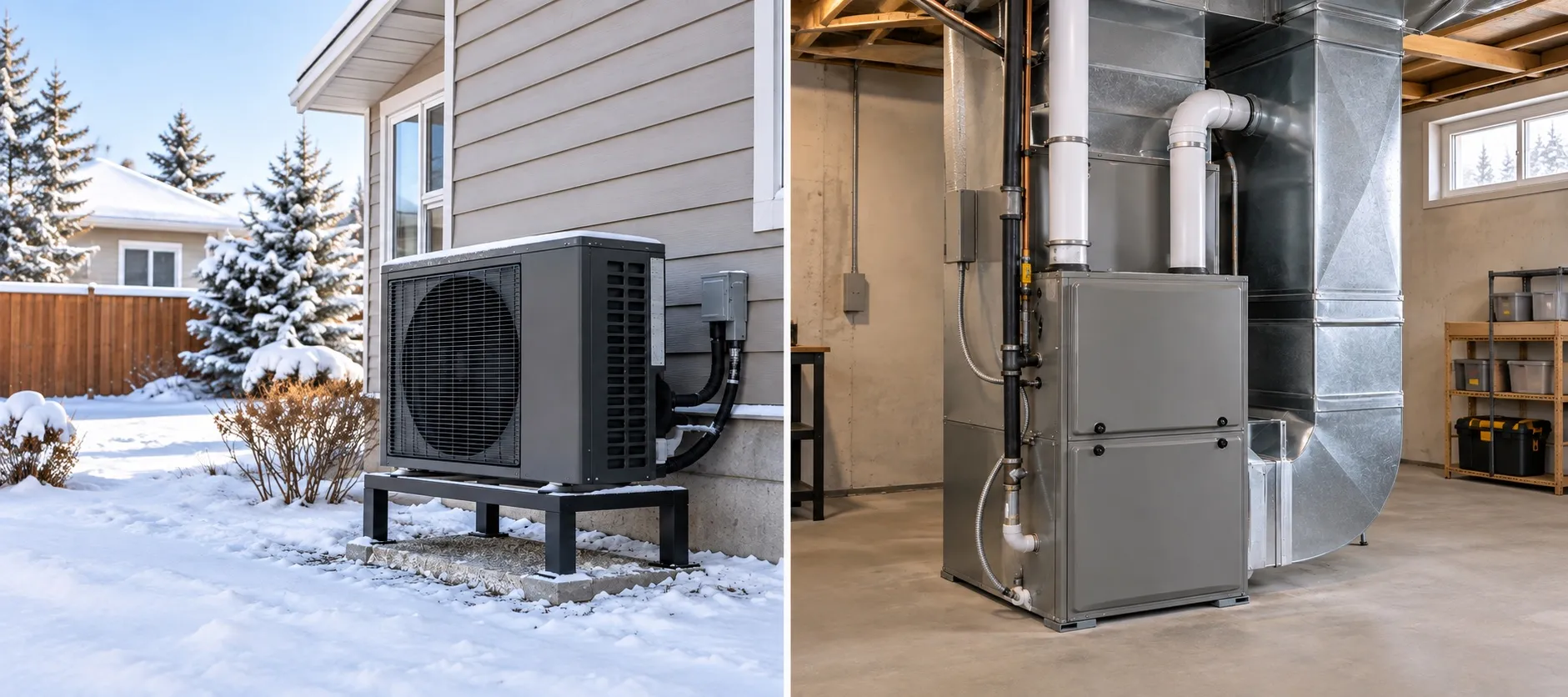
A heat pump moves heat rather than generating it directly. That is why it can deliver more than one unit of heat for each unit of electricity it uses. A furnace still has advantages in some homes, especially where existing ducts and gas service make replacement straightforward. Natural Resources Canada explains how heat pumps work and how they are sized.
Which is more efficient in a Canadian winter?
Heat pump efficiency is expressed as coefficient of performance (COP): heat delivered divided by electricity used. For example, a COP of 2.5 means 1 kWh of electricity delivers about 2.5 kWh of heat. Electric resistance heat delivers about 1 kWh of heat per 1 kWh of electricity. A gas furnace uses a different measure, AFUE, which estimates the share of fuel energy converted to useful heat over a season. A 95% AFUE furnace delivers about 95 units of heat for every 100 units of fuel energy under the rating method. NRCan describes COP and AFUE.
The comparison changes with temperature. NRCan reports a wide range of air-source heat pump COP values at −8°C, from 1.1 to 3.7 across equipment and conditions. A heat pump that looks efficient at a mild test temperature may deliver less heat and use more electricity during a cold snap. Ask for the model's heating capacity and COP at low outdoor temperatures, not just its seasonal rating. For a deeper explanation, see our guide to COP and HSPF.
Can a heat pump handle Canadian winters without a furnace?
Sometimes. Cold-climate models are designed to keep operating at much lower temperatures than conventional air-source heat pumps. But operating at a stated temperature does not mean the unit can heat every home on its own at that temperature. The answer depends on the model's output, your home's heat loss, and your local design temperature.
An installer should calculate the home's heating load, then show how much of that load the proposed heat pump can cover on the coldest design day. They should also explain the backup plan. It might use electric resistance heat, an existing furnace in a dual-fuel setup, or another approved system. NRCan notes that many air-source installations require supplemental heat during the coldest periods and that correct sizing is essential. Read our heat pump sizing guide for the questions to bring to your installer.
If your home is drafty, improving insulation and air sealing can reduce the heating load before you buy new equipment. This may change the size and operating cost of the system you need.
Heat pump vs furnace costs in Canada
There is no Canada-wide winner on heating bills. A heat pump's operating cost depends on its real-world COP and your electricity rate. A gas or propane furnace's cost depends on its AFUE, fuel price, and any fixed utility charges. A system that saves energy may still cost more to operate where electricity is expensive relative to gas. NRCan says the effect on bills depends on local electricity and fuel prices and the system being replaced. That is why comparing a heat pump with electric resistance heat is different from comparing it with an existing high-efficiency gas furnace.
Here is a simple energy comparison for 10 kWh of heat delivered to the home. At a COP of 2.5, a heat pump uses about 4 kWh of electricity. An electric resistance furnace uses about 10 kWh of electricity. At 95% AFUE, a gas furnace uses about 10.5 kWh of fuel energy, plus electricity for its fan and controls. This is an illustration, not an annual bill estimate: actual heat pump COP varies with weather and operation.
For a useful quote, ask each installer for an annual heating-cost estimate based on the same home heat-loss calculation, your recent utility rates, the proposed equipment's cold-weather performance, and the backup system's expected use. Include cooling costs if you would otherwise need a separate air conditioner.
Upfront cost, incentives and maintenance
Installation prices vary with system type, ductwork, electrical work, and the home's layout. Compare written quotes that include equipment, installation, controls, any required upgrades, backup heat, warranty, and estimated annual energy use. A heat pump also provides cooling, but that cooling is not free; it uses electricity.
Check current provincial, territorial, municipal, and utility incentives before signing a contract. Eligibility and funding change. The federal Canada Greener Homes Loan is closed to new applications, so older articles that list it as available are out of date.
Both systems need maintenance. Follow the manufacturer's filter and service schedule for a heat pump, and keep its outdoor unit clear of snow and blocked airflow. Have a fuel-burning furnace inspected as recommended by its manufacturer and local safety rules, and maintain working carbon monoxide alarms.
Heat pump vs furnace: how to choose for your home
A heat pump may be a strong fit if you also need air conditioning, you currently heat with electric resistance or oil, and a contractor can show that a properly sized model covers a large share of your heating load at your local winter temperatures.
A furnace or dual-fuel system may deserve a closer look if your home already has ductwork and gas service, local gas is inexpensive relative to electricity, or the proposed heat pump would rely heavily on backup heat. A dual-fuel system can use a heat pump during milder weather and switch to a furnace when the temperature or economics favour it.
Before deciding, ask for three things in writing: a home heat-loss calculation; the proposed heat pump's output and COP at relevant low temperatures; and a side-by-side estimate of installation and annual operating costs. Those figures are more useful than a generic claim that one system is always best.
Frequently asked questions
It can be, but the answer depends on the specific model and installation. Ask for its tested COP and heating capacity at −20°C or your area's design temperature. Do not assume a mild-weather rating applies in deep cold.
Not necessarily. Some homes use an all-electric heat pump with electric backup; others keep a furnace for dual-fuel operation. The right design depends on heat loss, equipment capacity, local utility rates, and how much backup heat you need.
It may, especially when replacing electric resistance or oil heat. Against a high-efficiency gas furnace, savings are less certain. Compare quotes using your local rates and estimated annual energy use rather than relying on a national average.
The best next step
For a heat pump vs furnace choice in Canada, start with your home's heating load and local energy prices. Then compare properly sized equipment and a clear backup strategy. That gives you a winter comfort decision you can defend with numbers rather than a one-size-fits-all promise.