
Energy Efficiency
Deep Lake Water Cooling for Buildings: Understand Toronto’s Shared System
Assess deep lake water cooling for buildings through Toronto’s district-energy example, with a...
3 min

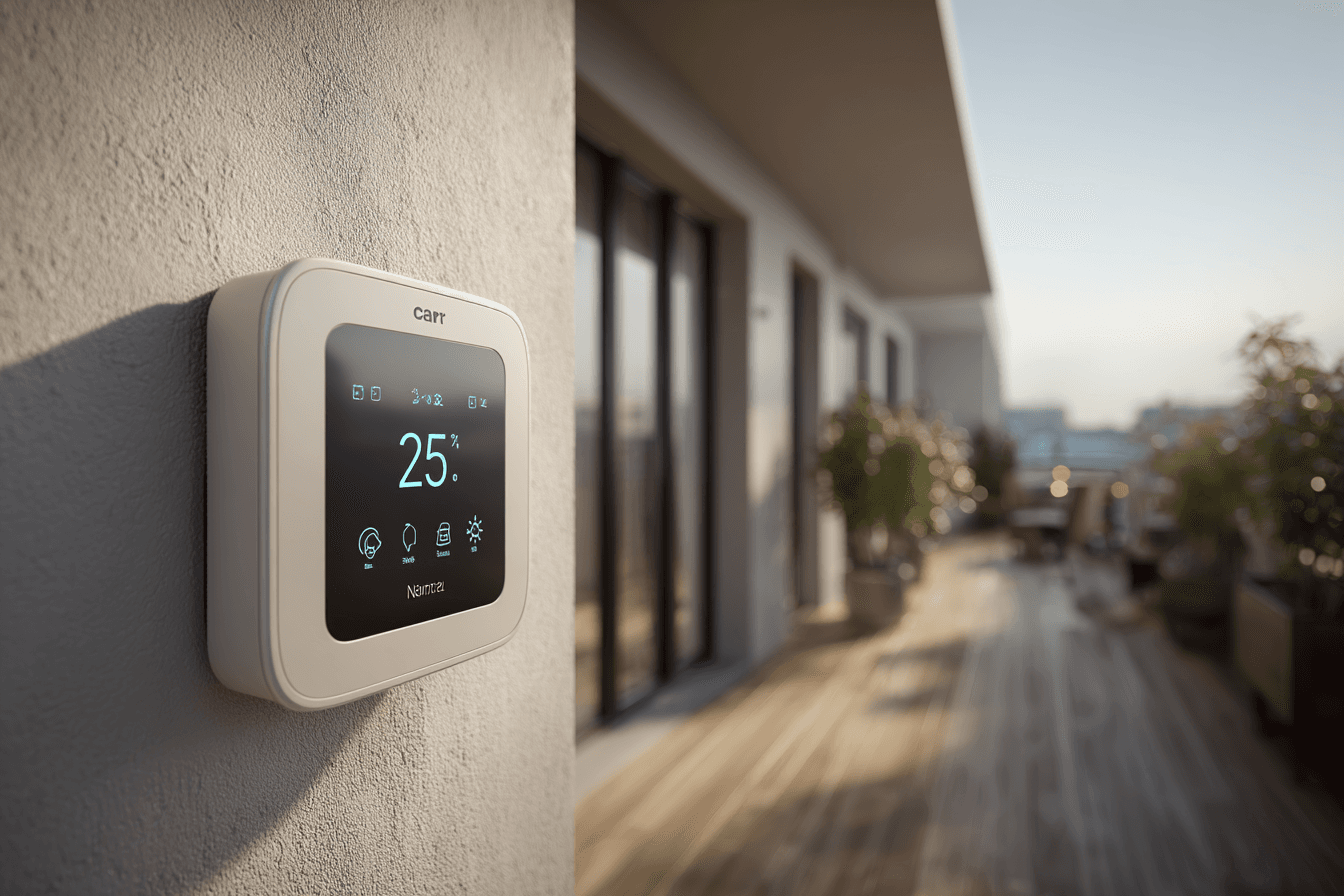
How smart thermostats save energy, how to choose one for a furnace, heat pump or baseboard heaters, and which Canadian programs offer rebates or rewards.
Smart thermostats in Canada can lower your heating and cooling costs by adjusting the temperature automatically when you’re asleep or away, and by letting you control your system from your phone. The key is choosing one that’s compatible with your heating system, whether that’s a furnace, a heat pump or electric baseboards, and using its scheduling features. Look for ENERGY STAR certification, and check whether your utility offers a rebate or rewards program.
Natural Resources Canada (NRCan) describes three main features of smart thermostats:
NRCan notes that lowering the temperature by two to three degrees Celsius is optimal for saving energy. A smart thermostat makes that easy to do consistently. Read NRCan’s smart thermostat page.
Compatibility matters more than brand when you shop for smart thermostats in Canada. Match the thermostat to your system:
| Your heating system | What to look for | Watch out for |
|---|---|---|
| Gas or oil furnace with central air | A standard low-voltage smart thermostat | Many need a “C-wire” for constant power; check your wiring |
| Central heat pump | A thermostat that supports heat pumps, including auxiliary or backup heat stages | Poorly set backup heat can raise your costs |
| Dual-fuel (heat pump plus furnace) | Support for dual-fuel control and a configurable switch-over temperature | Ask your installer to set the switch-over point |
| Ductless mini-split | The manufacturer’s controller, or a compatible smart controller | Standard wall thermostats often don’t work with mini-splits |
| Electric baseboards | A line-voltage smart thermostat rated for the heater load | Low-voltage thermostats aren’t compatible; use a licensed electrician if unsure |
If you’re installing a new heat pump, ask your contractor which thermostat they recommend and how they’ll set the backup heat. Learn more about heat pump efficiency (COP) and the heat pump defrost cycle.
According to NRCan, ENERGY STAR certified smart thermostats are third-party certified, based on field data from homes, to deliver energy savings. They also report equipment use and temperature data, and enter a low-power standby mode when inactive. Many rebate programs require ENERGY STAR certification.
Several programs reward smart thermostats in Canada. Programs change often, so check the current details:
Programs like Peak Perks are a form of virtual power plant. See how virtual power plants work in Canada.
Many low-voltage smart thermostats can be installed by a handy homeowner following the manufacturer’s instructions, with the power off. Line-voltage thermostats for baseboard heaters work at household voltage, so if you’re not comfortable with electrical work, hire a licensed electrician. See what certifications your contractor should have.
The best smart thermostats in Canada are the ones that match your heating system and that you actually use to schedule lower temperatures. Choose an ENERGY STAR certified model, set it up for your furnace, heat pump or baseboards, and check your utility for rebates or rewards.
Many do, but make sure the model supports heat pumps and backup heat stages, and that backup heat is set up correctly. Ductless mini-splits often need the manufacturer’s controller instead.
Yes, but you need a line-voltage smart thermostat rated for the heater. Standard low-voltage thermostats for furnaces won’t work.
It depends on your home, your heating system and how you use it. NRCan notes that lowering the temperature by two to three degrees Celsius when you’re asleep or away is optimal for saving energy, and a smart thermostat automates that.
Assess deep lake water cooling for buildings through Toronto’s district-energy example, with a...

Make a smart glass window comparison around the room’s comfort problem, complete assembly...

Plan furnace filter replacement with an equipment-specific specification card, safe owner-access...